
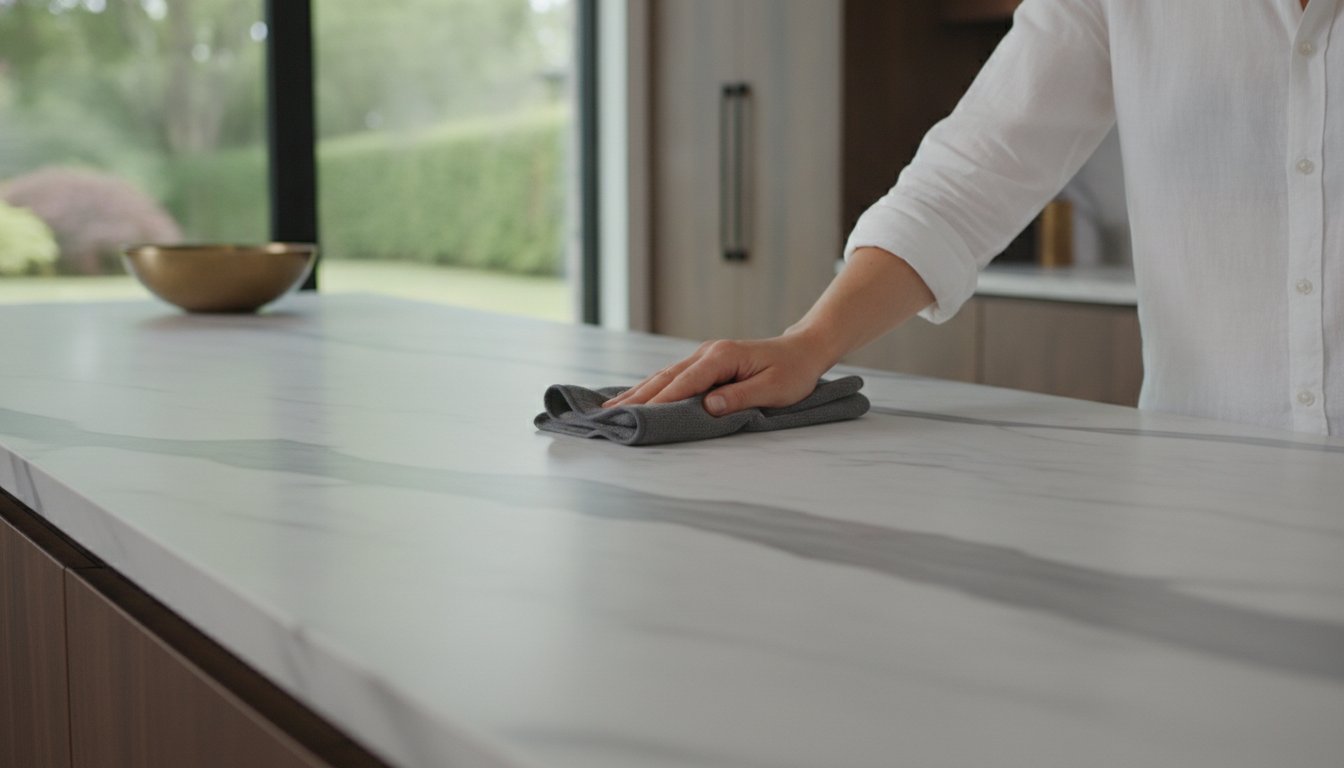
The velvet-soft touch of a honed marble slab is not a fragile liability but a resilient investment that matures with grace. You likely selected this matte finish for its organic texture and the way it handles the subtle colour variations of natural stone. However, don't let the fear of permanent damage from acidic foods or the confusion between etching and staining turn your home into a museum. Learning how to care for honed marble is the essential first step to realize the full aesthetic potential of your stone while maintaining peace of mind.
This guide serves as a professional resource for those who value both aesthetic elegance and long-term durability. We will move beyond conflicting advice to provide a clear maintenance schedule, professional-grade sealing techniques, and precise repair methods. You will gain the expertise required to handle spills effectively and ensure your natural stone surfaces, which often serve as the centre of your architectural design, develop a sophisticated patina over time. By following these industry standards, you can organize a cleaning routine that preserves the foundational elements of your high-end interior.
Key Takeaways
- Understand the structural differences between matte and polished finishes to manage surface porosity and long-term durability effectively.
- Implement a daily pH-neutral maintenance regimen to learn how to care for honed marble while preventing micro-scratches from environmental grit.
- Utilize high-performance impregnating sealers to provide a critical defensive barrier against liquid penetration and internal stone staining.
- Learn to differentiate between surface etching and deep-seated stains to execute precise, professional-grade repair techniques like poultice extraction.
- Prioritize the selection of high-density marble slabs to ensure superior structural integrity and a more resilient natural patina in residential applications.
Understanding the Nature of Honed Marble Slabs
Honed marble represents a pinnacle of understated luxury, defined by its matte, satin-like surface. Unlike traditional high-gloss finishes, a honed texture is achieved by halting the abrasive sanding process early, typically using coarser diamond pads. This specific mechanical treatment results in a velvet-like finish that diffuses light rather than reflecting it. For the discerning homeowner, this finish offers a tactile, organic quality that feels warmer to the touch than its polished counterparts. To truly master how to care for honed marble, one must first recognize that this aesthetic choice alters the physical profile of the stone's surface.
The chemical identity of the material is rooted in its geological origins. Most marble varieties consist primarily of calcium carbonate, a mineral sensitive to acidic substances. For a deeper look into these properties, Understanding the Nature of Marble provides essential context regarding its metamorphic formation and mineralogical composition. Because the stone is alkaline, it reacts almost instantly to acids like lemon juice or vinegar through a process called etching. While a honed finish makes physical scratches less noticeable because there is no mirror-like reflection to disrupt, the lack of a factory-sealed polish means the stone's microscopic pores remain more accessible to the environment.
Honed vs. Polished: The Porosity Factor
The primary distinction between these two finishes lies in surface density. A factory polish involves intense friction that effectively "closes" the stone's face, creating a natural barrier. In contrast, the honing process leaves the pores open, which increases the stone's capacity to absorb liquids if left unprotected. This structural difference is why understanding how to care for honed marble requires a focus on high-quality impregnation. Professional designers often favour this finish for high-traffic luxury kitchens because, while it is more porous, it does not show the "traffic paths" or dull spots that eventually plague polished surfaces. It is a misconception that honed surfaces are inherently more fragile; they simply require a different defensive strategy, specifically the use of advanced breathable sealers.
The Aesthetic of the Matte Finish
Modern interior design in Ontario increasingly leans toward transitional and minimalist aesthetics where texture takes precedence over shine. Honed marble slabs provide a soft, light-diffusing backdrop that enhances the stone's natural colour and intricate veining without the distraction of glare. This finish is particularly effective in spaces with large windows or complex lighting schemes where a polished surface might create uncomfortable reflections. For those seeking style inspiration, exploring Premium Marble Slabs in Ontario reveals how these matte textures complement contemporary residential architecture. The result is a surface that feels integrated into the home's structure, offering a quiet confidence that high-gloss materials often lack.
Establishing a Daily Maintenance Regimen for Luxury Stone
A sophisticated Daily Maintenance Regimen for Marble begins with a single non-negotiable rule: every cleaning agent must be pH-neutral. While mass-market marketing often suggests all-purpose solutions, these products frequently contain acidic or alkaline components that compromise the stone's structural integrity. Mastering how to care for honed marble requires a shift from aggressive scrubbing to a disciplined, preventative approach. This ensures that the velvet-like finish remains an asset rather than a source of stress.
Dry debris is the primary architect of micro-scratching. Particulate matter like grit or sand acts as an abrasive under the pressure of a wiping motion. To protect the surface, utilize a soft, dry microfibre cloth or a dedicated stone-safe dust mop to remove loose particles before any liquid contact. When spills occur, the immediate response must be to blot, never wipe. Wiping spreads the contaminant across a larger area and can force liquids deeper into the stone's open pores. By blotting with a clean, white cloth, you lift the substance directly from the surface, minimizing the risk of a permanent shadow. When selecting premium Marble Slabs for a high-traffic kitchen, establishing these habits early is essential for long-term satisfaction.
The Dangers of Traditional Household Cleaners
Many common Canadian household staples are catastrophic for a calcium-rich honed surface. Vinegar, lemon-based sprays, and bleach are high-acid or high-alkali substances that cause immediate chemical etching. Even cleaners marketed as "natural" or "green" often rely on citrus extracts that dissolve the stone's surface on contact. Professional stone soaps are the only recommended option; these specialized formulas are engineered to nourish the material without leaving the dulling film often associated with standard dish soaps. This curated choice preserves the specific light-diffusing properties of the honed finish.
Managing Ontario Hard Water Deposits
Homeowners in Mississauga and the broader GTA frequently encounter challenges related to high mineral content in the municipal water supply. If tap water is allowed to evaporate on a honed surface, it leaves behind white "scale" or mineral deposits, particularly around faucets and undermount sinks. To manage this without resorting to acidic descalers, always dry the stone completely with a fresh microfibre cloth after use. For existing buildup, a soft-bristled brush and a pH-neutral stone cleaner can gently agitate the minerals. This disciplined drying process prevents the clouding that can obscure the stone's natural colour and veining over time.
The Science of Sealing: Protecting Your Investment
Sealing is the most critical defensive measure for any natural stone surface, yet it is frequently misunderstood by homeowners and professionals alike. A high-quality sealer acts as a "time-buyer" rather than an impenetrable shield. It fills the microscopic voids within the stone to slow the absorption of liquids, granting you the necessary window to blot spills before they become permanent stains. However, it is essential to realize that sealers do not prevent chemical etching caused by acids. Understanding The Science of Sealing and Cleaning Marble is foundational to maintaining the material's integrity, as the chemical interaction between the stone and the sealer determines the longevity of the finish.
To determine if your surface requires attention, perform the Water Bead Test. Place a few drops of water on various sections of the slab and wait ten minutes. If the water beads tightly on the surface, your protection is intact. If the stone darkens or the water absorbs, the seal has been compromised. Mastering how to care for honed marble involves recognizing these subtle physical cues before deep-seated damage occurs. For a professional-grade result, the application must be meticulous; an uneven coat can lead to streaking that disrupts the matte elegance of a honed finish.
Impregnating Sealers vs. Topical Barriers
In the luxury market, topical sealers are generally avoided for honed surfaces. These coatings sit on top of the stone, often creating an artificial plastic-like sheen that peels or scratches over time. In contrast, impregnating sealers penetrate below the surface to protect the stone's core while allowing the material to "breathe." This breathability is vital for the natural evaporation of moisture trapped within the geological structure. When selecting a product for kitchen islands or prep areas, always prioritize food-safe, solvent-based impregnating sealers that offer maximum oil and water repellency without altering the stone's natural colour.
A Professional Sealing Schedule
The frequency of maintenance depends entirely on the functional placement of the slab within the home. High-use areas, such as primary kitchens and frequently used vanities, typically require re-sealing every 6 to 12 months. Conversely, low-use accents like fireplace surrounds or decorative feature walls may only need attention every three to five years. Establishing a disciplined schedule ensures that your investment ages gracefully, developing a natural patina without the interference of unsightly blemishes. For those in the early stages of a project, reviewing the Sourcing Premium Stone Slabs in Ontario guide can provide further insight into selecting materials with densities that best suit your intended maintenance level.

Troubleshooting Common Issues: Etching, Staining, and Scratches
Effective restoration begins with a precise diagnosis. Stains and etches are often conflated, yet they require entirely different remedial paths. A stain occurs when foreign pigments, such as oil or wine, migrate into the stone's pores. Conversely, an etch is physical damage; it is a chemical "burn" that dissolves the calcium carbonate surface. Mastering how to care for honed marble involves recognizing that while a sealer provides a window of protection against stains, it cannot prevent the chemical reaction that causes etching. When selecting Marble Slabs for a bespoke project, understanding these restoration techniques provides the confidence to enjoy your surfaces without reservation.
Honed marble offers a distinct advantage during the troubleshooting process. Because the surface lacks a high-gloss reflection, minor physical imperfections and light etches are less conspicuous. In many cases, a professional stone technician can locally buff out superficial etches without the need for a full, slab-wide restoration. For micro-scratches caused by metal cookware or jewellery, the response should be measured. These marks often blend into the stone's developing character, but they can be gently addressed with specialized professional honing pads that match the existing grit level of your finish.
The Poultice Method for Stubborn Stains
For deep-seated organic or oil-based stains that have bypassed the sealer, the poultice method remains the industry standard. This process involves creating a paste using a stone-safe absorbent powder and a specific solvent, such as hydrogen peroxide for organic matter or a degreaser for oils. The paste is applied to the site, covered with plastic wrap, and left to dwell for 24 to 48 hours. As the paste dries, it physically pulls the contaminant out of the marble and into the powder. Patience is essential; rushing this chemical extraction can lead to incomplete results. Avoid using abrasive scouring pads during cleanup, as these can inadvertently alter the local hone level and create an inconsistent texture.
Addressing the 'Dull Spot' (Etching)
Etching typically manifests as a matte "shadow" or a rough patch where an acidic substance, like tomato sauce or citrus, has made contact. While these marks are permanent alterations of the stone, they are not failures of the material. Minor etches in a residential setting can often be disguised using professional-grade honing powders that gently re-smooth the surface. However, many connoisseurs choose to embrace the "Patina Philosophy." In this view, the gradual accumulation of subtle etches is not damage, but rather the mark of an authentic, well-loved kitchen. This natural aging process allows the marble to evolve, eventually resulting in a sophisticated, lived-in elegance that manufactured materials cannot replicate.
Sourcing and Selecting Premium Marble Slabs in Mississauga
The longevity of a natural stone surface is determined long before the first sealer is applied. Selecting a high-density, premium-grade marble slab is the most effective way to minimize porosity and simplify the process of how to care for honed marble. Lower-quality, highly porous stones absorb liquids more rapidly, making them susceptible to deep-seated staining regardless of the maintenance regimen. At Infinity Stone Inc., we hand-select each slab to ensure it meets rigorous standards for both structural integrity and superior aesthetics. This curated approach provides the foundational elements required for high-end living, ensuring that your stone remains a steady partner in your home's design for decades.
We invite architects, designers, and homeowners to our Mississauga showroom to realize the tactile difference between various honed stones. Viewing a small sample is often insufficient for luxury projects; seeing full-size slabs allows you to understand the complete narrative of the veining and the subtle variations in colour. This physical interaction is essential for selecting a material that aligns with your aesthetic sensibilities and technical requirements. By positioning ourselves as a discerning authority on natural surfaces, we ensure that every client receives a material that reflects the prestigious nature of their residential space.
The Infinity Stone Inc. Selection Process
Our inventory features a sophisticated range of marble, including rare and highly sought-after varieties like Calacatta and Statuario. These premium slabs are chosen for their exceptional density and iconic veining patterns. While we provide the raw material, we partner with the region's most skilled fabricators to execute the final hone. This collaboration ensures that the abrasive process is stopped at the precise grit level required to achieve that signature velvet-like texture. Choosing the right slab from the outset reduces the frequency of professional restoration and ensures your daily maintenance routine remains efficient and effective.
Beyond Marble: Considering High-Performance Alternatives
For some high-traffic applications, a client may desire the aesthetic elegance of marble but requires higher resistance to chemical etching. In these instances, we recommend exploring our collection of premium Quartzite Slabs. Quartzite offers a similar visual profile to marble but possesses a much higher mineral hardness and acid resistance. To understand the technical trade-offs between these two luxury materials, we encourage readers to review our Quartzite vs. Marble performance comparison. Whether you choose the traditional heritage of marble or the modern innovation of quartzite, a visit to our Mississauga centre provides the professional consultation necessary to make an informed investment in your home's future.
Preserving the Legacy of Your Natural Stone
Understanding the structural nuances of your slabs turns maintenance from a chore into a sophisticated ritual. By prioritizing pH-neutral cleansers and committing to a disciplined sealing schedule, you ensure that the velvet-soft texture of your investment remains a central feature of your home. Mastering how to care for honed marble allows you to move past the fear of etching and instead embrace the graceful maturation of a living surface. This expertise ensures that your stone ages with a refined patina that manufactured alternatives simply cannot replicate.
Since 2017, we've served as a specialized authority for Ontario's elite design community, providing foundational elements for prestigious residential projects. Our handpicked inventory is sourced directly from global quarries to ensure every slab meets our curated standards for density and aesthetic excellence. Explore our curated collection of premium marble slabs at our Mississauga showroom to find the perfect centrepiece for your next architectural endeavour. With the right knowledge and a premium material, your marble will continue to tell a story of timeless elegance for years to come.
Frequently Asked Questions
Can I use dish soap to clean my honed marble countertops every day?
Avoid using dish soap for daily maintenance as it leaves a microscopic film that dulls the stone's matte finish over time. While occasionally safe, persistent use creates a gummy residue that traps environmental grit and obscures the natural veining. Instead, utilize specialized pH-neutral stone soaps specifically formulated to nourish the material. These professional solutions ensure the slab remains clean without compromising the velvet-like texture that defines the honed aesthetic.
What is the difference between etching and staining on a honed surface?
Staining occurs when foreign pigments, such as red wine or coffee, penetrate the stone's open pores and alter its internal colour. Etching is a physical reaction where acidic substances dissolve the calcium carbonate on the surface, leaving a dull, matte "shadow." When learning how to care for honed marble, it's vital to remember that sealers protect against staining but cannot prevent the chemical corrosion that causes etches.
How often should I professionally seal my honed marble slabs in Ontario?
High-traffic honed marble slabs in Ontario homes typically require professional-grade sealing every 6 to 12 months. Factors such as the regional hard water content in Mississauga and the frequency of use in primary kitchens accelerate the depletion of the protective barrier. Low-use accents, like fireplace surrounds, might only need attention every three years. Regular use of the Water Bead Test is the most reliable way to determine your specific maintenance needs.
Will lemon juice permanently ruin my honed marble island?
Lemon juice will not permanently ruin your island, but it will cause immediate surface etching on contact. Because marble is calcium-rich, the acid reacts with the stone to create a physical blemish. While this "mark of use" is permanent without intervention, a professional can often re-hone the affected area to restore the original finish. Many homeowners choose to view these marks as a natural patina that adds character to the stone.
Is it possible to fix a scratch on honed marble without calling a professional?
Superficial micro-scratches caused by metal rings or grit can sometimes be minimized using professional-grade honing powders or fine-grit pads. However, deep gouges that penetrate the surface require the expertise of a stone restoration professional to ensure an even finish. Attempting to buff deep scratches without the correct technical tools can create an inconsistent texture, making the repair more noticeable than the original damage.
Does honed marble stain more easily than polished marble?
Honed marble is technically more susceptible to staining than polished marble because the abrasive process leaves the pores more exposed. While the matte finish is superior at hiding physical scratches and etches, it lacks the natural "closure" provided by a factory polish. This increased porosity makes high-quality impregnation essential. Learning how to care for honed marble properly involves recognizing this vulnerability and maintaining a robust defensive seal to prevent liquid absorption.
What should I do immediately after spilling red wine on my marble slab?
Blot the spill immediately with a clean, white cloth to lift the liquid without spreading the pigment across the slab. Avoid any wiping motions, as this forces the wine deeper into the stone's metamorphic structure. Once the excess is removed, clean the area with a pH-neutral stone spray and dry it completely. If a shadow remains, a professional poultice treatment may be necessary to extract the deep-seated organic stain from the pores.
Can I use Windex or other glass cleaners on my natural stone?
Never use Windex or traditional glass cleaners on natural stone surfaces. These products often contain ammonia or other harsh alkalis that cause immediate chemical etching on calcium-based materials like marble. Using these agents will strip away your sealer and leave the surface vulnerable to permanent damage. Stick exclusively to professional stone care products that are specifically engineered to preserve the integrity of high-end architectural surfaces.


