
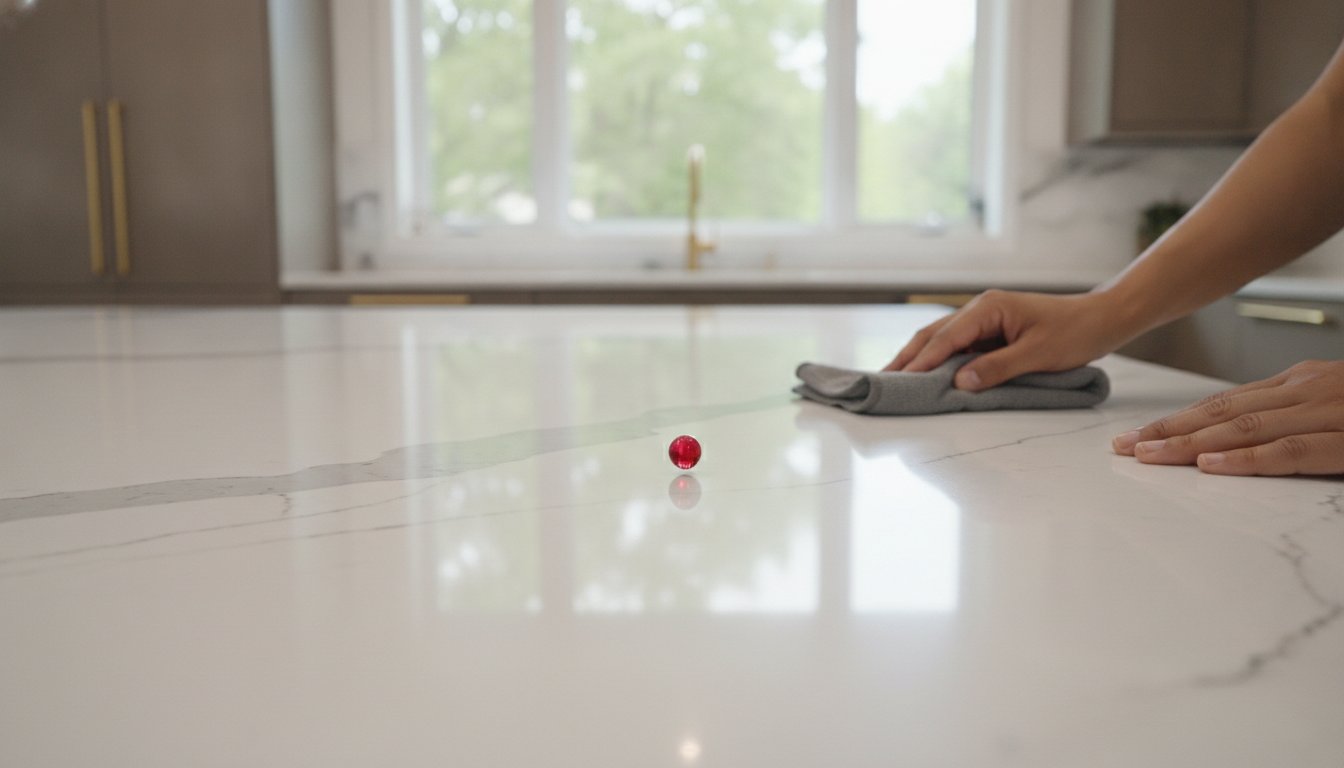
Would you pour a glass of bold Cabernet Sauvignon directly onto a C$5,000 investment and simply walk away? For many, the answer is a resounding no, yet this is the exact risk taken when relying on subpar surface treatments for premium stone. While quartzite is celebrated for its diamond-like hardness, its geological porosity varies significantly between varieties like Taj Mahal or White Macaubas. The frustration of lingering water rings and the fear of acidic etching are common concerns for those investing in high-end natural surfaces. Meeting the specific quartzite slab maintenance requirements ontario homeowners face is essential for preserving the integrity of such a sophisticated material.
You deserve a kitchen that maintains its luxury aesthetic without the constant stress of potential damage. This 2026 guide provides the professional-grade sealing strategies and high-density nano-impregnating products required to protect your stone from the inside out. We've curated the most reliable methods to ensure your surfaces remain a testament to elite craftsmanship. You'll gain the confidence to select a sealer that lasts for years, transforming your stone care routine from a source of confusion into a structured plan for long-term durability.
Key Takeaways
- Understand why standard water-based sealers often fail on dense metamorphic stone and how capillary porosity affects your material's longevity.
- Identify why solvent-based impregnators are the superior choice for meeting the quartzite slab maintenance requirements ontario residents must follow for long-term protection.
- Explore the advantages of 2026 nano-technology sealers that create a permanent chemical bond with the silica inside your premium slabs.
- Learn the professional saturation method to ensure deep penetration while avoiding the common pitfalls of surface hazing and residue.
- Realize how hand-selecting premium material from a specialized distributor serves as the foundation for a stain-resistant, luxury kitchen.
Understanding Quartzite Porosity: Why Standard Sealers Often Fail
Quartzite represents the pinnacle of natural stone durability, yet mastering its care begins with a deep understanding of its geological origins. What is Quartzite? At its core, it is a metamorphic rock born from the intense heat and pressure of tectonic activity. This transformation creates a material of immense density and hardness. However, this density is often deceptive. While the stone feels impenetrable, it contains a network of microscopic capillary pores. These tiny channels are the primary reason why generic, off-the-shelf water-based sealers frequently fail. The molecules in water-based carriers are simply too large to penetrate the dense surface of a premium slab. They often result in a superficial film that does little to satisfy the long-term quartzite slab maintenance requirements ontario homeowners expect for their luxury kitchens.
The choice between a standard sealer and an enhancer is also a critical decision point for the design community. A high-quality impregnating sealer protects the stone's interior without altering its natural aesthetic. In contrast, an enhancer is designed to darken or "wet" the stone's appearance, which can sometimes mask the delicate veining of a high-tier material. The surface finish further complicates the quartzite slab maintenance requirements ontario residents must manage. A polished slab has a tighter surface tension, whereas a honed or leathered finish increases the available surface area for absorption. This higher surface area requires a more meticulous application of high-density sealants to ensure every micro-pore is effectively saturated.
The Science of Stone Density and Absorption
The recrystallization of sandstone into quartzite involves the fusion of quartz grains, yet micro-fissures often remain within the structure. These geological features determine the stone's "thirst." For instance, Taj Mahal is renowned for its low absorption rate, making it nearly as resilient as granite. In contrast, some white quartzite varieties remain more porous and prone to moisture intake. An impregnating sealer acts as a sub-surface barrier that allows vapour to escape while preventing liquid contaminants from settling within the stone's structure.
Is Your Slab Actually Quartzite? The Acid Sensitivity Test
A recurring challenge in the Ontario stone market is the occasional mislabelling of dolomitic marble as quartzite. While they may share a similar aesthetic, their mineral compositions differ entirely. True quartzite is rich in silica and resists acid. Homeowners can verify their material by placing a slice of lemon on a sample piece; if the stone dulls or "etches," it contains calcium carbonate and is not a true quartzite. Acid-sensitive stones require vastly different protective measures, as standard quartzite sealers won't prevent the chemical reaction that causes etching on marble-based materials.
Solvent-Based vs. Water-Based: Choosing the Right Protection
Selecting the chemical carrier for your stone protection is as critical as the initial design phase. The primary distinction lies in molecular scale. Water-based sealers utilize larger molecules that often struggle to move past the surface of high-density materials. In contrast, solvent-based carriers possess a much smaller molecular structure. This allows the protective resins to travel deep into the microscopic capillaries of the stone. For those navigating the Natural Stone Institute guidelines, the consensus is clear: dense natural stones require impregnators that can actually reach the interior structure. This depth of penetration is a cornerstone of the quartzite slab maintenance requirements ontario homeowners must follow to protect their investment.
Breathability is the second pillar of effective protection. A high-tier solvent sealer doesn't create a plastic-like film. Instead, it lines the pores, blocking liquid water and oils while allowing moisture vapour to escape. This prevents internal pressure build-up that could eventually lead to stone degradation or cloudiness. When considering the local climate, especially with indoor humidity fluctuations in Mississauga and the GTA, this vapour permeability is indispensable. It ensures the stone remains a living, natural element of the home rather than a sealed-off synthetic surface.
VOC (Volatile Organic Compound) levels are a valid concern for indoor kitchen environments. While solvent-based products are more potent during application, modern professional-grade options are formulated to off-gas quickly. Ensuring proper ventilation during the curing process is a standard part of a sophisticated home care routine. If you're still in the planning stages of your project, viewing premium quartzite slabs in person can help you understand the specific density and visual texture of the material you'll eventually need to protect.
The Case for Solvent-Based Impregnators
Solvent-based sealers offer superior penetration for exotic quartzites with exceptionally tight grain structures. They provide a robust defence against "wicking," a process where oils travel through the stone's capillaries to create deep-set stains. While retail-grade water-based sprays might require reapplication every few months, a professional solvent impregnator typically maintains its integrity for one to three years. This longevity makes it the industry standard for high-traffic luxury kitchens.
When to Consider Water-Based Alternatives
Water-based sealers have a place in the luxury home, particularly for smaller, low-traffic areas like guest bathroom vanities or powder rooms. Their low-odour profile makes them convenient for quick touch-ups where heavy ventilation isn't possible. However, they lack the aggressive wicking resistance of solvents. Homeowners should expect a more frequent reapplication schedule to maintain the same level of safety for their surfaces compared to solvent-heavy counterparts.
Professional-Grade Sealers for Quartzite Countertops in 2026
In 2026, the standard for stone protection has shifted from temporary surface barriers to advanced molecular integration. While basic retail products often rely on silicone or wax, professional-grade nano-technology sealers create a covalent bond with the silica found in natural quartzite. This chemical fusion ensures the sealant becomes part of the stone's internal structure rather than a vulnerable top layer. According to the Natural Stone Institute guide to quartzite care, selecting a product with high oleophobic properties is essential for the modern kitchen. These "oil-hating" molecules are specifically engineered to repel lipids, preventing grease from cooking or olive oil from wicking into the slab.
Maintaining the pristine appearance of light-coloured materials like White Macaubas or Mont Blanc requires a non-yellowing formula. Some lower-tier sealants contain resins that degrade under heat or light, leading to a subtle amber tint over time. A professional-grade, UV-stable impregnator preserves the crisp whites and cool greys that define the luxury aesthetic. Adhering to these refined quartzite slab maintenance requirements ontario homeowners prioritize ensures that the stone remains as vibrant as the day it was installed. This level of protection is a foundational element for high-end living, moving beyond the simple "spray and wipe" methods found in mass-market advice.
High-Density Impregnating Sealers
These specialized products are formulated to address the micro-porosity discussed in previous sections. By utilizing smaller molecular carriers, these sealers can penetrate the dense grain of premium slabs to provide a 15-to-20-year permanent seal. This longevity is particularly valuable for expansive island installations where frequent reapplication is impractical. Additionally, UV stability is a critical factor for Ontario residences featuring floor-to-ceiling windows, as it prevents the protective bond from breaking down under direct Canadian sunlight.
Specialty Sealers for Honed and Leathered Finishes
Textured surfaces, such as honed or leathered finishes, present unique challenges due to their increased surface area. These finishes often feel more "open" and can absorb liquids more readily than their polished counterparts. For dark, leathered quartzite slabs, a colour-enhancing sealer can provide a rich, deep finish that highlights the stone's tactile qualities. However, practitioners should always conduct a small-area test. This ensures the product achieves the desired protection without creating an unwanted artificial sheen or altering the intended matte aesthetic of the designer's vision.

Application and Maintenance: Ensuring Long-Term Protection
The efficacy of any high-tier sealant depends entirely on the precision of its application. For dense metamorphic materials, a superficial wipe is insufficient. To truly satisfy the quartzite slab maintenance requirements ontario homeowners expect for their luxury interiors, one must employ the saturation method. This technique ensures the impregnator moves beyond the surface to occupy the microscopic voids within the stone's structure. Without achieving this depth, the protection remains a mere film, vulnerable to the mechanical wear of daily kitchen activity. Once you have selected your material, you can view our current inventory of premium quartzite slabs to begin planning your installation with professional-grade care in mind.
A critical, yet often overlooked, stage of the process is the removal of excess residue. If the sealer is allowed to dry on the surface rather than within the pores, it creates a persistent haze that can dull the stone's natural lustre. This residue is notoriously difficult to remove once cured. Most professional-grade solvent sealers require a full 24 hours to cure before the surface is safe for food preparation, and up to 72 hours to reach maximum oil and water repellency. Respecting this timeline is essential for ensuring the chemical bond between the sealer and the stone's silica is fully established.
The Saturation Technique for Maximum Depth
- Step 1: Deep clean the slab using denatured alcohol or a specialized professional stone cleaner. The surface must be entirely free of dust, oils, and moisture before application.
- Step 2: Apply the sealer liberally using a lamb's wool applicator or a lint-free cloth. Continue to add product until the stone no longer absorbs the liquid; it should remain "wet" on the surface for the duration of the process.
- Step 3: Allow for a dwell time of 10 to 20 minutes, depending on the specific manufacturer's specifications. Before the product begins to dry or become tacky, buff away all remaining liquid with a clean, dry microfibre towel.
Routine Care in the Ontario Climate
Ontario's indoor environment experiences significant humidity fluctuations, from the dry heat of winter to the humid summers of the GTA. These shifts can affect the surface tension of natural stone. Homeowners must avoid common household cleaners like vinegar, lemon juice, or bleach. These acidic or harsh alkaline substances act as degreasers that strip away the protective barrier, leaving the stone exposed. Instead, utilize pH-neutral stone soaps that clean without compromising the sealer's integrity. To monitor the state of your protection, perform a monthly water bead test. If water droplets no longer bead on the surface and instead begin to darken the stone, it is a clear signal that the quartzite slab maintenance requirements ontario standards necessitate a fresh application of sealer.
Sourcing Premium Quartzite Slabs in Mississauga
The journey to a pristine, stain-resistant kitchen doesn't begin with a bottle of sealer. It begins at the source. The geological integrity of the raw material dictates the complexity of your quartzite slab maintenance requirements ontario homeowners often find that premium, high-density slabs are far more resilient and predictable than entry-level alternatives. By hand-selecting material from a specialized distributor like Infinity Stone Inc., you ensure the stone's mineral composition aligns with the durability expectations of a luxury build. This proactive approach significantly reduces the risk of acquiring mislabelled dolomitic marbles or low-grade stones that are prone to rapid degradation. For those seeking design inspiration, our premium quartzite slabs pillar offers a detailed look at the connoisseur's choice for luxury surfaces.
Quality control at the distribution level is the most effective safeguard against long-term maintenance frustrations. High-tier slabs undergo rigorous inspection to ensure they lack the structural weaknesses that often lead to excessive wicking or permanent staining. When you prioritize material excellence, the sealing strategies discussed in previous sections become a secondary layer of protection rather than a desperate attempt to save a porous surface. This commitment to quality is what distinguishes a lasting architectural feature from a temporary interior trend.
The Infinity Stone Advantage for Ontario Builders
Our Mississauga showroom serves as a curated gallery of exotic quartzite specifically imported for the demanding GTA market. Beyond aesthetic beauty, a professional distributor acts as a vital bridge between the quarry and the home, providing essential technical data on stone porosity and mineral density to fabricators. This collaboration ensures that the chosen sealing strategy matches the stone's specific geological "thirst." It's essential to view stone slabs in person to fully realize the intricate vein patterns and tactile finishes that define high-tier architectural applications.
Finding the Right Professional for Your Project
While we specialize in the distribution of world-class materials, the final success of your installation depends on the synergy between the slab and the fabricator. Before committing to a partner, ask specific questions about their sealing protocol. Do they use high-density nano-impregnators? Is the sealer applied in a controlled shop environment or on-site? A professional-grade sealer applied before the stone leaves the shop often provides a more uniform, deep-set barrier. This ensures your project meets the highest quartzite slab maintenance requirements ontario standards from the moment of installation. Visit our Mississauga showroom to browse our premium stone slabs today and secure the foundation for your next design masterpiece.
Securing the Future of Your Luxury Surface
Protecting the refined beauty of natural stone requires more than a casual cleaning routine. By prioritizing high-density nano-impregnators over generic retail alternatives, you ensure that your investment remains resilient against the rigours of daily kitchen activity. Mastering the saturation method and respecting the necessary cure times are the final steps in fulfilling the quartzite slab maintenance requirements ontario homeowners must realize to maintain a flawless aesthetic. When the foundation of your project is a premium, handpicked slab, the path to long-term durability becomes significantly more manageable.
Since 2017, Infinity Stone Inc has served the GTA design community as a trusted partner and direct importer of handpicked global stone. Our specialized expertise in high-density natural surfaces allows us to provide the technical guidance necessary for a successful installation. We invite you to Explore our curated collection of premium quartzite slabs in Mississauga and discover the ideal material for your next architectural masterpiece. Your vision deserves a surface that balances prestigious elegance with quiet confidence for years to come.
Frequently Asked Questions
How often should I reseal my quartzite countertops in Ontario?
Resealing typically occurs every one to three years, though the specific frequency depends on the porosity of your slab and daily usage patterns. A simple water test remains the most reliable indicator for these quartzite slab maintenance requirements ontario homeowners must monitor; if water no longer beads on the surface and begins to darken the stone, it's time for a fresh application of a high-density impregnator.
Can I use a standard granite sealer on my quartzite slabs?
You can use high-quality granite sealers, provided they are professional-grade impregnating sealants designed for dense natural stone. However, because some quartzite varieties possess a much tighter molecular structure than granite, a nano-technology solvent-based sealer is often required. This ensures deep penetration into the micro-pores rather than a surface-level coating that may quickly wear away during daily kitchen use.
Why does my quartzite have water rings even after sealing?
Water rings often appear if the sealant has not reached maximum saturation or if the stone variety is naturally more porous. If the dark spots disappear once the moisture evaporates, the stone is breathing as intended, which is a sign of a high-quality impregnator. If the rings persist, the protective barrier likely needs reinforcement with a more aggressive saturation technique using a professional-grade solvent-based product.
Will sealing my quartzite make it 100% stain-proof against red wine?
No sealer makes natural stone 100% stain-proof; instead, it makes the surface highly stain-resistant. The sealant provides a critical window of time to wipe up spills like red wine, lemon juice, or oils before they penetrate the microscopic pores. While a sealed surface is a formidable barrier, prompt cleanup remains the best practice for maintaining the prestigious aesthetic of a luxury quartzite investment.
What is the best daily cleaner for sealed quartzite surfaces?
The most effective daily cleaner is a pH-neutral stone soap specifically formulated for natural surfaces. You must avoid household staples like vinegar, bleach, or ammonia-based glass sprays, as these harsh chemicals strip away the protective resins over time. Consistent use of the correct cleaner is a foundational part of the quartzite slab maintenance requirements ontario residents follow to extend the life of their sealer.
Does honed quartzite need to be sealed more often than polished finishes?
Honed quartzite typically requires more frequent sealing because the "open" texture of the finish increases the surface area and porosity. Unlike a polished surface that provides some mechanical resistance to moisture, a honed or leathered finish is more absorbent and demands a more rigorous application of high-density impregnators. Homeowners with textured finishes should perform the water bead test more frequently to ensure continued protection.
Can I apply a new sealer over an old one without stripping it?
You can generally apply a fresh coat of an impregnating sealer over an existing one, provided the stone is deep-cleaned and free of surface contaminants. If you are switching from a water-based product to a more robust solvent-based one, ensure the surface is completely dry. This allows the smaller solvent molecules to bond effectively with the stone's internal structure without being blocked by old residue.
How do I know if my fabricator already sealed my countertops before delivery?
You should directly ask your fabricator for their specific sealing protocol and the brand of product used before the slabs arrive. To verify the protection independently, perform a water bead test by placing a few droplets on the surface in several locations. If the water remains as a distinct, tight bead for over ten minutes without darkening the stone, a professional sealer has been correctly applied.


