
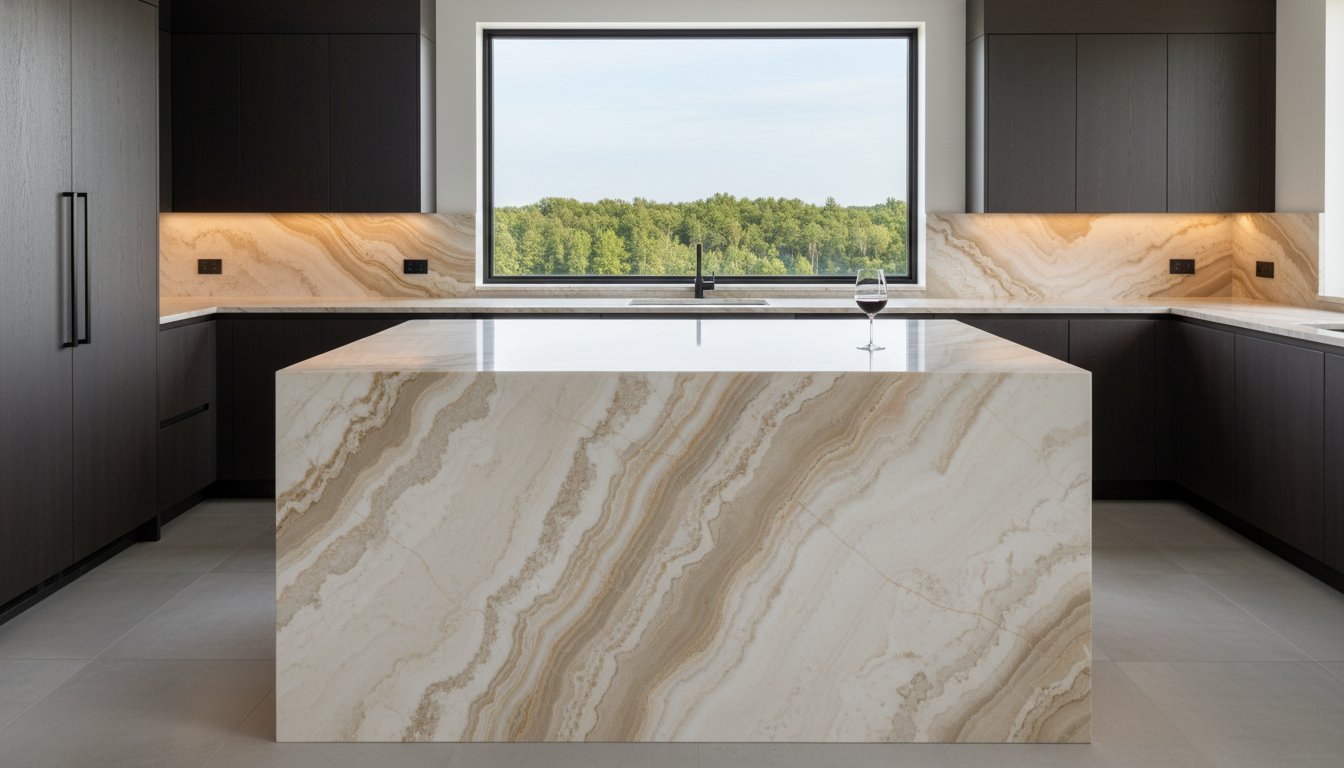
What if you could secure the ethereal, soft veining of a high-end marble without the constant anxiety of a spilled glass of wine or a stray lemon wedge? Many Ontario homeowners find themselves caught between the aesthetic allure of natural quartzite and the practical demands of a busy kitchen. You likely want a striking focal point for your residence, yet the fear of permanent etching on a delicate surface often leads to compromised design choices. It's a common dilemma in the luxury market where daily performance must match architectural prestige.
This guide demonstrates why this resilient stone is the definitive solution for the discerning eye. You'll discover how this natural metamorphic rock offers the soul of marble with the legendary durability of granite. We will clarify the frequent confusion between natural slabs and engineered products, explore the 2026 design shift toward warm earthy tones and bold organic veining, and identify where to find the most exclusive inventory in Mississauga. By the end, you'll have the confidence to select a material that remains as pristine as the day it was quarried, ensuring your investment stands the test of time.
Key Takeaways
- Geological transformation and hardness profiles that distinguish quartzite from softer natural stones and engineered materials.
- Performance benchmarks for heat, scratch, and acid resistance to eliminate the common maintenance concerns associated with luxury surfaces.
- Technical considerations for slab selection, including the structural benefits of 3cm thickness for expansive residential designs.
- Professional inspection techniques for identifying high-quality slabs and verifying material purity within a professional showroom environment.
- The strategic advantage of sourcing handpicked inventory from a specialized Mississauga stone gallery to ensure aesthetic consistency.
Understanding Quartzite: The Pinnacle of Natural Stone Surfaces
True luxury is rarely synthesized; it is forged over millennia. For the Ontario homeowner, quartzite represents the ultimate intersection of geological rarity and functional excellence. This 100% natural metamorphic stone has emerged as the premier choice for high-end residential projects in the Greater Toronto Area, offering a sophisticated alternative to traditional surfaces. Its prestigious positioning in modern Canadian architecture stems from a unique ability to mimic the ethereal, fluid veining of marble while possessing a structural density that rivals or exceeds granite. It is a material that does not force a choice between aesthetic grace and long-term resilience.
Architects and interior designers increasingly specify these slabs for gourmet kitchens and primary ensuites where visual impact is paramount. The stone's inherent hardness makes it nearly impervious to the scratches and abrasions that often diminish the beauty of softer materials. By choosing this natural masterpiece, you are investing in a foundation for high-end living that maintains its lustre under the rigours of daily use. It is a statement of taste that values authentic origin over mass-produced uniformity.
The Natural Origin of Quartzite Slabs
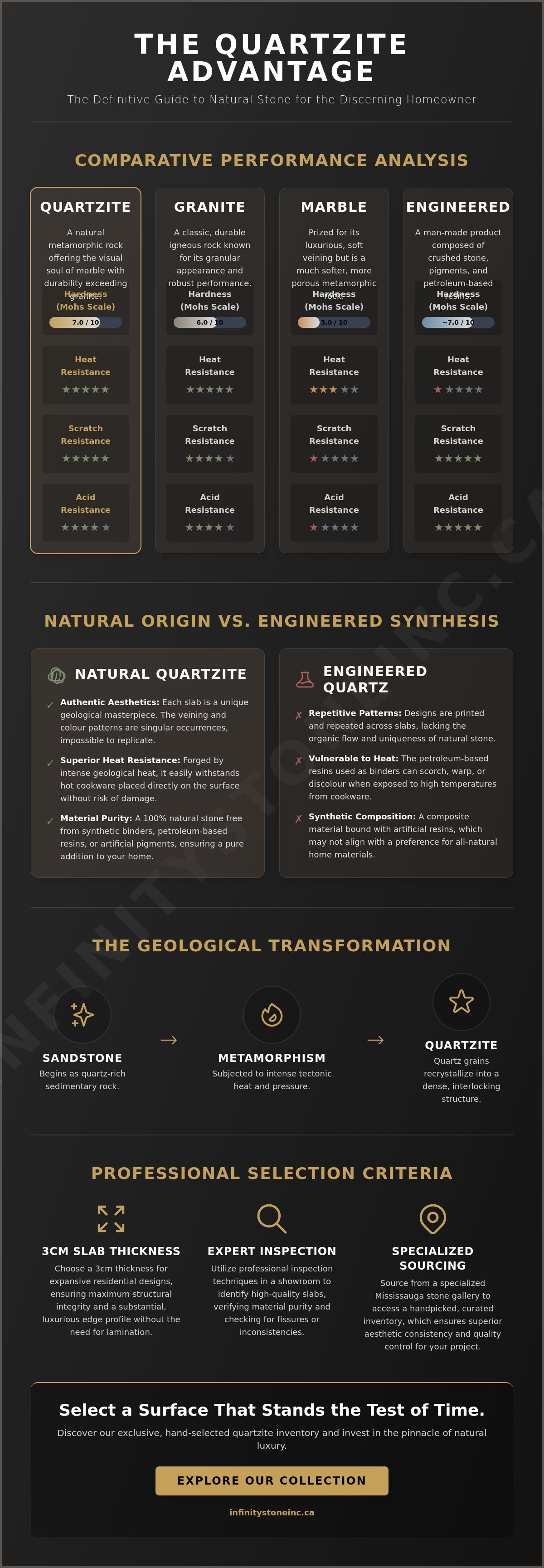
The journey of a luxury slab begins as quartz-rich sandstone. Through tectonic activity, this sandstone is subjected to intense heat and pressure deep within the Earth's crust. This process, known as recrystallization, fuses the individual grains into a solid, interlocking crystalline structure. Quartzite owes its signature sparkling patterns and translucent depth to this metamorphic transition. We curate these slabs from elite quarries globally, bringing the finest specimens to the Mississauga market to ensure our clients have access to the world's most evocative geological art.
Quartzite vs. Engineered Quartz: Clearing the Confusion
A frequent point of confusion for consumers involves the distinction between natural stone and engineered products. While the names are similar, the materials are fundamentally different. Engineered quartz is a man-made product composed of crushed stone bound together by petroleum-based resins and pigments. In contrast, natural slabs are harvested directly from the earth and sliced into solid blocks. This distinction is critical for performance and longevity.
- Heat Resistance: Natural stone easily withstands hot cookware, whereas the resins in engineered quartz can scorch or discolour at high temperatures.
- Aesthetic Authenticity: Every natural slab is a singular occurrence. Engineered products rely on printed patterns that repeat across multiple slabs, lacking the organic movement found in nature.
- Material Purity: Choosing a natural surface ensures your home is free from synthetic binders, opting instead for the raw, enduring power of mineral crystal.
Designers prefer the non-repeating patterns of natural stone because they provide a sense of movement that cannot be replicated in a factory. This authenticity is the hallmark of a truly custom residence.
The Geological Transformation: From Sandstone to Metamorphic Masterpiece
The genesis of quartzite is a testament to the Earth's transformative power. It begins as sandstone, a sedimentary rock composed primarily of quartz grains. Through tectonic subduction, this material is subjected to temperatures and pressures so extreme that the individual grains lose their boundaries. They fuse into a singular, dense crystalline structure. This metamorphosis creates a material that is significantly harder than granite, providing a structural integrity that is unmatched in the world of natural architectural surfaces. It is this intense pressure that creates the stone's characteristic density, making it a preferred choice for the foundational elements of a high-end home.
Hardness and the Mohs Scale
On the Mohs scale of mineral hardness, quartzite typically ranks at a 7. This rating is pivotal for high-traffic residential applications. For context, marble usually sits at a 3, while granite typically reaches a 6. This superior rating ensures that these slabs are exceptionally resistant to mechanical damage. Common kitchen knives, which are often made of steel with a hardness of about 5.5, cannot easily scratch the surface. This inherent physical durability and chemical resistant rocks profile makes the stone an ideal candidate for those who refuse to sacrifice utility for elegance. Builders and architects often specify this material specifically for its ability to withstand the rigours of a professional-grade kitchen environment without losing its polished or leathered finish.
The Palette of Nature: Colour and Veining
While pure quartz is white or grey, the introduction of secondary minerals during formation creates a breathtaking spectrum of hues. Iron oxides can infuse the stone with warm pinks, reds, or creams, while other mineral inclusions produce exotic greens or deep blues. The rarity of these patterns is what defines a luxury interior. For instance, the subtle, parchment-like tones of Taj Mahal quartzite have become a hallmark of sophisticated Mississauga design, aligning perfectly with the 2026 trend toward warm, earthy palettes. These natural variations ensure that no two kitchen islands or feature walls are ever identical. This provides a truly bespoke aesthetic that manufactured products simply cannot replicate. If you are looking to elevate your next project, you can view our curated collection of exotic slabs at our Mississauga gallery.
Quartzite vs. Marble and Granite: A Comparative Performance Analysis
Selecting a surface for a high-value residence requires a balance between geological beauty and chemical stability. While marble remains an iconic choice for its classic white background and grey veining, its performance in a functional kitchen often falls short of expectations. Granite offers a rugged alternative. However, it frequently lacks the sophisticated visual movement sought by modern designers. Quartzite occupies the superior middle ground, providing a surface that is both chemically inert and physically formidable. It is exceptionally tough.
For property owners in the Greater Toronto Area, understanding these distinctions is the difference between a kitchen that ages gracefully and one that requires constant professional intervention. We evaluate these materials based on their mineral composition and how they interact with the realities of a modern home. This analysis focuses on the long-term integrity of your investment.
The Etch-Resistance Advantage
Etching is a chemical reaction that occurs when acidic substances like lemon juice, vinegar, or wine come into contact with calcium carbonate. Because marble is primarily composed of this mineral, it reacts instantly, leaving dull, permanent marks on the polished surface. This isn't a stain that can be wiped away; it's a physical change to the stone's structure. Quartzite is composed of silica, which doesn't react to kitchen acids. This chemical immunity allows homeowners to enjoy the appearance of a light-coloured stone without the constant vigilance required by marble. You don't have to panic when a glass of wine spills during a social gathering.
Durability in High-Traffic Mississauga Kitchens
The physical density of these stones provides exceptional impact resistance, which is vital for large-format architectural features. In many Mississauga homes, the kitchen island serves as a multi-functional hub for food preparation, dining, and social interaction. Premium quartzite slabs are the preferred choice for these expansive surfaces because they offer greater structural strength than granite. This density also contributes to superior heat resistance. Unlike engineered materials that contain synthetic resins, natural stone can withstand direct contact with hot cookware without the risk of thermal shock or surface scorching.
Porosity levels are another critical factor in long-term maintenance. While all natural stone requires periodic sealing to maintain its protective barrier, the tight crystalline structure of this metamorphic rock naturally resists deep staining. This translates to a higher return on investment. A surface that maintains its integrity and visual appeal for decades adds tangible value to a luxury residence, reducing the need for costly restoration or premature replacement. It's a strategic selection for those who view their home as both a sanctuary and a significant asset.
Discerning Quality: How to Evaluate Quartzite Slabs for Your Project
Selecting the perfect quartzite slab requires more than just an appreciation for its aesthetic. It demands a technical eye to ensure the material meets the structural requirements of your architectural vision. When visiting a Mississauga showroom, your evaluation should begin with the slab's profile. While 2cm slabs are available, 3cm thickness is the preferred standard for premium residential applications. The additional mass provides superior structural integrity for expansive, unsupported spans like breakfast bars and kitchen islands. It also offers a more substantial, luxurious visual edge that complements high-end cabinetry.
If your project involves a feature wall or a seamless backsplash, consider the potential for book-matching. This technique involves using two consecutive slabs from the same block, polished on opposite sides to create a mirrored effect. The result is a symmetrical, high-impact visual that showcases the stone's organic movement as a singular work of art. It is a hallmark of custom design that elevates a space from standard to extraordinary.
Inspecting for Structural Soundness
Professional curators distinguish between natural fissures and problematic cracks. Fissures are inherent geological features that don't compromise the stone's stability. In contrast, cracks often result from improper handling and can lead to failure during the fabrication process. Many exotic varieties utilize a high-grade resin to fill natural voids. This is a standard industry practice that enhances the stone's durability without detracting from its beauty. Always view your selected slab in natural light or high-CRI showroom lighting to realize its true colour and depth. This ensures the stone's appearance in your home matches your expectations.
Choosing the Right Finish for Your Aesthetic
The finish you choose determines how light interacts with the surface and how the stone feels to the touch. Each option serves a specific design purpose:
- Polished: This classic high-gloss finish provides maximum clarity. It enhances the depth of the stone's colours and its intricate crystalline structure.
- Honed: A smooth, matte finish that offers a contemporary, understated elegance. It is particularly effective at hiding fingerprints and reducing glare in bright, sunlit spaces.
- Leathered: This textured finish follows the natural contours of the stone's minerals. It adds a tactile dimension that is increasingly popular in modern design, providing a sophisticated, organic feel.
Our Mississauga gallery houses a diverse range of these finishes to suit any specific design requirement. You can browse our current inventory of premium slabs to find the ideal match for your next residential project.
Sourcing Premium Quartzite in Mississauga: The Infinity Stone Experience
Infinity Stone Inc. stands as a specialized destination for those seeking the world's most evocative natural surfaces. We maintain a curated inventory of quartzite, imported directly from premier global quarries to ensure our collection reflects the highest standards of geological excellence. This discerning approach allows us to serve as a steady partner for Ontario's most prestigious residential projects. We don't aim for mass-market volume. Instead, we prioritize the unique mineral characteristics and structural integrity that make each block a singular masterpiece for the high-end home.
Our role within the local design ecosystem is one of a professional supplier to the Greater Toronto Area's most elite fabricators. By providing these artisans with exceptional raw materials, we facilitate the creation of bespoke interior features that define luxury living. Visiting our Mississauga showroom is a critical step in the selection process. It allows you to experience the full scale and translucent depth of these slabs, which is essential for visualizing how the organic movement will translate to your specific architectural application. Seeing a small sample cannot replicate the impact of a full-format slab.
Our Curated Global Selection
Our commitment to quality over quantity defines our inventory management. We focus on sourcing unique quartzite countertops that offer rare colour profiles and sophisticated veining patterns. This personalized service extends to designers and architects who require specific aesthetic markers for their custom builds. We understand that every project has a distinct identity, and our knowledgeable curators are available to help you identify the specific slab that aligns with your vision. Our inventory also includes premium Marble Slabs, Granite Slabs, and Porcelain Slabs, ensuring a comprehensive range of high-tier options for every functional space.
Planning Your Visit to Our Mississauga Centre
To ensure a productive selection experience, we encourage you to bring cabinet door samples, floor tiles, and paint swatches to our Mississauga gallery. This allows you to realize how the stone's natural hues interact with your chosen palette under professional lighting. Once you identify the ideal material, we offer a slab hold policy for active projects. This secures your specific blocks while you finalize details with your chosen fabricator. For those beginning their material research, our stone slabs pillar guide provides additional technical insights into our full range of offerings.
Securing a world-class surface is a definitive investment in your property's long-term value. We invite you to explore our Mississauga collection and discover why this resilient stone remains the premier choice for the sophisticated Ontario residence. Your journey from inspiration to application begins with a singular, handpicked slab.
Elevate Your Architectural Vision with Timeless Resilience
The transition from a conceptual design to a completed residence requires materials that don't compromise your vision. You now understand how quartzite serves as the ultimate architectural foundation; it merges the fluid beauty of marble with a physical hardness that surpasses granite. By prioritizing a stone that resists etching and mechanical damage, you ensure your kitchen island or primary ensuite remains a pristine focal point for decades. It's a strategic investment in both the aesthetic and functional value of your property.
Choosing the right slab involves more than a visual scan. It requires an appreciation for structural thickness and a curated selection of finishes that match your lifestyle. Our specialized Mississauga showroom houses a handpicked global inventory of premium 2cm and 3cm slabs. These materials provide the technical reliability and aesthetic exclusivity your project demands. We invite you to view these geological masterpieces in person to realize their full potential and depth.
Explore Our Curated Quartzite Collection in Mississauga
Your next project deserves a surface that reflects your high standards and sophisticated taste. We look forward to helping you secure a material that is as enduring as it is beautiful.
Frequently Asked Questions
Does quartzite stain as easily as marble?
No, this stone is significantly less porous and does not contain the calcium carbonate that makes marble susceptible to acid etching. While it resists staining from common household liquids like lemon juice or wine, it's still a natural material that requires a professional sealant. This protective layer prevents oils and pigments from penetrating the crystalline structure and ensures the surface remains pristine.
Do I need to seal my quartzite slabs regularly?
Regular sealing is necessary to maintain the stone's integrity and protect against moisture absorption. Most industry experts recommend applying a high-quality impregnating sealer once a year, though high-traffic areas might require more frequent attention. You can easily test the seal by placing a few drops of water on the surface; if the water fails to bead and begins to soak in, it's time for a fresh application.
Why is quartzite more expensive than granite?
The premium price reflects the extreme hardness of the material and the difficulty of its extraction. Because quartzite ranks a 7 on the Mohs scale, it requires specialized diamond-tipped equipment and significantly more time to cut and shape than granite. Its rarity and the high demand for its marble-like aesthetic in the Mississauga luxury market also contribute to its prestigious market positioning.
Can I cut directly on my quartzite countertops?
You shouldn't cut directly on the surface despite its incredible density. While the stone is harder than a steel knife blade and won't easily scratch, the contact will quickly dull your professional cutlery. Furthermore, repeated cutting in the same area can eventually compromise the surface sealant, leaving the stone vulnerable to organic stains and moisture over time. Always use a dedicated cutting board.
Is quartzite heat resistant for kitchen use?
Natural stone slabs offer exceptional heat resistance due to their metamorphic formation under intense pressure and temperature. Unlike engineered quartz, which contains synthetic resins that can melt or discolour at approximately 150 degrees Celsius, quartzite can withstand hot cookware without scorching. It's a reliable partner for active kitchens where thermal shock resistance is a primary requirement for a functional workspace.
How do I distinguish between real quartzite and "soft" quartzite?
Real metamorphic stone will easily scratch a glass tile, whereas "soft" varieties, which are often actually dolomitic marbles, will not. You can verify the material's authenticity by performing a scratch test on a sample or an inconspicuous edge of the slab. If the stone is easily marked by a metal file or reacts to a mild acid, it lacks the mineral purity of a true metamorphic masterpiece.
What is the best way to clean quartzite to maintain its lustre?
Use a pH-neutral stone cleaner or a simple solution of warm water and mild dish soap for daily maintenance. Avoid abrasive cleaners, vinegar, or bleach, as these harsh chemicals can strip away the protective sealant and dull the stone's natural finish. A soft microfibre cloth is the best tool for wiping down the surface and preserving the sophisticated glow of the crystalline structure.


