
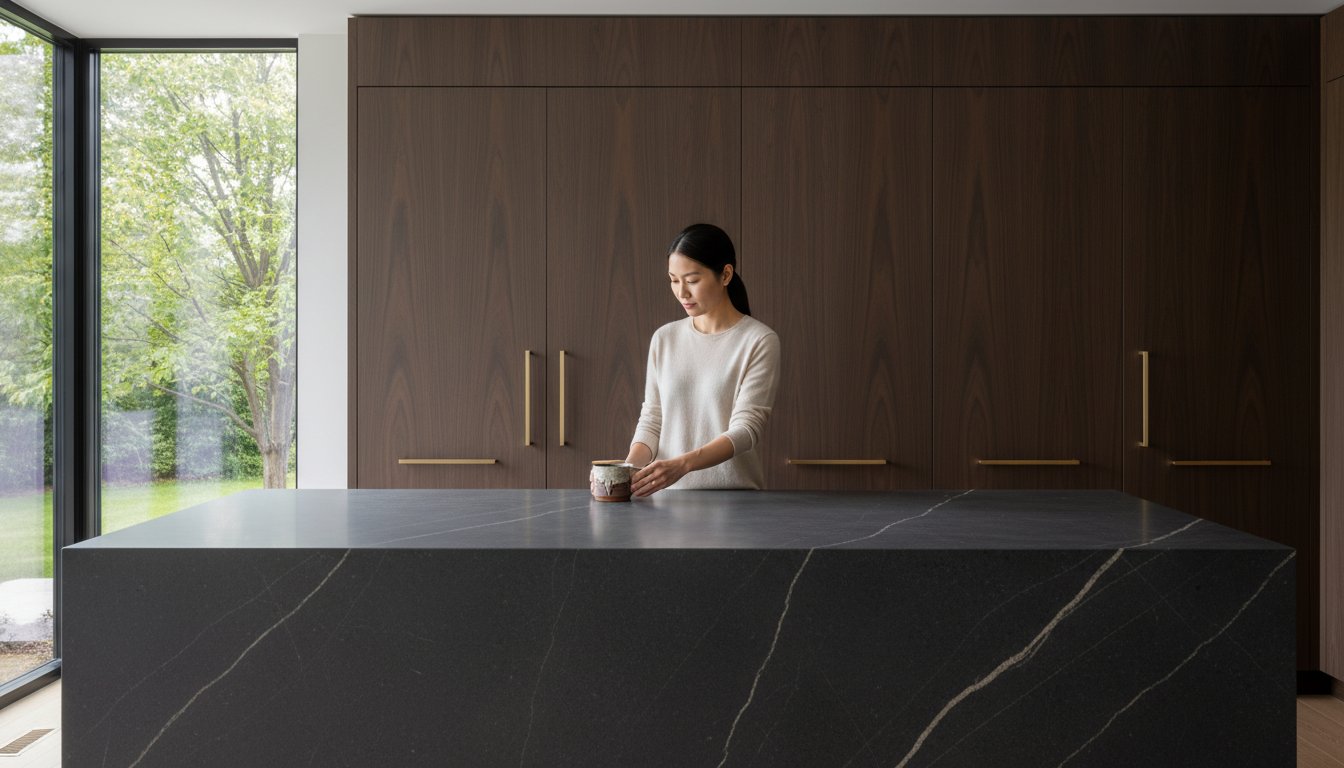
The most sophisticated surface for your Ontario home might be the one you've been told is too "soft" to handle a high-traffic kitchen. While many homeowners prioritize the sheer hardness of quartzite, true connoisseurs realize that the tactile warmth and chemically inert nature of soapstone offer a level of functional luxury that harder materials cannot replicate. You likely admire the deep, moody tones of charcoal surfaces but hesitate due to concerns about scratching or the difficulty of sourcing premium architectural grade slabs within the Greater Toronto Area.
It's a reasonable concern when you're investing in a "living finish" that evolves alongside your home. This guide will demonstrate why this stone is a practical, heat-resistant alternative to granite, even as the Canadian natural stone market grows toward a projected $156.2 million by 2030. You'll gain clarity on the maintenance of architectural grade slabs, compare current project costs ranging from $70 to $120 per square foot, and determine if this storied material aligns with your design vision.
Key Takeaways
- Distinguish between artistic and architectural grade materials to ensure your surface meets the durability standards required for high-traffic Ontario kitchens.
- Compare the non-porous density of soapstone against premium granite and quartzite to select the most resilient material for your specific lifestyle.
- Discover why this heat-resistant stone is an ideal candidate for master ensuites and luxury backsplashes due to its naturally impervious composition.
- Master the concept of the "living finish" and learn how to maintain a flawless patina through simple oiling or light sanding techniques.
- Identify the benefits of handpicking slabs at a local showroom to secure superior veining and colour consistency for large-scale interior projects.
What is Soapstone? Defining the Aesthetic for Ontario Homes
Soapstone is a talc-rich metamorphic rock, prized for a texture so silky it feels nearly soft to the touch. This stone isn't just a surface; it's a sensory experience. While high-gloss granite dominated the market for decades, modern Ontario designers now gravitate toward the understated elegance of this material. For those asking What is Soapstone?, it's essential to recognize it as a material that balances sensory appeal with industrial-strength durability. The stone’s natural palette typically moves from light grey to deep charcoal, often featuring subtle green undertones and dramatic white veining. Beyond its beauty, soapstone offers a unique functional advantage known as thermal mass. This allows it to absorb, store, and slowly radiate heat, making it an exceptional choice for the fluctuating Ontario climate.
The Petrology of Architectural Steatite
Understanding the mineralogy is key to appreciating its performance. The presence of talc creates the famous "soapy" feel, but the specific grade matters immensely. For interior applications, we specify architectural grade steatite, which contains approximately 30% talc. This lower concentration ensures the slab remains hard enough for kitchen environments while retaining its heat-resistant properties. Unlike marble or granite, this stone is entirely non-porous and chemically inert. It doesn't react to acids, meaning lemon juice or red wine won't cause the etching typically seen on other natural stones. Architectural soapstone is significantly denser and more impervious than most marbles, providing a reliable foundation for high-use areas.
Why Soapstone is Trending in the GTA
In luxury Mississauga and Toronto interiors, there's a distinct shift toward matte, "honed" finishes. Homeowners are moving away from the artificial shine of polished quartz in favour of materials that feel grounded and authentic. This aligns with the biophilic design trend, where natural elements are used to create a calming, organic atmosphere. Designers across Canada value the stone's ability to tell a story through its "living finish." As it ages, it develops a rich patina that reflects the home’s history. This desire for longevity and sustainability has made it a preferred material for those who view their home as a curated collection rather than a temporary space. With the Canadian natural stone market projected to reach $156.2 million by 2030, the demand for these authentic, long-lasting materials continues to outpace mass-market alternatives.
Soapstone vs. Granite and Quartzite: A Technical Comparison
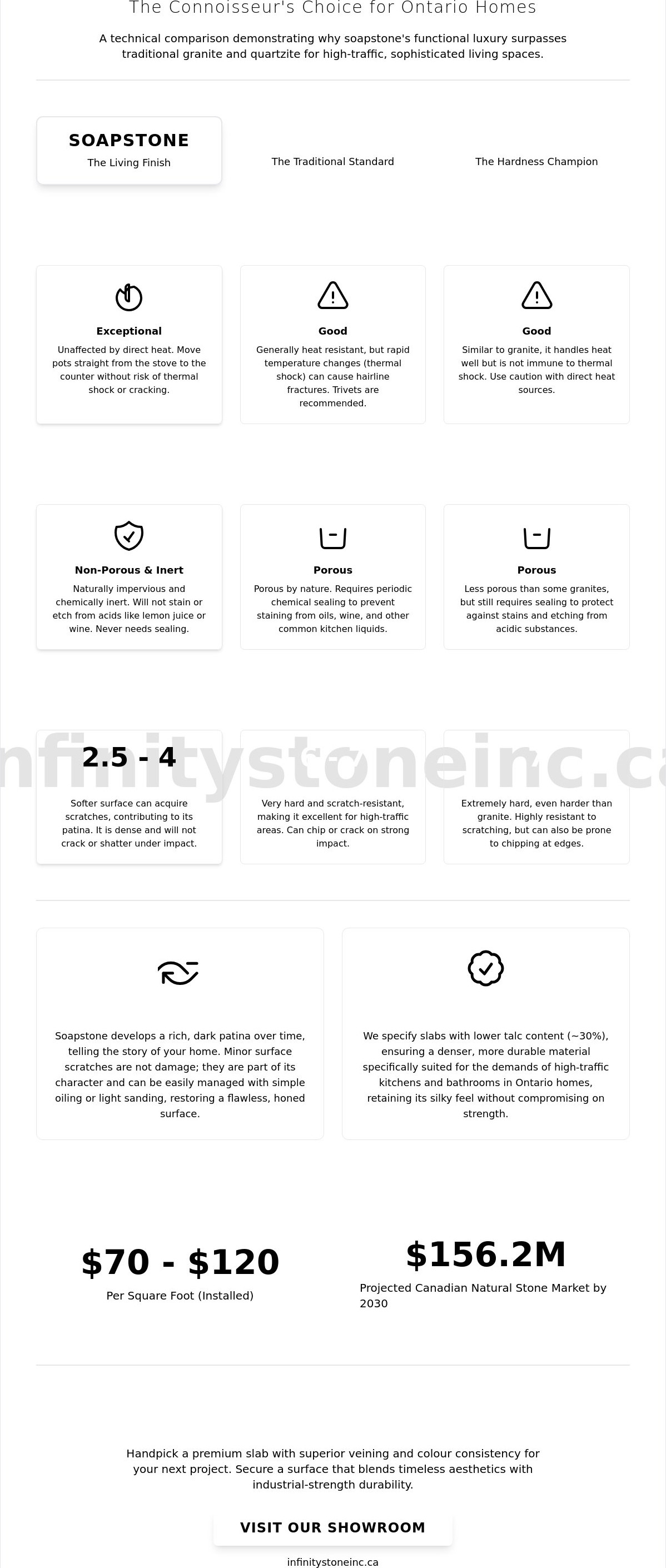
Choosing the right surface for a high-end Ontario renovation requires a deep understanding of material performance. While homeowners often group luxury stones together, the technical differences between granite, quartzite, and soapstone are significant. Granite and quartzite are prized for their extreme hardness on the Mohs scale, yet they remain porous materials that require periodic chemical sealing to prevent staining. In contrast, soapstone is naturally impervious. According to ASTM C97 testing, architectural soapstone maintains a water absorption rate as low as 0.11%. This makes it technically superior in moisture-heavy environments compared to even the most compact stones. While it's true that soapstone is "softer" and more prone to surface scratches, this doesn't equate to a lack of durability. It won't shatter or crack under stress, and its density provides a structural reliability that lasts for generations.
Thermal Conductivity and Heat Resistance
Soapstone stands alone as the only natural stone capable of withstanding direct, intense heat without the risk of thermal shock. In a professional kitchen setting, you can move a cast-iron skillet directly from the range to the counter. This is a feat that would likely cause a hairline fracture in stone granite. The stone's high thermal mass allows it to store heat and radiate it slowly, which is why it's been the standard for wood-burning stoves and scientific laboratories for over a century. This extreme temperature tolerance ensures that your investment remains intact regardless of culinary rigour.
Porosity and Chemical Sensitivity
The geological properties of soapstone render it completely chemically inert. Unlike marble or certain quartzite slabs, soapstone doesn't react to acidic substances. Lemon juice, vinegar, and red wine won't etch the surface or leave permanent marks. While granite requires a chemical barrier to stay pristine, soapstone only needs an occasional application of mineral oil to deepen its natural colour. This maintenance is purely aesthetic rather than structural. For those seeking a long-term property investment, the cost-to-value ratio is compelling. With average installation costs ranging from $70 to $120 per square foot, you're investing in a surface that never requires professional resealing or expensive chemical treatments. If you're ready to see these textures in person, we invite you to explore our premium inventory and experience the tactile difference of architectural steatite.
- Soapstone: Non-porous, heat-proof, requires oiling for colour.
- Granite: Porous, heat-resistant, requires annual sealing.
- Quartzite: Porous, very hard, requires specialized sealing.
Architectural Applications for the Canadian Climate
The versatility of soapstone extends far beyond the traditional kitchen counter. In the Ontario design landscape, where homeowners increasingly demand materials that perform through extreme seasonal shifts, this stone has emerged as a premier architectural solution. Whether utilized in a sprawling Mississauga estate or a contemporary Toronto penthouse, its ability to anchor a room’s aesthetic while providing unmatched durability is unparalleled. Current 2026 design trends favour the deep, moody charcoal tones that architectural steatite naturally provides, allowing it to transition seamlessly between rustic farmhouse charm and ultra-modern minimalism. Because it's unaffected by the freeze-thaw cycles of our local climate, it's also a leading choice for high-end outdoor kitchens that must withstand harsh winters and humid summers alike.
The Ultimate Kitchen Worktop
For a high-traffic kitchen island, few materials rival the hygienic profile of this stone. Since it's naturally non-porous, bacteria and food particles can't penetrate the surface, making it one of the cleanest worktops available for culinary enthusiasts. Beyond hygiene, the tactile experience of a honed edge profile offers a silky, matte feel that is far more inviting than the cold, glassy surface of polished quartz. For those seeking a substantial, luxury look, we recommend selecting 3cm slab thicknesses. This provides the visual weight necessary for large-scale islands while allowing for intricate edge detailing that showcases the stone's unique veining. If you're researching the technical background behind these features, understanding What is Soapstone? from a mineralogical perspective helps clarify why it remains so resilient under daily use.
Fireplace Surrounds and the Ontario Winter
In the Greater Toronto Area, the fireplace is often the focal point of the great room. Utilizing soapstone for a floor-to-ceiling hearth or fireplace surround isn't just an aesthetic choice; it's a functional upgrade for the Canadian winter. The stone's high thermal mass allows it to absorb heat from the flames and radiate that warmth back into the living space long after the fire has been extinguished. Unlike granite or marble, which can crack when exposed to rapid temperature changes, this material is immune to thermal shock. This safety benefit ensures your fireplace remains a durable, beautiful centrepiece for decades. The visual impact of a dark, matte hearth against a lighter room palette creates a sophisticated contrast that aligns perfectly with the current shift toward warmer neutrals and high-contrast statement pieces in luxury home design.
Beyond the living room, these same moisture-resistant properties make the stone an exceptional candidate for master ensuites. It provides a spa-like atmosphere that is both slip-resistant and impervious to the steam and standing water common in luxury wet rooms. By choosing a material that excels in every room of the home, Ontario property owners ensure a cohesive, high-value interior that stands the test of time.
The Living Finish: Managing Softness and Patina
The concept of a "living finish" is central to the appeal of architectural steatite. While a premium quartzite measures a 7 on the Mohs hardness scale, soapstone typically registers between 2.5 and 3.5. This difference in mineral density is exactly what grants the stone its signature velvet texture. In a busy Ontario household, this means the surface will inevitably encounter minor scratches and "character marks" over time. Rather than viewing these as defects, connoisseurs appreciate how the stone evolves alongside the family. It's a narrative material. Unlike synthetic surfaces that look increasingly worn as they age, this natural stone gains depth and sophistication. It's a practical choice for those who value authenticity over the static, sterile look of engineered quartz.
Oiling vs. Waxing vs. Natural Aging
Homeowners have three distinct paths for managing the stone's aesthetic progression. Applying food-grade mineral oil is the most traditional method; it immediately darkens the stone to a deep charcoal or forest green while highlighting the white veining. For a more durable, matte finish, many Mississauga designers recommend a specialized soapstone wax composed of beeswax and carnauba. This requires less frequent application than oil, typically only once every four to six months. Alternatively, you can leave the stone entirely natural. In its untreated state, it maintains a soft grey hue, slowly darkening only in the areas where it's frequently touched, creating a truly bespoke patina.
Repairing Minor Imperfections
One of the most empowering aspects of this material is the ability for homeowners to perform their own maintenance. Because the stone is consistent in colour and composition throughout the entire slab, surface scratches aren't permanent. You can easily remove minor imperfections using a small piece of 80-grit to 220-grit sandpaper. By lightly sanding the affected area in a circular motion and reapplying a touch of oil or wax, the scratch disappears entirely. This DIY capability is rare in the world of luxury surfaces. It ensures that a "character mark" from a dropped utensil never becomes a source of stress. You remain the curator of the stone's beauty, maintaining its lustre without the need for professional intervention. If you're ready to select a slab that will grow with your home, browse our curated slab gallery to find your perfect match.
- Daily Cleaning: Use simple soap and water; the stone is impervious to bacteria.
- Scratch Removal: Lightly sand with 220-grit paper for a seamless repair.
- Colour Enhancement: Apply mineral oil to achieve a permanent dark aesthetic.
Sourcing and Selecting Premium Slabs in Ontario
Selecting the perfect slab requires more than a digital preview; it demands a physical engagement with the material's texture and tonal depth. In the current 2026 Ontario design market, where natural stone revenue has surpassed $129 million, the competition for high-character architectural steatite is significant. Visiting a local showroom allows you to witness how light interacts with the stone's matte surface, a detail that photography often fails to capture. While many retailers offer generic inventory, a premium distributor provides access to handpicked blocks that ensure consistency across large-scale installations. This curated approach is essential when coordinating soapstone with other high-end stone slabs like marble backsplashes or quartzite perimeter counters. By viewing the full slab, you can plan vein transitions that flow logically across seams, elevating the final installation from a mere renovation to a bespoke architectural statement.
What to Look for in a Soapstone Slab
During a warehouse inspection, it's vital to distinguish between aesthetic veining and structural fissures. While white quartz veins add dramatic flair, a fissure is a separation in the stone's mineral structure that could compromise the slab during fabrication. Professionals often use a simple water test to preview the stone's appearance; wetting a small section reveals the deep charcoal or green hues that will emerge once the stone is oiled or waxed. Slab size is another critical factor. Because soapstone slabs are typically smaller than massive granite blocks, often averaging 60 by 90 inches, identifying larger "jumbo" slabs is a priority for homeowners seeking a seamless 10-foot kitchen island. Minimizing seams in high-visibility areas preserves the stone's organic visual rhythm.
Collaborating with Design Professionals
Infinity Stone Inc. functions as a professional ally for the Ontario design community, providing the technical data and logistical support necessary for complex residential projects. We understand that architects and decorators require more than just a material supplier; they need a partner who can guarantee block consistency for multi-room applications. Sourcing from a specialized distributor in the Greater Toronto Area ensures that the material has been vetted for architectural grade quality before it reaches the fabricator's shop. Before final approval, always verify the slab's thickness and surface finish. A final checklist should include a review of the slab's origin, a thorough inspection under high-intensity lighting, and a confirmation of the fabricator’s experience with the unique cutting requirements of steatite. This structured selection process ensures your investment meets the prestigious standards of luxury Ontario interiors.
- Slab Inspection: Check for structural integrity and vein consistency under warehouse lighting.
- Size Verification: Ensure slab dimensions accommodate your island layout with minimal seams.
- Finish Preview: Use water or mineral oil to realize the stone's final darkened state.
- Professional Validation: Source through distributors trusted by interior designers across Canada.
Elevating Your Ontario Interior with Architectural Steatite
Choosing a surface that balances sensory appeal with industrial durability is a hallmark of discerning design. Architectural soapstone offers a unique combination of thermal mass and chemical resistance that standard granite simply cannot match. By embracing the "living finish," you ensure your kitchen or fireplace surround evolves with a rich patina that synthetic materials cannot replicate. Since 2017, Infinity Stone Inc. has been trusted by top GTA interior designers to provide specialized, handpicked architectural surfaces that meet the rigorous demands of the Canadian home.
Our role as a professional ally is to offer expert guidance on material performance, ensuring your selection aligns with both your aesthetic vision and your lifestyle requirements. We prioritize quality over quantity, curating our inventory to satisfy the technical needs of builders and the aesthetic sensibilities of decorators. Whether you are seeking a deep charcoal island or a heat-radiating hearth, our collection provides the foundational elements for luxury living.
Explore our curated collection of premium natural stone slabs in Ontario and realize the potential of a truly timeless surface. We look forward to helping you curate a space that stands as a testament to quality craftsmanship and enduring elegance.
Frequently Asked Questions
Does soapstone scratch easily compared to granite?
Soapstone is significantly softer than granite, registering between 2.5 and 3.5 on the Mohs hardness scale compared to granite's 6 or 7. While this makes it more susceptible to surface marks, it also prevents the stone from being brittle. Unlike granite, which can chip or crack under impact, soapstone remains structurally resilient. Any surface scratches are easily removed by the homeowner using a small piece of 220-grit sandpaper; a process that takes less than five minutes and requires no professional assistance.
Do I need to seal my soapstone countertops?
You don't need to apply chemical sealers to soapstone because the material is naturally non-porous. Unlike marble or granite which require annual sealing to prevent deep-set stains, this stone's density ensures that liquids like red wine or oils stay on the surface. While many homeowners choose to apply mineral oil or specialized wax to darken the stone's colour, this is a purely aesthetic choice rather than a protective requirement.
Why does soapstone turn darker over time?
The stone darkens through a natural process of oxidation and the absorption of ambient oils from daily use. This transition from a light, chalky grey to a deep, moody charcoal is a defining characteristic of the "living finish." You can realize a uniform dark aesthetic immediately by applying food-grade mineral oil, or you can allow the patina to develop organically over several years to reflect the unique history of your home.
Can I put hot pans directly on soapstone?
You can safely place hot pans directly on the surface without the risk of cracking or thermal shock. Soapstone is the only natural stone capable of withstanding extreme heat, which is why it has been the primary material for wood-burning stoves and laboratory tables for over 100 years. Its high thermal mass allows it to absorb heat and radiate it slowly, providing a level of performance that exceeds even premium quartzite.
Is soapstone more expensive than quartzite in Ontario?
Current 2026 market data indicates that soapstone costs between $70 and $120 per square foot, placing it in a similar price bracket to mid-range quartzite. While some rare quartzite slabs can exceed $200 per square foot, soapstone pricing remains consistent due to its steady supply from specialized quarries. The long-term value is often higher because it eliminates the recurring costs of professional chemical sealing and specialized stone cleaners.
How do I clean soapstone surfaces daily?
Daily cleaning requires nothing more than a soft cloth and mild dish soap. Since the material is chemically inert, it won't react to acidic substances or common household cleaners. You don't need to purchase expensive, pH-neutral stone cleaners required for marble or granite. For those who maintain an oiled finish, a simple wipe with soap and water preserves the lustre without stripping the darkened patina.
Does soapstone harbour bacteria?
Soapstone does not harbour bacteria because its non-porous structure prevents organic matter from penetrating the surface. It is considered one of the most hygienic natural stones available for luxury kitchens and master ensuites. This impervious quality meets the strict requirements of scientific laboratories and professional culinary environments, ensuring a sanitary workspace without the need for harsh chemical disinfectants.
Can soapstone be used for outdoor BBQs in the GTA?
Soapstone is an exceptional choice for outdoor kitchens in the Greater Toronto Area due to its immunity to freeze-thaw cycles. It won't crack during -30°C Ontario winters or fade under intense UV exposure during the summer months. Its ability to handle rapid temperature changes makes it the most reliable surface for placement next to high-heat BBQ grills or outdoor pizza ovens.


