

What if the right time to seal a stone surface has less to do with the calendar than with the slab itself? A sealing schedule for different stone types can’t rely on one annual rule: granite, marble and quartzite vary in porosity, while engineered quartz and porcelain generally don’t need sealing. Even slabs in the same category can behave differently.
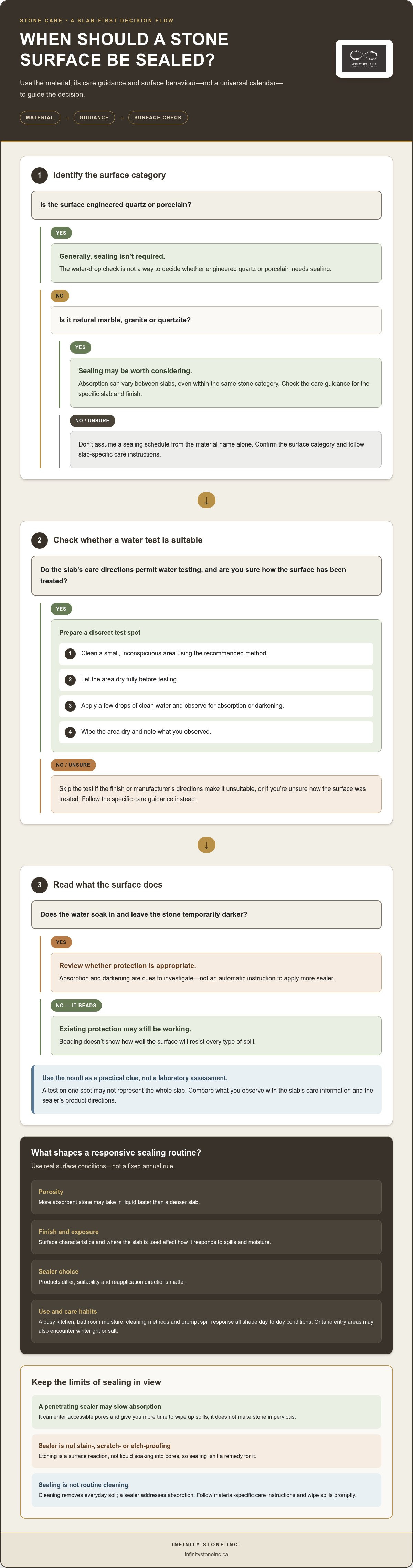
If you’re unsure whether to seal, it’s sensible to want protection without risking unnecessary treatment, residue or a change in appearance. A few drops of water can offer a practical clue: if they soak in and darken the stone, the surface may need attention; if they bead, existing protection may still be working. Always follow the slab and sealer manufacturer’s guidance.
This guide explains which materials may need sealing, how to test a surface and how to choose an appropriate sealer without treating a generic interval as a rule. Whether you’re comparing natural stone with engineered options or planning care for a kitchen or bathroom, the goal is a maintenance approach suited to the specific material and its use.
Key Takeaways
- Build a sealing schedule for different stone types around the slab’s absorption, finish, use and sealer guidance, not a universal calendar.
- Use a small, inconspicuous water test as a practical cue, while remembering it indicates surface behaviour rather than providing a laboratory assessment.
- Marble, granite and quartzite may need sealing consideration; engineered quartz and porcelain generally don’t require sealing.
- Set review reminders around real conditions, including kitchen spills, bathroom moisture and winter grit or salt near Ontario entryways.
- Weigh maintenance expectations alongside appearance and intended use when comparing surfaces for a project.
Sealing schedule for different stone types: why one calendar does not fit all
A sealing routine should begin with the surface, not a date on the calendar. Stone sealing can slow liquid absorption into porous material, giving you more time to wipe up spills. It doesn’t make a surface impervious. The porosity of natural stone and the function of sealers help explain why one natural slab may benefit from protection while another may not.
Start by distinguishing the material categories. Marble, granite and quartzite are natural stones, and absorption can vary between slabs. Engineered quartz and porcelain are different surface categories and generally don’t need sealing. The material name alone doesn’t determine the care routine: the specific slab, its finish and any treatments it has received matter.
This distinction is useful when choosing a surface for a kitchen, bathroom or other interior. Consider maintenance expectations alongside appearance and intended use. A sealing schedule for different stone types is best treated as a responsive care plan, not a promise that every slab needs treatment at the same interval.
What a stone sealer can and cannot do
An appropriate penetrating sealer enters accessible pores and may slow absorption. It doesn’t prevent every mark, and it won’t make stone stain-proof, scratch-proof or etch-proof. Etching, for example, is a surface reaction rather than liquid soaking into pores, so sealing isn’t a remedy for it.
Sealing also isn’t routine cleaning. Follow care instructions suited to the material and wipe spills promptly rather than relying on a sealer to contain them. Cleaning removes everyday soil; a sealer addresses absorption. Neither replaces the other.
Why a calendar-only schedule can mislead
Surfaces experience different conditions. A lightly used vanity may see fewer spills than a busy kitchen counter. Finish, exposed edges, installation details, cleaning products and the sealer itself can also influence performance. In an Ontario home, an entry-area surface may encounter winter grit or salt, while indoor counters face their own patterns of use.
- Porosity: More absorbent stone may take in liquid faster than a denser slab.
- Finish and exposure: Surface characteristics and where a slab is used affect how it responds to spills and moisture.
- Sealer choice: Products differ, so suitability and reapplication guidance matter.
- Care habits: Cleaning methods and prompt spill response shape day-to-day surface condition.
Even two slabs in the same category may behave differently. A fixed annual reminder can lead to unnecessary treatment on one surface and delayed attention on another. Follow the instructions for the specific slab and sealer, then use a cautious absorption test on an inconspicuous area as a practical check. The result is a guide, not a laboratory measurement or a substitute for product directions.
How porosity and surface testing shape a stone sealing schedule
A water-drop check can help you judge whether a suitable stone surface is absorbing moisture, but treat it as a practical indication, not a laboratory measurement. A drop that soaks in and leaves a temporary darkened area suggests the stone warrants closer review. Beading may indicate that protection is still present, but it doesn’t show how well the sealer will resist every type of spill. The guidelines from the Natural Stone Institute on stone care offer further context for maintaining natural stone.
Use the test only where water is suitable for the material and finish. It isn’t a way to decide whether engineered quartz or porcelain needs sealing. For a natural stone slab, pair your observation with the care guidance for that specific surface and the instructions for its sealer. This makes the sealing schedule for different stone types more responsive to actual surface behaviour.
A simple water-drop check for suitable surfaces
Choose a small, inconspicuous spot on a suitable surface. Clean it using the recommended method and let it dry fully first, since residue or existing moisture can affect the result. Apply a few drops of clean water, observe the area, then wipe it dry. If water absorbs and the stone darkens, review whether protection is appropriate; don’t treat the result as a diagnosis on its own.
- Confirm the material’s care guidance permits a water test.
- Clean and dry a discreet area before testing.
- Apply a few drops and watch for absorption or darkening.
- Wipe the area dry and record what you observed.
Skip the check if the finish or manufacturer’s care directions make water testing unsuitable, or if you’re unsure how the surface has been treated. A test on one spot may not represent the whole slab, particularly if conditions vary across the surface.
Read the result alongside the stone and sealer guidance
Absorption or darkening is a cue to investigate, not an automatic instruction to apply more sealer. Compare the result with the product label and any slab-specific care information. Sealer instructions govern suitable surfaces, preparation, application, curing time and reapplication. Don’t shorten the curing time or apply another coat simply because a calendar reminder says it’s due.
- Material and finish: Record the slab category and surface finish.
- Test details: Note the date, location and whether the water beaded, absorbed or darkened the stone.
- Product guidance: Keep the sealer name and label directions with your care notes.
These records make later checks easier to compare and help distinguish a change in surface response from a difference in test conditions. If you’re still choosing a surface, compare natural and engineered slab options alongside their care expectations before specifying one for your project.
Compare sealing needs by material: marble, granite, quartzite, quartz, and porcelain
Material category is a useful starting point, not a complete maintenance prescription. Marble, granite and quartzite are natural stones with individual absorption characteristics, while engineered quartz and porcelain generally don’t require the penetrating sealer used for porous stone. The sealing schedule for different stone types should reflect both the surface category and the specific slab’s care instructions.
Use the comparison below to see what deserves attention. A water response can help flag absorption on a suitable natural-stone surface, but it can’t establish a universal interval or replace manufacturer guidance.
| Material | Typical sealing consideration | Test cue | Schedule caveat |
|---|---|---|---|
| Marble | Assess whether the slab benefits from a suitable sealer; respond promptly to spills. | On a suitable finish, absorption or darkening during a water check warrants closer review. | Follow slab and sealer instructions; sealing won’t prevent etching. |
| Granite | Assess by slab, since some dense or factory-resined slabs may not need sealing. | Absorption or darkening suggests reviewing the existing protection. | Don’t assume every granite surface needs the same reapplication timing. |
| Quartzite | Consider protection based on the individual slab’s absorption and finish. | Use a cautious water check only where the care guidance permits. | Characteristics vary; no single interval suits every slab. |
| Engineered quartz | Generally doesn’t require natural-stone sealing. | A water-drop test isn’t a sealing test for this category. | Use the manufacturer’s cleaning and care instructions. |
| Porcelain | Generally doesn’t require penetrating stone sealer. | Don’t use a water test to decide whether it needs natural-stone sealer. | Follow product-specific surface-care guidance. |
Natural stone: marble, granite, and quartzite
Marble’s distinctive surface calls for careful spill response and slab-specific protection guidance. A sealer may slow absorption, but it doesn’t prevent etching from substances that react with the stone. Granite and quartzite should also be assessed by slab and finish rather than reputation alone. A water test that shows absorption can prompt a closer look, while beading is only an indication, not proof that protection will resist every spill.
Some dense granites or factory-resined slabs may not need sealing, and quartzite can vary. For all three natural stones, use the selected slab’s care information and sealer label to determine suitability and timing. Avoid fixed promises such as “every year” for an entire category.
Engineered quartz and porcelain surfaces
Engineered quartz is non-porous and generally doesn’t need natural-stone sealer. Porcelain slabs are also generally non-porous and don’t require penetrating stone sealer. Both still need routine cleaning: follow the product’s care instructions and wipe spills as appropriate. Before applying any treatment, consult the surface manufacturer’s guidance so cleaning, maintenance and sealing aren’t treated as interchangeable tasks.
Build a practical resealing routine for kitchens, bathrooms, and Ontario homes
A useful maintenance routine combines regular observation with occasional testing. It doesn’t mean applying sealer at every reminder. Review each suitable natural-stone surface according to its exposure, then use the test response and product instructions to decide whether further action is warranted. This makes a sealing schedule for different stone types practical without turning it into an automatic annual task.
Make the routine surface-specific. A kitchen counter used for meal preparation may see frequent spills and repeated cleaning, while a bathroom vanity may face moisture around the sink. An indoor entry surface can encounter tracked-in grit and seasonal de-icing residue during Ontario winters. These conditions call for attentive cleaning and observation, but they don’t establish a resealing interval on their own.
Adjust checks to the room and surface use
Give high-use counters and splash-prone areas closer visual attention than surfaces that see little activity. Wipe spills promptly and use gentle cleaning products compatible with the material, finish and any sealer already applied. Don’t assume a product suitable for one slab is appropriate for another.
At an entry, remove tracked-in grit regularly using a care method suited to the surface. Grit can be abrasive, and seasonal residue may need prompt, material-compatible cleaning. In bathrooms, watch areas repeatedly exposed to water, but distinguish surface moisture from evidence that a stone sealer needs renewal. For engineered quartz and porcelain, follow their product care guidance instead of creating a natural-stone sealing routine.
- Kitchen: Notice recurring spill areas and changes in how suitable natural stone responds to a permitted absorption check.
- Bathroom: Observe sink surrounds and other frequently damp areas, and keep routine cleaning separate from sealing decisions.
- Entry: Monitor tracked-in grit or de-icing residue, especially through the winter season, and clean in line with the surface instructions.
Apply and document resealing carefully
If testing and care guidance indicate that resealing is appropriate, follow the selected sealer’s label from preparation through curing. Check its instructions for surface suitability, ventilation, application conditions and how long the area must remain undisturbed. Product directions take precedence over a convenient household timetable. Don’t add coats or resume normal use before the stated requirements are met.
Before using a new cleaning or care product, test it in a discreet area if the product and surface guidance permit. Record the material, finish, location, test date, observed response and any treatment date. Include the sealer used and relevant label directions so future checks can be compared under similar conditions. A log supports informed decisions; it shouldn’t lock you into resealing at fixed intervals regardless of the surface’s condition.
When choosing a slab, consider the care routine that suits your household. Explore slab options for your project and weigh material, appearance and maintenance expectations together.
Choose a stone surface with a maintenance profile that suits your project
The right surface balances visual character, intended use and the care routine you’re comfortable maintaining. Sealing expectations matter, but they’re only one part of the decision. Consider how the space will be used, what finish suits the design and what the specific slab’s care guidance recommends before settling on a material.
Natural stones such as marble, granite and quartzite offer distinctive patterns and variations that make each slab visually individual. Their care requirements can also vary by slab. If you’re drawn to natural stone, factor in attentive spill response and material-specific care rather than assuming a broad category name guarantees a particular maintenance routine.
Match the material to the room and maintenance preference
Think through daily use: a kitchen counter may call for a different care approach than a decorative surface in a lower-traffic area. Consider the actual slab, finish and application together. A maintenance profile that suits your household is more useful than choosing based on appearance alone, especially if you prefer a simpler routine or value the natural variation of stone.
Engineered quartz and porcelain are distinct categories, not direct substitutes for natural stone in every design or performance consideration. They generally don’t require natural-stone sealing, but still have product-specific care instructions. Compare the desired look, intended application and ongoing care as part of the complete specification.
For natural-stone selection context, explore the premium quartzite slab guide and the premium marble slab reference. If porcelain is under consideration, the porcelain countertop guide offers another perspective on that surface category.
Explore stone slab options through Infinity Stone
Before specifying a slab, compare the material categories against the room’s requirements and your preferred level of upkeep. Review the finish and care guidance for the particular slab, then consider how its appearance and maintenance profile fit the wider project. This keeps the sealing schedule for different stone types grounded in selection decisions rather than treating care as an afterthought.
Infinity Stone Inc. distributes quartzite, marble, granite, quartz and porcelain slabs from Mississauga for residential and professional projects. Explore Infinity Stone’s slab selection as you plan a surface that aligns with your design direction and maintenance preferences.
Make maintenance part of your material brief
As your project takes shape, treat upkeep as a design preference, not a decision to postpone until after choosing a surface. Consider the room’s role, the look you want and the level of ongoing care that feels realistic for your household. That perspective makes the sealing schedule for different stone types one useful part of a broader material choice.
Seeing natural and engineered surfaces side by side can help clarify which direction fits your plans. Infinity Stone Inc., a Mississauga-based distributor, offers quartzite, quartz, granite, marble and porcelain slabs for residential and professional projects. Each category brings its own visual character and care considerations, so let the intended application guide your shortlist.
Explore Infinity Stone’s premium slab selection and compare materials for your Ontario project. Consider the intended application, appearance and maintenance expectations as you choose a surface that suits your space.
Frequently Asked Questions
How often should natural stone countertops be sealed?
There’s no reliable interval that applies to every natural-stone countertop. The sealing schedule for different stone types depends on the slab’s absorption, previous treatment, use and the sealer’s directions. Recommendations can range from months to many years, so a generic annual reminder may be too frequent for one surface and too long for another. Check the product guidance and review the surface response before deciding to reseal.
Can you seal quartzite, and does every quartzite slab need it?
Quartzite can be sealed when the particular slab and its care guidance indicate that protection is suitable, but not every slab necessarily needs it. Two quartzite counters in similar kitchens may respond differently if their finishes or treatments differ. Use the slab-specific instructions and an appropriate absorption check to inform the decision. Don’t apply sealer solely because the material is labelled quartzite.
Does sealing marble prevent etching from acidic spills?
No. Sealing marble doesn’t prevent etching caused by acidic substances such as lemon juice or vinegar. A sealer addresses absorption into pores, while etching affects the stone’s surface, so the two concerns require different care. If an acidic spill lands on marble, wipe it up promptly with a soft cloth and follow the surface’s cleaning guidance. Don’t treat a sealer as a substitute for careful everyday use.
Is engineered quartz supposed to be sealed?
Engineered quartz generally doesn’t require sealing, unlike some porous natural stones. Applying a natural-stone sealer by default may be unnecessary and could conflict with the product’s care instructions. Follow the manufacturer’s recommendations for routine cleaning and stain response instead. If you’re unsure what surface you have, identify the material before using a sealer, since care advice for a natural-stone countertop may not suit engineered quartz.
Does porcelain slab need a penetrating stone sealer?
Porcelain slabs generally don’t need penetrating sealer intended for porous natural stone. Keep routine cleaning separate from sealing, and use the porcelain product’s care instructions for everyday maintenance. If the surface is part of a larger installation, consider adjacent materials separately: grout or other components may have their own care requirements. Those needs don’t mean the porcelain slab itself should be sealed.
How can you tell whether a stone surface needs resealing?
On a suitable natural-stone surface, clean and dry a discreet area, then place a few drops of water on it. If the stone absorbs the water and darkens, review the slab and sealer guidance; beading can suggest protection remains, but doesn’t prove it is effective against every spill. Repeat observations under similar conditions and keep a brief record. A single test is a clue, not a definitive diagnosis.
Can stone sealer change the colour or finish of a countertop?
Yes, some sealers can change a surface’s appearance. Enhancing sealers are intended to deepen colour or create a wet look, while topical products may alter sheen or feel. A penetrating sealer is generally chosen when protection is desired without a visible surface film, but results depend on the product and stone. Check the label and test a discreet area if directed before treating the full countertop.


