
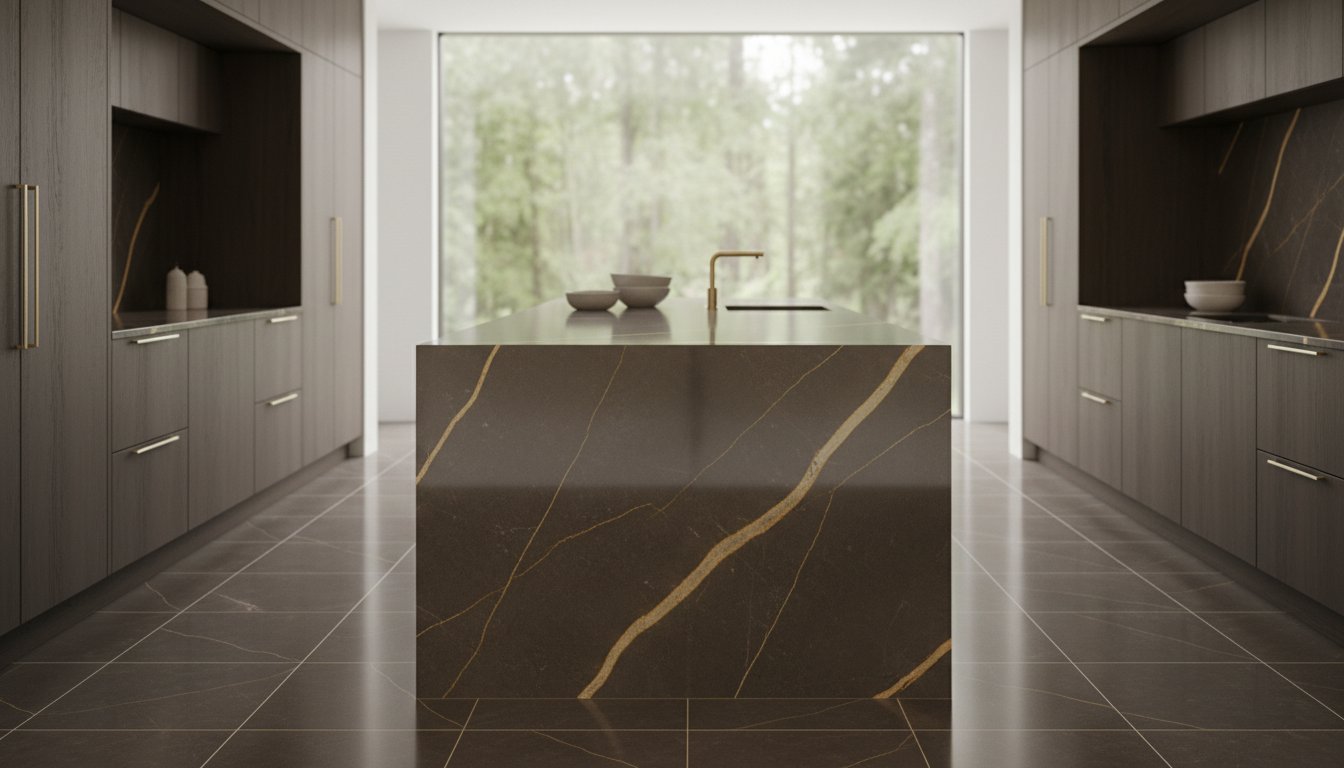
What if the most durable, heat-resistant surface in your kitchen wasn't actually quarried from the earth as a single block, but engineered to outperform it? You likely favour the timeless elegance of natural marble but hesitate at its porous nature and demanding maintenance. It's a common concern for homeowners across Ontario who fear that choosing a porcelain tile or slab might result in a flat colour or a "printed" aesthetic. However, modern manufacturing has transformed these surfaces into high-performance canvases that are now a primary choice for premium Canadian interiors.
You'll discover how high-end porcelain is redefining luxury by mimicking dramatic veining with technical precision. We'll examine the 2026 TCNA standards and explain why the porcelain market is projected to reach $10.81 billion this year. From understanding why slab material costs range between $20 and $60 per square foot to identifying where to source designer-grade materials in the GTA, this guide provides the clarity needed for your next project. We compare standard formats with large-format slabs to help you organize your renovation priorities and meet the demands of a modern luxury home.
Key Takeaways
- Learn why the shift toward high-density, vitrified materials has transformed porcelain from a budget commodity into a premier choice for high-end Canadian interiors.
- Evaluate the technical advantages of porcelain slabs over natural stone regarding porosity, heat resistance, and daily maintenance requirements.
- Identify versatile design opportunities for large-format surfaces, including sophisticated fireplace surrounds and seamless feature walls.
- Understand the structural and aesthetic differences between a traditional porcelain tile and modern sintered stone to select the ideal format for your renovation budget.
- Recognize why professional curators recommend viewing full-scale slabs in a dedicated showroom to ensure colour and vein continuity for your project.
Redefining Porcelain Tile: From Commodity to Luxury Surface
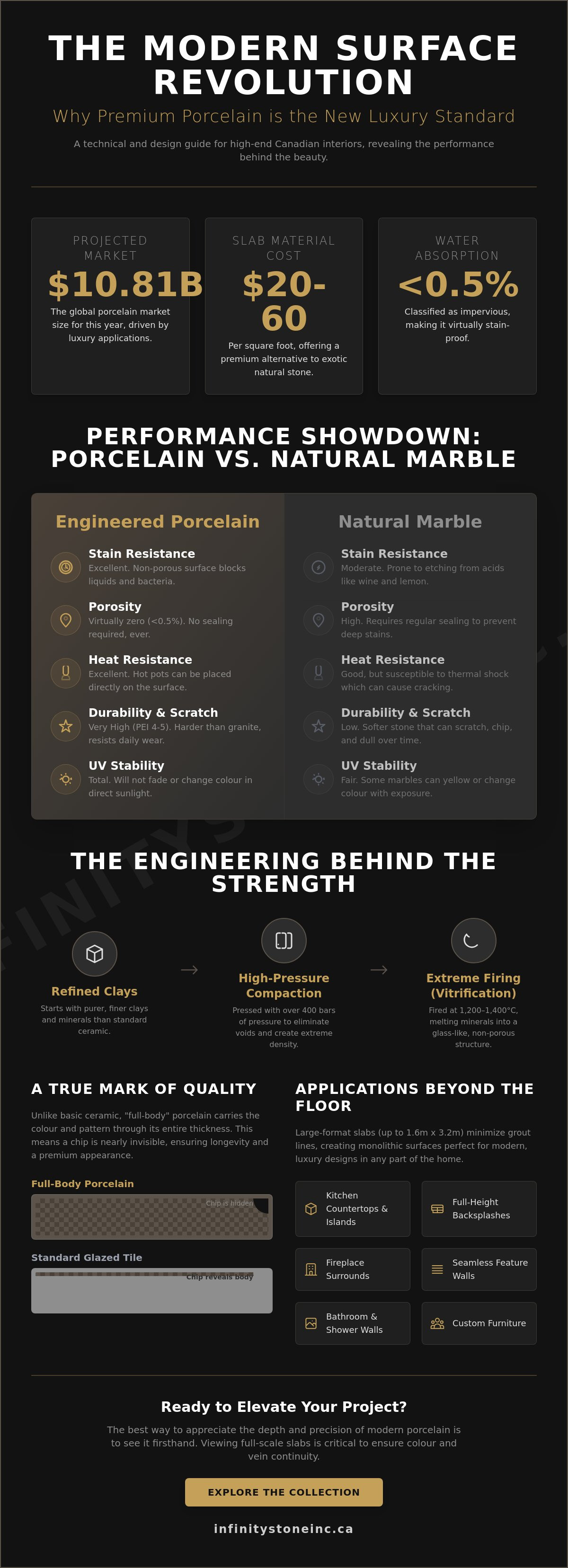
Porcelain is no longer just a functional floor covering found in high-traffic laundry rooms or commercial foyers. By 2026, it's evolved into a premier architectural material that rivals the world’s most prestigious natural stones. A porcelain tile is defined as a high-density, vitrified ceramic material with a water absorption rate of less than 0.5%. This near-zero porosity makes it virtually impervious to moisture and staining. Mississauga designers now specify these surfaces for luxury penthouses and custom builds because they offer an uncompromising blend of aesthetics and technical performance.
The "Porcelain Slab" revolution of 2026 has fundamentally changed the design landscape in Ontario. We've moved past the era of small-format squares to embrace massive, continuous surfaces that mimic the grandeur of a mountain-quarried block. This shift is driven by advanced digital printing technology that replicates rare marble and quartzite patterns with 1200 DPI precision. These prints don't just sit on the surface; they capture the depth and translucency of natural stone, satisfying even the most discerning curators of high-end interiors.
The Technical Difference: Porcelain vs. Ceramic
While often grouped together, porcelain and standard ceramic are distinct in their composition and durability. Porcelain utilizes more refined clays and is fired at extreme temperatures, typically between 1,200°C and 1,400°C. This intense heat triggers a chemical transformation. Vitrification is the process of melting silica into a glass-like state during firing, which creates an incredibly dense, non-porous structure that resists deep-set stains. For Ontario homeowners, the PEI (Porcelain Enamel Institute) rating system is a vital tool for selection. We recommend a PEI 4 or 5 for residential projects to ensure the surface maintains its lustre under heavy daily use.
The Rise of Large-Format Slabs in Ontario
The aesthetic leap from a standard 12x24 tile to a 1.6m x 3.2m porcelain slab is transformative. These expansive dimensions allow for a "seamless" look that minimizes grout lines, creating a sense of visual continuity that was previously only possible with natural marble slabs. In modern Mississauga kitchens, a single slab can cover an entire island or a full-height backsplash without a single break in the pattern. This clean, architectural finish is a hallmark of contemporary luxury. For those exploring specific design applications, our Luxury Porcelain Countertops in Ontario guide offers deeper insights into how these formats elevate the home. Utilizing these large-scale surfaces requires a sophisticated eye, as the continuity of the veining becomes the focal point of the entire room.
The Engineering Behind Premium Porcelain Surfaces
The engineering of modern premium surfaces is a testament to technological advancement. Unlike standard ceramic, a high-end porcelain tile undergoes a high-pressure compaction process that eliminates internal voids. This extreme compression, often exceeding 400 bars, results in a material that is significantly harder than many natural granites. It's this density that ensures the surface survives the rigours of a busy Canadian household while maintaining its pristine finish.
"Full-Body" porcelain represents a marker of true quality. In these slabs, the colour and pattern run through the entire thickness of the material. If a minor chip occurs, it remains nearly invisible because the interior matches the surface perfectly. This differs significantly from glazed tiles where the pattern is only a thin top layer. For GTA homeowners with sun-drenched solariums, porcelain offers total UV stability. It won't fade or yellow when exposed to direct sunlight for decades. Additionally, the material is essentially fireproof. You can place hot pots directly from the cooktop onto a porcelain surface without risking thermal shock or scorch marks.
Sintered Stone vs. Traditional Porcelain
While all sintered stone shares characteristics with porcelain, the manufacturing process is more intense. Sintering uses higher heat and pressure to fuse minerals without the need for resins or bonding agents. This creates a surface that feels more like natural stone and less like a manufactured product. For heavy-duty applications, many designers prefer Neolith Sintered Stone because of its superior scratch resistance. Adhering to ANSI standards for porcelain tile ensures that these premium slabs meet the strict performance requirements for modern construction.
Achieving the Natural Stone Aesthetic
The visual depth of modern porcelain is achieved through sophisticated 1200 DPI inkjet technology. This allows for the exact replication of iconic Calacatta and Statuario marble veins. One of the most sought-after features in luxury design is "bookmatching." This involves aligning two slabs so the veining creates a symmetrical, mirrored image. This technique is perfect for creating a dramatic feature wall in a master ensuite or living room. Selecting these pieces requires a discerning eye. Hand-picked slabs at a boutique showroom offer a level of detail and pattern variation that big-box retailers simply cannot match. If you're ready to explore these curated options, viewing our porcelain slab inventory in person is the best way to appreciate the craftsmanship.
Porcelain vs. Natural Stone: A Performance Comparison
Choosing between natural stone and engineered surfaces is a pivotal decision for any luxury renovation. While marble and quartzite offer a raw, geological "soul," modern porcelain provides a level of utility that is difficult to ignore. A detailed porcelain vs. natural stone comparison reveals that porcelain's reduced thickness, often just 6mm or 12mm, makes it significantly lighter than 2cm or 3cm natural slabs. This weight advantage is crucial for vertical surfaces like fireplace surrounds or feature walls where structural load is a concern. It allows for easier handling and lower structural reinforcement requirements during the design phase.
Many homeowners worry that a porcelain tile floor will feel colder than stone. In reality, porcelain has excellent thermal conductivity. It's perfectly compatible with Ontario radiant heating systems, distributing heat evenly across the room. Once the system is engaged, the material retains warmth as effectively as natural granite. This makes it a sophisticated choice for bathrooms and open-concept living areas where barefoot comfort is a priority during Canadian winters.
Porcelain vs. Marble: The Maintenance Debate
Marble is prized for its organic movement, but it requires regular sealing to prevent staining. It's also highly sensitive to acids like lemon juice or vinegar, which cause etching. Porcelain, by contrast, is chemically inert and requires zero sealing. While we provide Premium Marble Slabs in Ontario for those who demand the authentic original, porcelain is often the smarter choice for high-traffic GTA mudrooms. It handles road salt, slush, and frequent cleaning without losing its finish. For families who want the look of Carrara without the constant anxiety of maintenance, the engineered route is often the most practical luxury.
Porcelain vs. Quartzite: Strength and Aesthetics
Quartzite is one of the hardest natural materials available, often outperforming granite in scratch resistance. Comparing our Quartzite Slabs to porcelain involves a trade-off between natural rarity and architectural precision. Porcelain offers a superior price-to-performance ratio for massive projects where consistent pattern matching is required. The choice often comes down to the project's intent. Use quartzite when you want a one-of-a-kind masterpiece with depth that only nature can create; choose porcelain when the priority is high-utility, low-maintenance luxury for a busy kitchen or commercial space. Both materials offer distinct advantages, and the final decision depends on whether the homeowner prioritizes the "soul" of the stone or the "utility" of the engineering.
Designing with Porcelain: Applications Beyond the Floor
Modern Mississauga architecture embraces porcelain for its structural versatility. While a standard porcelain tile remains a staple for high-traffic flooring, the 2026 design trend focuses on verticality and exterior integration. Porcelain is the most reliable freeze-thaw material for the Ontario climate. Its near-zero porosity prevents water from entering the slab; this stops the internal expansion that causes natural stone to crack during the transition from -20°C winters to humid 30°C summers. This durability makes it the premier choice for outdoor kitchens and luxury patio cladding.
Thin-profile slabs, typically 6mm to 12mm, have become a favourite for custom bathroom vanities. These dimensions allow for sleek, European-inspired designs that avoid the bulky appearance of traditional 3cm stone. Designers can create floating vanities that appear weightless yet remain incredibly durable against moisture, humidity, and common cosmetic chemicals. It's a sophisticated solution for modern master ensuites where aesthetics and hygiene must coexist.
The Seamless Kitchen: Backsplashes and Islands
The current luxury aesthetic favours a monolithic design. Designers achieve this by matching the kitchen island slab directly to the backsplash, creating an uninterrupted flow of pattern. High-definition printing allows for integrated sinks made from the same material, resulting in a minimalist, sculptural look. Beyond the visual appeal, porcelain’s non-porous surface provides exceptional hygienic benefits. It doesn't harbour bacteria or absorb food odours. This is a critical advantage for active family kitchens in the GTA where food safety is a priority. The material's resistance to thermal shock also means it handles the heat of a busy cooktop without cracking or discolouring over time.
Vertical Elegance: Feature Walls and Fireplaces
Infinity Stone Inc. acts as a Professional Ally for architects specifying floor-to-ceiling feature walls. Porcelain slabs offer a significant lightweight advantage for Toronto high-rise renovations. Transporting heavy 3cm granite up a service elevator is often logistically impossible; porcelain provides a sophisticated alternative. For fireplaces, it meets Ontario’s strict heat clearance requirements for both gas and electric units. It remains stable under high temperatures, ensuring the safety and longevity of the installation. The ability to bookmatch veins across a large vertical surface creates a dramatic focal point that rivals any natural gallery. If you're planning a vertical installation, you can view our luxury porcelain slab collection to find the perfect match for your feature wall.
Sourcing Luxury Porcelain Slabs in Mississauga
Sourcing a premium porcelain tile or slab for a luxury project requires a departure from the "big box" or "liquidator" mindset. These mass-market retailers typically stock commodity-grade products with repetitive patterns and limited technical support. For a custom home in Mississauga, the nuance of a vein or the haptic quality of a finish matters. A liquidator cannot provide the curated selection or the professional industry expertise necessary for high-stakes renovations. Infinity Stone Inc. positions itself as a connoisseur of these surfaces, providing a steady partner for those who value quality over quantity.
The importance of viewing full-sized slabs cannot be overstated. Small samples often fail to represent the dramatic scale of a 3.2m slab. By visiting our Mississauga showroom, you can appreciate the intricate details of hand-selected patterns. This is where you see how light interacts with the surface and how the veining flows across the entire piece. We are trusted by interior designers and decorators across Canada because we understand that the selection of a slab is the foundational element of luxury living. Our showroom environment is designed for efficiency, allowing professionals to quickly identify the ideal material for their specific home applications.
The Infinity Stone Curation Process
Our curation process involves hand-selecting patterns that most accurately mimic the rare characteristics of natural marble and quartzite. We operate strictly as a material supplier; this allows us to focus entirely on maintaining a world-class inventory of porcelain slabs. We collaborate seamlessly with your chosen fabricator to ensure the material is handled with the precision it deserves. We invite you to realize your design vision by exploring our Stone Slabs collection, where every piece is chosen for its aesthetic excellence and technical superiority.
Next Steps for Your Ontario Renovation
Preparing for a showroom visit ensures a productive consultation. We recommend bringing your architectural floor plans and existing colour palettes to help our experts guide your selection. Coordinating material delivery with your project timeline is essential for a smooth renovation. Our team provides the logical progression from inspiration to application. Before finalizing your choice, use this checklist to interview your chosen fabricator:
- Ask about their specific experience with 6mm and 12mm porcelain tile and slab formats.
- Confirm they utilize water-jet or specialized bridge saws designed for high-density porcelain.
- Ensure they understand the 2026 TCNA standards for substrate flatness and joint minimums.
- Discuss their procedures for handling and transporting large-format materials to prevent breakage.
Visit our Mississauga showroom to explore our premium porcelain collection.
Elevate Your Design with Modern Porcelain Innovation
The evolution from a standard porcelain tile to expansive, high-performance slabs represents a significant shift for Ontario luxury interiors. You've discovered how the 2026 TCNA standards and advanced vitrification processes ensure these surfaces outperform traditional natural stone in durability and daily maintenance. Whether you're planning a seamless monolithic kitchen island or a dramatic floor-to-ceiling fireplace surround, the technical superiority of modern porcelain provides an uncompromising aesthetic for your home.
Infinity Stone Inc. has been trusted by GTA interior designers since 2017 to provide a specialized inventory of large-format porcelain slabs. Our curated collection offers the precise detail and pattern continuity required for high-end residential projects. Our experts provide the material guidance needed to move your project from a conceptual floor plan to a realized masterpiece. Explore our hand-picked Porcelain Slab collection at our Mississauga Showroom and find the foundational element for your next luxury space. We look forward to helping you select a surface that combines timeless elegance with modern engineering.
Frequently Asked Questions
Is porcelain tile better than marble for a kitchen island?
Porcelain is technically superior for kitchen islands because it resists the stains and acidic etching that common household ingredients like lemon juice cause in marble. While marble requires sealing every 6 to 12 months, porcelain remains maintenance-free. It's a reliable choice for busy families who desire a luxury aesthetic without the constant risk of surface damage or permanent marks from daily use.
Does porcelain tile crack easily compared to natural stone?
High-quality porcelain is less likely to crack than many natural stones when subjected to daily impacts. Its density, achieved through extreme pressure and high firing temperatures, makes it incredibly resilient. However, longevity depends on the substrate. Following 2026 TCNA standards for floor flatness is essential to prevent stress points that could lead to breakage under heavy loads in your home.
Can I use large format porcelain slabs for an outdoor patio in Ontario?
Porcelain slabs are exceptionally suited for Ontario’s outdoor environments. Their 0.5% or lower water absorption rate prevents moisture from penetrating the surface, which is the primary cause of cracking during winter freeze-thaw cycles. Unlike some natural flagstone, porcelain won't flake or fade under direct UV exposure. This ensures your patio remains a pristine extension of your luxury living space for decades.
What is the difference between glazed and unglazed porcelain tile?
The primary difference lies in the composition of the surface and how the pattern is applied. Glazed porcelain tile utilizes digital inkjet technology to apply a decorative layer, allowing for intricate marble replications. Unglazed, or full-body porcelain, carries the colour and pattern through the entire thickness. Designers often choose full-body options for high-traffic areas where edge profiles need to remain visually consistent with the surface.
How do I clean and maintain my luxury porcelain surfaces?
Maintaining luxury porcelain is remarkably simple because the vitrified material is naturally non-porous. You don't need specialized stone cleaners or periodic resealing treatments. A damp cloth with pH-neutral soap is sufficient for most spills. For stubborn marks, the material's high chemical resistance allows for more vigorous cleaning without the fear of dulling the polished or matte finish.
Is porcelain tile more expensive than quartz or granite?
Porcelain slab material costs generally align with premium quartz or mid-to-high-range granite. While entry-level granite may be less expensive, porcelain provides a superior price-to-performance ratio when you consider its zero-maintenance requirements. It offers a sophisticated, high-end look that mimics rare stones like Statuario marble, which would cost significantly more in its natural, quarried form.
Do I need a special fabricator for large porcelain slabs in Mississauga?
Yes, you must hire a professional with specific expertise in handling large-format porcelain. These slabs are thinner and require different handling techniques than 3cm granite. A qualified Mississauga fabricator uses specialized bridge saws or water-jets to ensure precise cuts and mitred edges. We recommend asking for proof of experience with 6mm or 12mm sintered stone before starting your renovation project.
Can porcelain tile be used for a fireplace surround?
Porcelain is an ideal material for fireplace surrounds due to its heat-resistant and fireproof properties. It won't discolour, crack, or release fumes when exposed to the temperatures generated by modern gas or electric inserts. Its lightweight nature also makes it easier to install as a floor-to-ceiling feature wall. This provides a seamless, contemporary look that meets Ontario’s strict residential fire safety regulations.


