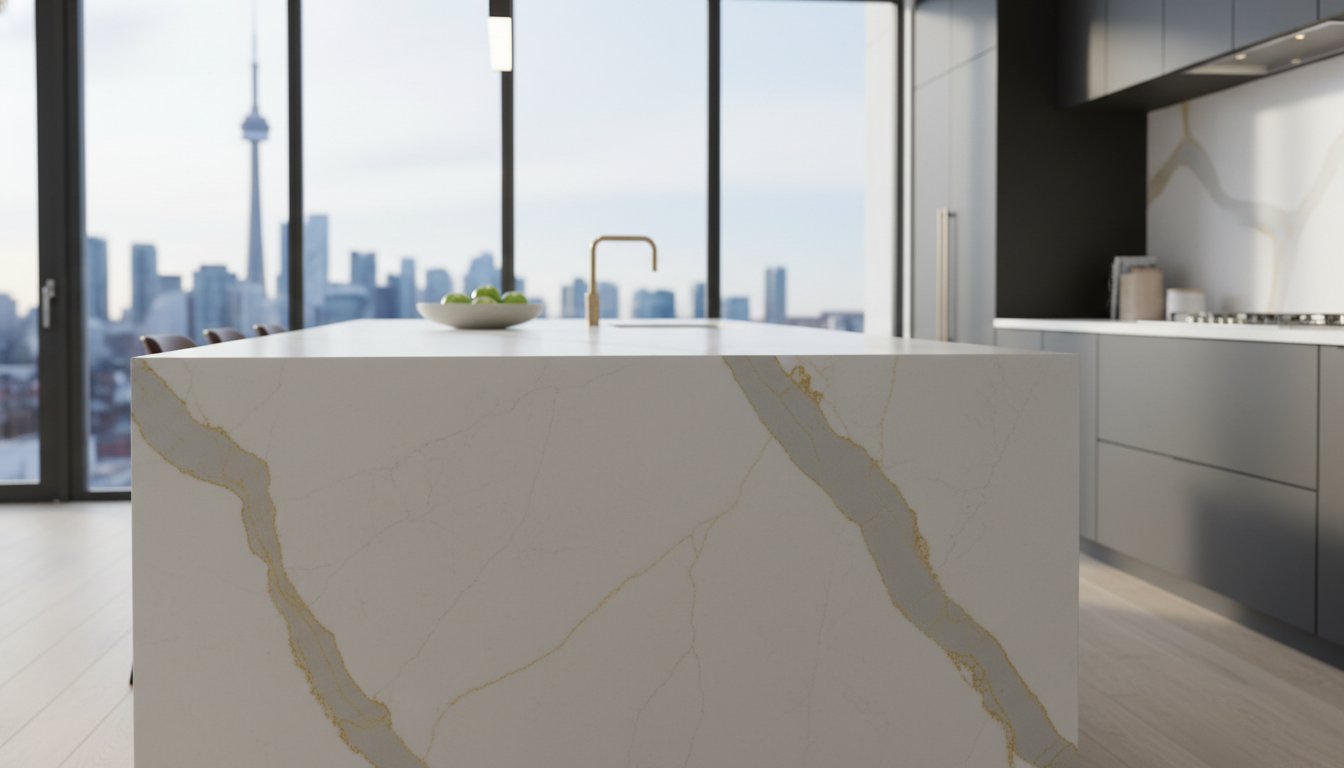
A luxury kitchen should be a gallery of fine materials rather than a source of constant maintenance anxiety. You likely adore the timeless elegance of natural stone but hesitate at the thought of permanent etching or the requirement for annual sealing. While authentic marble carries undeniable heritage, modern engineering has created a sophisticated alternative that challenges traditional design hierarchies. Understanding the marble look quartz pros and cons is essential for any connoisseur who demands both visual excellence and structural reliability.
You likely appreciate the intricate veining of Calacatta but worry that an engineered surface might appear artificial in a high-end setting. This guide promises to clarify the technical advantages and aesthetic trade-offs of premium quartz slabs to help you realize your design goals. We'll examine how these surfaces eliminate the need for yearly sealing, explore the latest innovations in realistic veining, and determine if this durable material aligns with your vision for a maintenance-free interior that adds genuine resale value to your Canadian property.
Key Takeaways
- Discover how the non-porous surface of engineered quartz provides superior resistance to acidic staining agents like citrus and coffee.
- Evaluate the marble look quartz pros and cons to understand the technical distinction between surface-printed patterns and premium through-body veining.
- Compare the streamlined daily maintenance of engineered slabs against the intensive sealing and protection protocols necessary for natural stone.
- Identify the critical thermal limitations of polymer resins to prevent permanent scorching or heat-related damage to your luxury surfaces.
- Learn why inspecting full-sized slabs at a professional design centre is essential for ensuring cohesive veining flow across large-scale kitchen islands.
The Evolution of the Marble Aesthetic in Modern Canadian Design
The architectural landscape of Mississauga and the Greater Toronto Area has long been defined by a commitment to classical elegance. In the most prestigious residences, the distinctive veining of Calacatta and Carrara marble has served as a primary indicator of luxury and refined taste. However, the delicate nature of natural stone often conflicts with the high-traffic demands of modern Canadian households. This tension has driven the evolution of the marble aesthetic, transforming it from a fragile trend into a foundational design element. Today, designers prioritize surfaces that combine the organic beauty of European quarries with the rigorous durability required for North American living. Evaluating marble look quartz pros and cons requires an understanding of how these surfaces have evolved from mere imitations to architectural staples.
Defining Marble Look Quartz
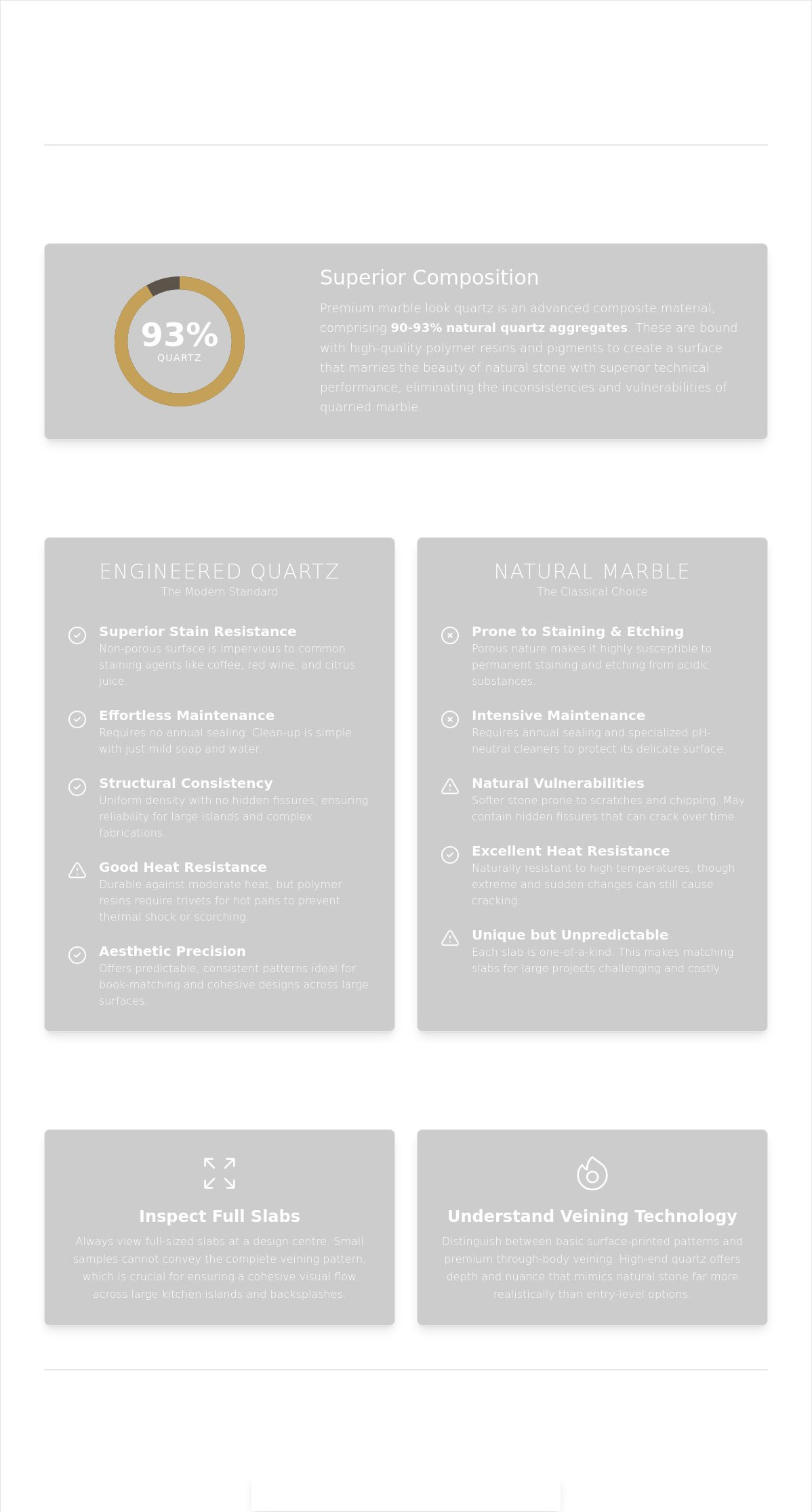
To understand the current market, one must examine the Engineered Stone Composition that defines these slabs. Premium marble-look quartz consists of approximately 90 to 93 percent natural quartz aggregates bound by high-quality polymer resins. Advanced pigment technology allows manufacturers to recreate the spontaneous, flowing vein patterns once exclusive to natural marble. This process ensures that the aesthetic is not merely a surface print but a depth-filled recreation of geological history. It's vital to recognize that the quality of these recreations varies significantly between elite distributors and mass-market retailers. While entry-level options may appear pixelated or repetitive, premium slabs offer a nuanced, multi-tonal appearance that satisfies the most discerning eye.
Why Ontario Homeowners are Moving Toward Engineered Slabs
The shift toward engineered surfaces reflects a broader change in how we use our residential spaces. In open-concept GTA homes, the kitchen functions as the primary social hub, often doubling as a workspace and an entertaining centre. Homeowners increasingly demand worry-free surfaces that can withstand the rigours of daily life without compromising on prestige. This is why many look for high-end quartz countertops in Mississauga. These materials provide a seamless, large-format aesthetic that aligns perfectly with modern minimalism. When weighing the marble look quartz pros and cons, the primary advantage is the ability to achieve a luxury hotel atmosphere without the constant fear of staining or etching. Engineered quartz has successfully closed the visual gap between nature and technology, offering a reliable partnership for long-term architectural integrity.
The Pros: Why Marble Look Quartz Dominates Premium Kitchens
The primary appeal of engineered stone lies in its exceptional resistance to the environmental stressors of a busy household. When evaluating marble look quartz pros and cons, the most significant advantage is its non-porous surface. Unlike natural marble, which readily absorbs acidic liquids like red wine, citrus juice, or coffee, premium quartz remains impervious to staining. This performance ensures that your investment retains its pristine appearance without the constant vigilance required by more porous materials.
Structural consistency offers another layer of reliability for high-end installations. Natural marble slabs frequently contain internal fissures or geological weak points that may lead to cracking during fabrication or after installation. Engineered quartz provides a uniform density across the entire slab. This predictability allows for ambitious architectural features, including expansive waterfall islands and seamless vertical backsplashes, without the risk of hidden structural failure. If you are planning a comprehensive renovation, you may wish to explore our premium quartz slabs to see these patterns in person.
Aesthetic precision is a hallmark of the quartz manufacturing process. Designers can achieve sophisticated book-matched patterns with a level of predictability that nature rarely provides. This control is essential for creating cohesive visual flows in large-scale projects. Maintenance protocols for quartz are also remarkably straightforward. There is no requirement for annual sealing, specialized pH-neutral cleaners, or restorative polishing. A simple solution of mild soap and water is sufficient to maintain the surface's original lustre for decades.
Superior Durability and Longevity
The physical properties of quartz ensure it remains one of the hardest materials available for residential use. On the Mohs scale of mineral hardness, natural quartz typically rates a 7, while marble generally falls between 3 and 5. This disparity is confirmed by Consumer Reports Durability Testing, which highlights the material's superior resistance to scratching and chipping in high-traffic zones. Superior durability and low maintenance requirements are the primary drivers for quartz's dominance in the 2026 luxury surfacing market.
Design Versatility and Colour Consistency
Achieving a uniform aesthetic across multiple slabs is a critical requirement for expansive GTA kitchens. Premium quartz allows for consistent colour matching that ensures a seamless transition between the island and perimeter counters. Additionally, the material's structural integrity supports intricate edge profiles, such as mitred or ogee edges, which might be too brittle for natural stone. A balanced assessment of marble look quartz pros and cons highlights how these engineered surfaces provide the look of stone with the strength of technology. Modern pigment technology even replicates the subtle translucency of high-grade Calacatta, providing the visual depth expected in a luxury setting.
The Cons: Essential Considerations Before Finalizing Your Selection
While the technical advantages of engineered stone are significant, a balanced perspective on marble look quartz pros and cons requires acknowledging the material's inherent limitations. Quartz is a high-performance surface, but it's not indestructible. The primary vulnerability lies in the polymer resins used to bind the quartz aggregates. These resins are sensitive to extreme temperatures, meaning that thermal shock or direct contact with hot cookware can cause permanent scorching or discolouration. Unlike natural stone, which can often be refinished, a heat-damaged quartz surface usually requires a full slab replacement.
Another consideration for the luxury market is the challenge of visual depth. In lower-tier manufacturing, the marble pattern is often merely a surface print. This can result in a pixelated appearance that lacks the translucent, multi-layered quality of genuine stone. Connoisseurs often notice a lack of "soul" in engineered products; while a quartz slab is a masterpiece of human engineering, it lacks the unique geological history found in authentic marble slabs. Every natural slab is a one-of-a-kind event, whereas quartz, by design, offers a level of repetition that some may find less prestigious.
Chemical sensitivity also plays a role in long-term maintenance. While quartz resists staining, the polished finish is susceptible to damage from high-pH or highly alkaline cleaners. Products containing bleach or abrasive chemicals can dull the surface lustre over time, creating a hazy appearance that is difficult to reverse. Maintaining the integrity of the finish requires a commitment to using only approved, gentle cleaning solutions.
Managing Heat and Environmental Factors
Protecting your investment involves simple but disciplined habits. The use of trivets and hot pads is non-negotiable in a quartz-equipped kitchen. Furthermore, quartz is generally unsuitable for outdoor applications in the Ontario climate. The intense UV radiation from the sun can cause the chemical resins to yellow or become brittle over time. It's also important to realize that quartz remains in a state of stasis. While natural marble evolves and develops a storied patina, quartz stays exactly as it was installed, which may or may not align with your long-term aesthetic preferences.
Identifying Quality Disparities
The market for marble-look surfaces is vast, and quality varies dramatically. Premium distributors focus on through-body veining, where the pattern extends through the entire thickness of the slab, allowing for beautiful edge detailing. In contrast, budget options often reveal a plain white interior when cut. This discrepancy is why premium marble look quartz pros and cons discussions often highlight that high-end quartz pricing can rival that of natural stone. Achieving a flawless look also necessitates meticulous vein matching at the seams during the design phase to avoid jarring visual breaks in the pattern.
Marble Look Quartz vs. Natural Marble: The Ultimate Comparison
Choosing between engineered and natural surfaces is a pivotal decision for any high-end renovation project. While both materials offer a prestigious aesthetic, they represent different philosophies of luxury. Natural marble is a captured moment of geological history; it's unpredictable, reactive, and physically unique. Conversely, engineered quartz is a curated architectural element designed for precision and resilience. Understanding the marble look quartz pros and cons requires a direct comparison of daily lifestyle impacts versus long-term property valuation in the Mississauga luxury market.
Aesthetics often drive the initial selection. Natural marble provides a raw, organic unpredictability that many purists find irreplaceable. The depth of light penetration in a high-grade slab of Carrara creates a soft glow that engineered surfaces strive to replicate. However, quartz offers a level of engineered symmetry that is ideal for modern, minimalist designs. It allows for perfect pattern alignment across large surfaces, ensuring that the visual narrative of your kitchen remains cohesive and intentional. Both materials require expert handling during installation due to their weight and the precision needed for mitred edges.
Maintenance and Care Profiles
The divergence in maintenance requirements is where most homeowners find their answer. Natural marble demands rigorous protection protocols, including professional sealing every six to twelve months and the immediate removal of any spills to prevent etching. Quartz eliminates these concerns entirely. It's non-absorbent and requires nothing more than a daily wipe-down with a damp cloth to maintain its showroom appearance. This fundamental difference provides a level of peace of mind that allows you to enjoy your kitchen as a functional space rather than a delicate gallery. While marble remains a classic choice, the stain-resistant benchmarks of quartz make it the pragmatic leader for active Canadian households.
Cost and Long-Term Value
Initial investment levels for these materials have shifted in recent years. While entry-level marble can sometimes be less expensive than premium engineered stone, high-grade Calacatta often remains the most significant financial commitment. In the 2026 Ontario market, the "luxury" label applies equally to both, as premium quartz now rivals the cost of rare natural stone due to its advanced manufacturing technology. From an appraisal perspective, a Mississauga luxury home benefits from either choice, provided the material is of high quality and professionally installed. For those seeking the durability of quartz with the 100 percent natural composition of a rare stone, exploring quartzite slabs offers a compelling third alternative. To finalize your decision, you can view our full inventory of premium slabs at our Mississauga showroom.
Selecting Your Premium Slab: The Infinity Stone Standard
Selecting the perfect surface for a luxury residence requires a transition from conceptual design to physical inspection. While small samples serve as a convenient colour reference, they are insufficient for evaluating the complex visual narrative of an entire slab. A 120-inch surface presents a unique landscape where vein continuity and pattern distribution must be viewed in their entirety to ensure they meet your aesthetic standards. Understanding the marble look quartz pros and cons involves recognizing that while the material is engineered for consistency, the "flow" of the pattern can vary between production batches. Sourcing from a specialized Mississauga distributor ensures access to a curated inventory where each slab has been selected for its architectural merit.
What to Look for in a Luxury Quartz Slab
A rigorous visual inspection is the only way to verify the quality of a premium slab. Look closely for "ink bleeds," which appear as blurred or pixelated edges along the veins, a common flaw in lower-tier manufacturing. High-quality slabs should demonstrate crisp, clear patterns that mimic the sharp definition of natural stone. Additionally, check for resin pooling, which manifests as dark, concentrated spots of binding agent that can disrupt the visual harmony of the surface. Choosing between 2cm and 3cm thickness is also a critical architectural decision. While 2cm slabs are often preferred for vertical cladding or bathroom vanities, the 3cm profile remains the standard for luxury kitchen islands in the GTA, providing a more substantial and prestigious presence. When coordinating these elements during a renovation, specialists like Countertops and Cabinetry By Design can help integrate your chosen surfaces with custom cabinetry for a cohesive look.
The Designer’s Experience at Our Mississauga Showroom
Our facility is designed to serve as a collaborative hub for homeowners and industry professionals. We provide a structured environment where you can evaluate stone slabs under professional-grade lighting that accurately reflects how the material will appear in a residential setting. This step is vital for ensuring that the subtle undertones of the quartz align with your cabinetry and flooring selections. Once a final decision is reached, we mark your specific slabs for delivery to your chosen Ontario fabricator. This process ensures that the exact material you inspected is the one used for your project, maintaining the integrity of your design from selection to completion. Navigating the marble look quartz pros and cons becomes much simpler when you can physically compare the options side-by-side in a professional design centre.
Realizing Your Vision for a Sophisticated Interior
Selecting a foundational surface for your home is a decision that balances aesthetic prestige with long-term functional reliability. By weighing the marble look quartz pros and cons, you can move forward with the confidence that your chosen material will withstand the rigours of a modern Canadian lifestyle. Whether you prioritize the maintenance-free nature of engineered stone or the raw geological history of natural marble, the final result should be a seamless integration of luxury and durability. Every premium project deserves a surface that reflects the high standards of its inhabitants.
As direct importers of handpicked premium slabs, we provide the specialized expertise required by Ontario designers and architects to realize complex architectural visions. We maintain the largest inventory of high-end engineered and natural stone in the GTA to ensure that every project finds its perfect match. We invite you to explore our curated collection of premium marble-look quartz slabs at our Mississauga showroom to witness the depth and clarity of our inventory first-hand. Our team is ready to help you secure the ideal foundational element for your next high-end design project.
Frequently Asked Questions
Does marble-look quartz stain as easily as natural marble?
No, engineered quartz is significantly more stain-resistant than natural marble due to its non-porous composition. While marble readily absorbs acidic liquids like citrus juice and red wine, quartz remains impervious to these common household culprits. This performance feature eliminates the requirement for annual sealing and intensive protection protocols, making it a preferred choice for active kitchens.
Can I put hot pots and pans directly on a marble-look quartz surface?
You shouldn't place hot cookware directly on quartz surfaces because the polymer resins are susceptible to thermal shock. While the material is exceptionally durable, extreme temperatures can cause permanent scorching or discolouration. Always utilize trivets or heat pads to preserve the structural integrity and aesthetic clarity of your premium slabs.
How do I clean marble-look quartz to maintain its shine?
Maintaining the original lustre of your quartz requires only a simple solution of mild soap and warm water. Avoid using abrasive sponges or high-pH chemical cleaners, as these can dull the polished finish over time. A quick daily wipe-down is sufficient to ensure the surface remains a pristine centrepiece in your home without specialized stone cleaners.
Is marble-look quartz more expensive than real marble in Ontario?
Premium marble-look quartz often rivals the price of high-grade natural marble in the Ontario market. While entry-level engineered stone is generally more accessible, the advanced technology required for realistic, through-body veining places top-tier slabs in the same luxury bracket as authentic stone. The total value is often higher when considering the lack of long-term maintenance costs.
Will marble-look quartz increase the resale value of my Mississauga home?
High-end kitchen upgrades featuring quartz surfaces can yield a 60 to 80 percent return on investment in the regional real estate market, according to 2026 industry reports from Teccorp Stone. Mississauga buyers specifically value the combination of luxury aesthetics and maintenance-free durability. A professionally installed premium surface serves as a significant selling point for high-value residential properties.
Does the pattern on marble-look quartz go all the way through the slab?
Through-body veining is a hallmark of premium slabs, ensuring the pattern extends through the entire thickness of the material. This allows for sophisticated edge profiles and mitred joins that look authentic from every angle. Lower-tier options often utilize surface-printed patterns that disappear once the slab is cut, resulting in a plain white edge that reveals the material's engineered nature.
Can marble-look quartz be used for a fireplace surround?
Quartz is an excellent choice for fireplace surrounds, provided it isn't exposed to direct flames or temperatures that exceed its resin threshold. It provides a striking, seamless aesthetic for modern living rooms and is easier to maintain than porous natural stone. Ensure your designer accounts for proper heat clearances to maintain the material's integrity over the long term.
How do I tell the difference between high-quality and low-quality marble quartz?
High-quality quartz is distinguished by its visual depth and the absence of pixelated or blurry print patterns. When evaluating marble look quartz pros and cons, you should inspect the slab for surface clarity and the realistic flow of veining. Premium options avoid the "fake" appearance found in mass-market alternatives by using advanced pigment technology that replicates the translucency of natural stone.


