
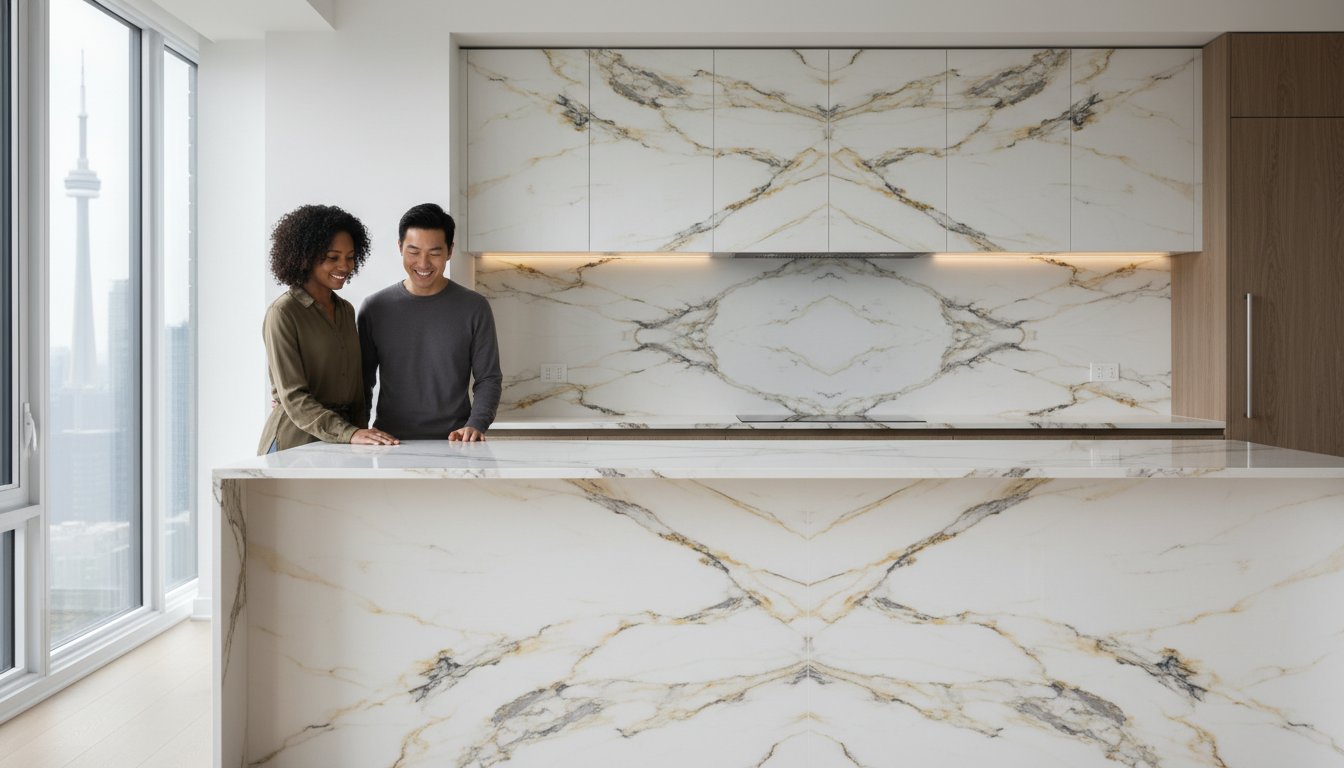
The modern porcelain slab is an engineered powerhouse; it is a superior architectural solution providing controlled aesthetics and technical resilience for the discerning homeowner. While many associate porcelain with standard bathroom tiles, today's large-scale porcelain slabs provide a seamless, high-end finish that mimics rare marble with surgical precision. This material represents the intersection of elite craftsmanship and modern durability, designed specifically for the rigorous demands of a luxury interior.
You likely desire the prestige of a book-matched stone surface but hesitate due to concerns about material fragility during transport or the porous nature of traditional minerals. It's a common dilemma for those planning sophisticated renovations across Ontario. This guide provides the expertise needed to select premium materials that offer a water absorption rate of less than 0.5% and a projected lifespan of up to 50 years. We'll examine the technical requirements for flat substrate preparation, the impact of the 2026 Ontario Building Code on interior projects, and the visual strategy behind achieving a flawless, large-format aesthetic in your kitchen or bathroom.
Key Takeaways
- Understand the sintering process to appreciate how intense heat and pressure create a non-porous surface that rivals the durability of natural stone.
- Learn to evaluate print resolution and material thickness when selecting porcelain slabs for specific high-end interior applications.
- Compare the maintenance-free benefits of engineered surfaces against traditional marble to ensure long-term aesthetic continuity in your home.
- Identify the essential logistical considerations for transporting large-format materials and the importance of engaging specialized fabrication partners.
- Discover how to utilize book-matched patterns and rare exotic textures to create a seamless, sophisticated atmosphere in modern Ontario kitchens.
Understanding Porcelain Slabs: The High-Performance Evolution of Stone
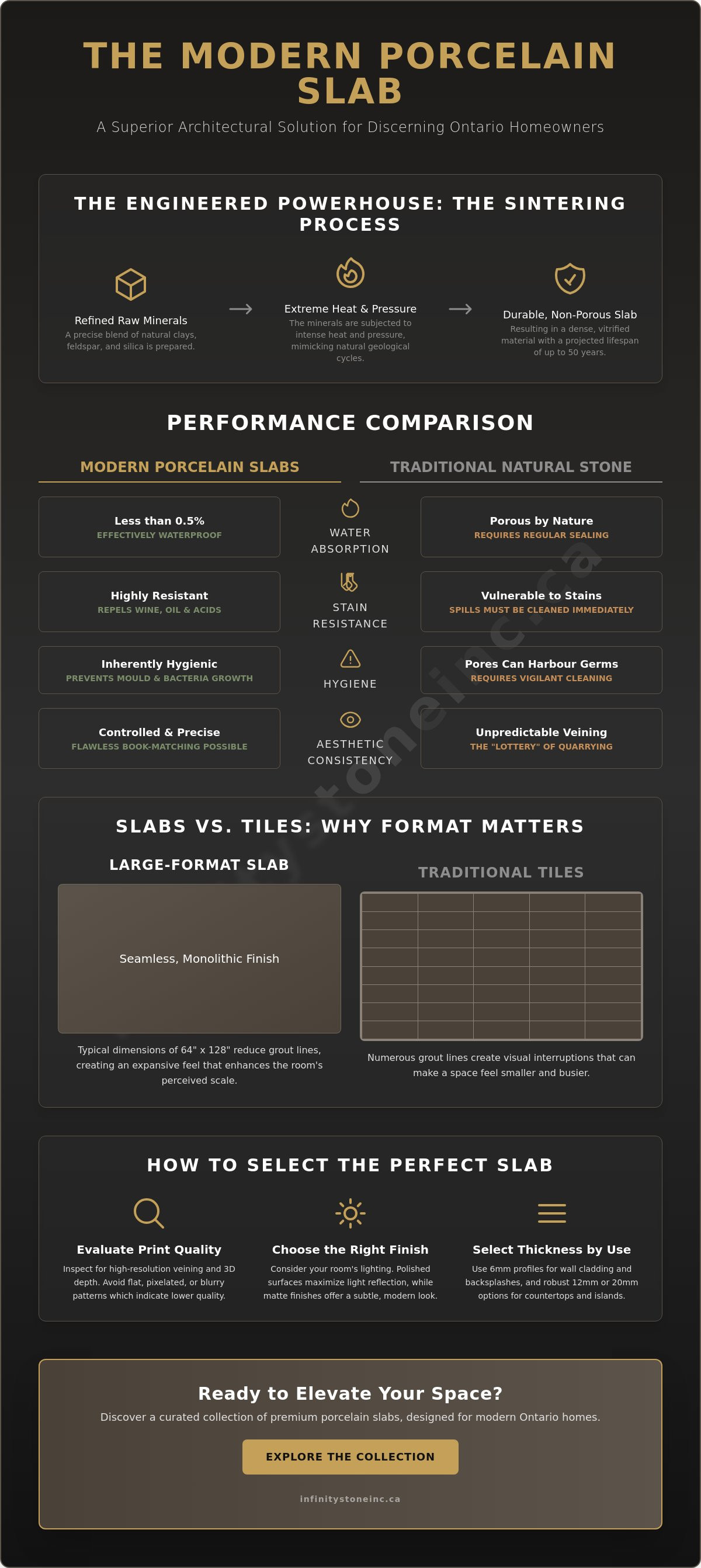
Porcelain slabs represent a significant leap in material science, moving beyond the traditional constraints of ceramic production. Unlike standard Porcelain tile, these large-format surfaces are engineered through a rigorous sintering process. This method subjects raw minerals to extreme pressure and heat; it effectively mimics natural geological cycles but at an accelerated pace. The result is a dense, vitrified material that provides architectural continuity across expansive surfaces. It's a preferred choice for high-end Mississauga luxury interiors where visual interruptions are undesirable and durability is non-negotiable.
The technical superiority of this material lies in its non-porous structure. Because the sintering process eliminates internal voids, the slabs achieve a water absorption rate of less than 0.5%. This makes the surface inherently hygienic and resistant to deep-set stains, which is a vital feature for active kitchens. While natural stones often present unpredictable veining or structural fissures, porcelain slabs offer a curated colour consistency. You'll achieve a precise aesthetic across multiple surfaces without the "lottery" effect of quarrying natural minerals. Homeowners benefit from several distinct advantages:
- Stain Resistance: Liquid spills like red wine or oils cannot penetrate the surface.
- Bacterial Protection: The lack of pores prevents the growth of mould and bacteria.
- Chemical Resilience: The material resists damage from common household acidic cleaners.
Slabs vs. Tiles: Why Format Matters
Size is the primary differentiator in modern design. Standard porcelain slabs typically measure 64 x 128 inches, allowing for seamless coverage that traditional tiles cannot achieve. In open-concept GTA homes, reducing grout lines creates a more expansive, monolithic feel that enhances the room's perceived scale. Thickness also dictates application. A 6mm profile is ideal for weight-sensitive wall cladding, while 12mm and 20mm options provide the structural integrity required for heavy-use countertops.
The Sintered Stone Connection
Sintered stone is a premium subset of porcelain that utilizes a more refined mineral composition. This specific blend affects the slab's density and overall durability, pushing the boundaries of what engineered surfaces can handle. For those seeking the highest calibre of performance, reviewing the Neolith sintered stone review provides deeper technical insight into how these materials resist thermal shock and mechanical stress. Understanding these mineral differences helps you select a slab that doesn't just look like stone, but outperforms it in high-traffic environments.
How to Select the Perfect Porcelain Slab for Your Project
Selecting porcelain slabs involves more than choosing a colour; it requires a disciplined evaluation of technical specifications and visual depth. You should start by identifying the specific application. A vertical feature wall necessitates different structural properties than a high-traffic kitchen island. Once the function is defined, you can focus on the aesthetic nuances that separate premium engineered surfaces from mass-market alternatives. This process ensures the material handles the mechanical stress of a busy home while maintaining its prestigious appearance.
Evaluating Pattern and Digital Print Quality
High-calibre manufacturing ensures a sense of three-dimensional depth within the pattern. When inspecting a slab, look closely for pixelation or blurring in the veining, which indicates lower print resolution. Premium slabs utilize advanced digital technologies to replicate the intricate details of natural stone without looking flat or artificial. If your project involves large-scale installations, verify the availability of book-matching or vein-matching sequences. These allow for a continuous flow across multiple surfaces, creating a seamless architectural statement. You can view our curated selection to see how high-resolution patterns enhance modern interiors.
Choosing the Right Finish for Your Space
Lighting plays a critical role in how a finish performs within Ontario homes. A polished surface maximizes light reflection, which is beneficial for smaller kitchens or darker hallways, though it may highlight fingerprints and water spots. Matte or honed finishes offer a sophisticated, tactile feel and are exceptionally practical for hiding daily wear in active households. For specific architectural features like fireplace surrounds or high-traffic commercial entries, a textured or leathered finish provides additional grip and visual interest. These finishes interact with both natural and recessed lighting to create distinct moods within a room.
Sizing and Thickness Requirements
Thickness is the primary factor in structural integrity. For kitchen islands and countertops, we recommend 12mm or 20mm slabs to withstand mechanical stress and support the weight of heavy appliances. Vertical applications, such as shower walls or backsplashes, are better suited for 6mm profiles to reduce the total weight on the substrate. Keep in mind that thinner porcelain has more restrictive overhang limitations than granite; proper support is essential for any cantilevered design. A physical inspection at a Mississauga showroom remains the gold standard for verifying tonal nuances and surface textures that digital screens cannot accurately represent. This final step ensures the material aligns perfectly with your cabinetry and lighting plan.
Porcelain vs. Natural Stone: A Performance Comparison
While natural stone remains a hallmark of luxury, porcelain slabs provide a technically superior alternative for homeowners prioritizing long-term resilience. The primary advantage lies in the material's engineered composition. Unlike marble or granite, which possess natural fissures and pores, porcelain is an entirely vitrified surface. This fundamental difference eliminates the need for periodic sealing; a task that remains mandatory for traditional stones to prevent deep-seated staining. For a full breakdown of these differences, consult our Porcelain vs. Natural Stone guide.
Thermal stability is another area where porcelain excels. These slabs can withstand direct contact with hot cookware, though we recommend using trivets to preserve the surface finish over many decades. This heat resistance is coupled with exceptional UV stability. In sun-drenched Ontario solariums or kitchens with large floor-to-ceiling windows, natural resins in some engineered stones may yellow or fade over time. Porcelain slabs remain colour-fast regardless of light exposure. Modern digital printing has also matured to a level where it replicates rare marble veining with such precision that the authenticity gap has effectively closed for all but the most traditional purists.
The Maintenance Advantage
The chemical resistance of porcelain is a decisive factor for culinary enthusiasts. The surface is impervious to common household acids such as lemon juice, vinegar, and red wine; liquids that would otherwise etch a marble countertop instantly. This zero-porosity state ensures a more hygienic environment for families, as bacteria and mould have no microscopic crevices in which to thrive. Contrast this with the maintenance requirements for quartzite slabs, which, despite their incredible hardness, still require a strict sealing schedule to maintain their pristine appearance. Porcelain offers a sophisticated, low-effort solution for the modern home.
Durability and Impact Resistance
A common misconception suggests that porcelain is brittle or easily chipped. While it is a ceramic product, its extreme density provides remarkable mechanical strength. On the Mohs hardness scale, porcelain typically ranks between 6 and 7, significantly higher than the 3 to 5 rating associated with most marbles. This hardness translates to superior scratch resistance during daily use. To mitigate the risk of chipping on exposed corners, fabricators utilize specific edge profiles, such as mitered edges, which provide structural reinforcement and protect the slab from side impacts. This careful detailing ensures that your architectural investment remains as flawless as the day it was installed.
Planning Your Project: Logistics and Handling in the GTA
Successful execution of a luxury interior requires a sophisticated logistical plan. Infinity Stone operates as a premier supplier of porcelain slabs, providing the foundational materials for ambitious architectural projects across Ontario. We don't provide fabrication or installation services; these technical tasks must be managed by specialists who understand the unique mechanical properties of large-format surfaces. Establishing a clear protocol for delivery and inspection ensures your material arrives at your Mississauga fabricator in pristine condition. This collaborative approach between supplier and fabricator is the hallmark of a professional-grade renovation.
Sourcing and Showroom Etiquette
Viewing a small sample is insufficient for a project of this scale. You must inspect full slabs in person to appreciate the continuity of the pattern and the subtlety of the finish. Digital representations often fail to capture the tactile quality of a leathered surface or the precise tonal shifts in a marble-look slab. Sourcing from a local Mississauga distributor significantly reduces lead times and simplifies coordination with your design team. We recommend inviting your fabricator to review the slabs before delivery. This professional validation confirms the material aligns with your specific layout and cutting requirements. You can browse our full inventory of premium porcelain to select the ideal surface for your next GTA project.
Handling and Fabrication Considerations
Fabrication of porcelain requires a distinct set of tools compared to natural stone. Specialists must utilize specific diamond blades and water-cooled bridge saws to ensure clean, chip-free cuts. Because these slabs are large and relatively thin, handling them requires specialized suction cup frames to distribute weight evenly during transport and positioning. This prevents the mechanical stress that leads to fractures.
A perfectly level substrate is also essential. Whether you're cladding a kitchen island or a feature wall, any irregularity in the cabinets or wall surface can lead to structural tension. We suggest confirming that your installation site has been professionally levelled to TTMAC standards before the slabs arrive. Always hire a fabricator with documented experience in handling large-format porcelain slabs. Their expertise with specialized adhesives and edge profiling is what transforms a raw slab into a seamless architectural feature. This level of technical precision protects your investment and ensures the final result meets the high standards of the luxury interior market.
The Infinity Stone Collection: Curated Porcelain for Ontario
Infinity Stone functions as a discerning curator for the most ambitious residential and commercial projects in the province. Our collection of porcelain slabs is the result of a rigorous selection process, focusing on materials that offer both visual prestige and long-term durability. We source exclusively from international manufacturers who demonstrate mastery in sintering technology. Our inventory spans a diverse aesthetic range, including timeless marble-look surfaces, industrial concrete-look finishes, and rare exotic patterns that serve as the focal point of any high-end room. By maintaining a prestigious and aspirational inventory, we provide the foundational elements for luxury living across the GTA.
Our Curation Process
We prioritize structural density and print resolution above all else. Every material in our Mississauga facility undergoes a vetting process to ensure the digital veining possesses the depth required for luxury applications. We maintain a robust stock of various thicknesses, including 6mm for weight-sensitive cladding and 12mm or 20mm for robust horizontal surfaces. This commitment ensures we provide the foundational stone slabs that meet the specific architectural standards and climate demands of the Canadian market. Our focus remains on quality over quantity, ensuring each slab in our warehouse represents the highest calibre of engineered stone available today.
Visit Our Mississauga Showroom
Our showroom serves as a professional hub for the GTA design community. It's the only way to truly realize the scale and colour accuracy of our inventory. When scheduling your appointment, we suggest bringing floor plans, cabinet swatches, and lighting samples to ensure a cohesive match. Our team provides technical guidance to help designers and homeowners identify perfectly book-matched sets for seamless, large-format installations. This hands-on approach ensures your project moves from a conceptual design to a concrete reality with absolute precision. Seeing the slabs in person eliminates the guesswork associated with digital samples and ensures your vision is executed without compromise. Explore our current porcelain slab inventory to begin your selection process and discover the ideal surface for your next architectural project.
Elevating Your Architectural Vision with Premium Surfaces
Selecting the right material is the foundational step in any high-end renovation. You now understand the technical superiority of the sintering process and the logistical precision required for successful large-format handling. These surfaces don't just replicate the beauty of rare minerals; they provide a resilient, maintenance-free solution that preserves your design's integrity for years. Achieving a seamless, book-matched aesthetic requires both a discerning eye for pattern and a specialized approach to material sourcing.
Infinity Stone has served Mississauga and the GTA since 2017, acting as a professional partner for those who value curated excellence. Our imported inventory is handpicked to meet the highest architectural standards, backed by our specialized knowledge in porcelain slabs. This expertise ensures you realize your vision with a surface that aligns with both your aesthetic goals and technical requirements. We invite you to visit our Mississauga showroom to select your premium porcelain slabs and view the impressive scale of our inventory in person. Your next interior project deserves the quiet confidence of a truly superior surface.
Frequently Asked Questions
Are porcelain slabs more expensive than granite or marble?
The total investment for porcelain remains comparable to high-end natural stones; however, the value lies in long-term performance. While specific rare marbles may carry a higher initial material cost, the zero-maintenance nature of porcelain eliminates the recurring expense of professional sealing. You're investing in a surface that resists the etching and staining common with traditional minerals.
Can porcelain slabs be used for outdoor kitchens in Ontario's climate?
Yes, these slabs are an ideal solution for Ontario's demanding freeze-thaw cycles. Their water absorption rate of less than 0.5% ensures that moisture cannot penetrate the surface to cause internal expansion or cracking during winter. This thermal stability makes porcelain slabs a superior choice for exterior kitchens and sun-drenched solariums where UV resistance is mandatory.
Do porcelain slabs crack easily during installation?
Porcelain is exceptionally durable once properly bonded to a level substrate, but it is sensitive during the handling phase. Cracking typically occurs only if the material is subjected to improper mechanical stress or if the installer lacks specialized suction-frame tools. We recommend engaging a fabricator with documented experience in large-format materials to ensure a flawless transition from the showroom to your home.
What is the difference between porcelain slabs and porcelain tile?
The distinction lies in the scale and the visual continuity they provide. Slabs are manufactured in expansive formats, typically 64 x 128 inches, which allows for seamless coverage of kitchen islands and feature walls with minimal grout lines. Standard tiles are smaller, modular units that create more visual interruptions; they don't offer the same monolithic, architectural aesthetic found in premium slab collections.
How do I clean and maintain my porcelain countertops?
Maintenance is remarkably simple; it requires only warm water and a pH-neutral detergent for daily spills. Because the surface is entirely non-porous, you don't need to worry about bacteria growth or deep-seated stains from red wine or oils. You'll never need to apply sealants or specialized stone polishes to maintain the material's original lustre and integrity.
Can I cut directly on a porcelain slab surface?
While porcelain ranks between 6 and 7 on the Mohs hardness scale, we suggest using a cutting board for all culinary preparation. The surface is hard enough to dull your kitchen knives quickly. Direct cutting on certain polished finishes can also lead to subtle surface abrasions over time, so a protective barrier remains a professional recommendation for any luxury countertop.
Are the veins in porcelain slabs consistent throughout the material?
Most porcelain slabs utilize high-definition digital printing to achieve their intricate patterns, meaning the veining is concentrated on the surface. While the pattern doesn't run through the entire body of the slab, premium fabricators use mitered edges to create the illusion of a solid stone block. This technique ensures the aesthetic continuity of the veining remains consistent across all visible profiles.
How thick should a porcelain slab be for a kitchen island?
We recommend a thickness of 12mm or 20mm for all horizontal applications, including kitchen islands and dining surfaces. These profiles provide the necessary structural density to handle mechanical weight and daily impact. Thinner 6mm slabs are specifically engineered for vertical cladding, such as backsplashes or fireplace surrounds, where reducing the total weight on the wall is a primary technical concern.


