
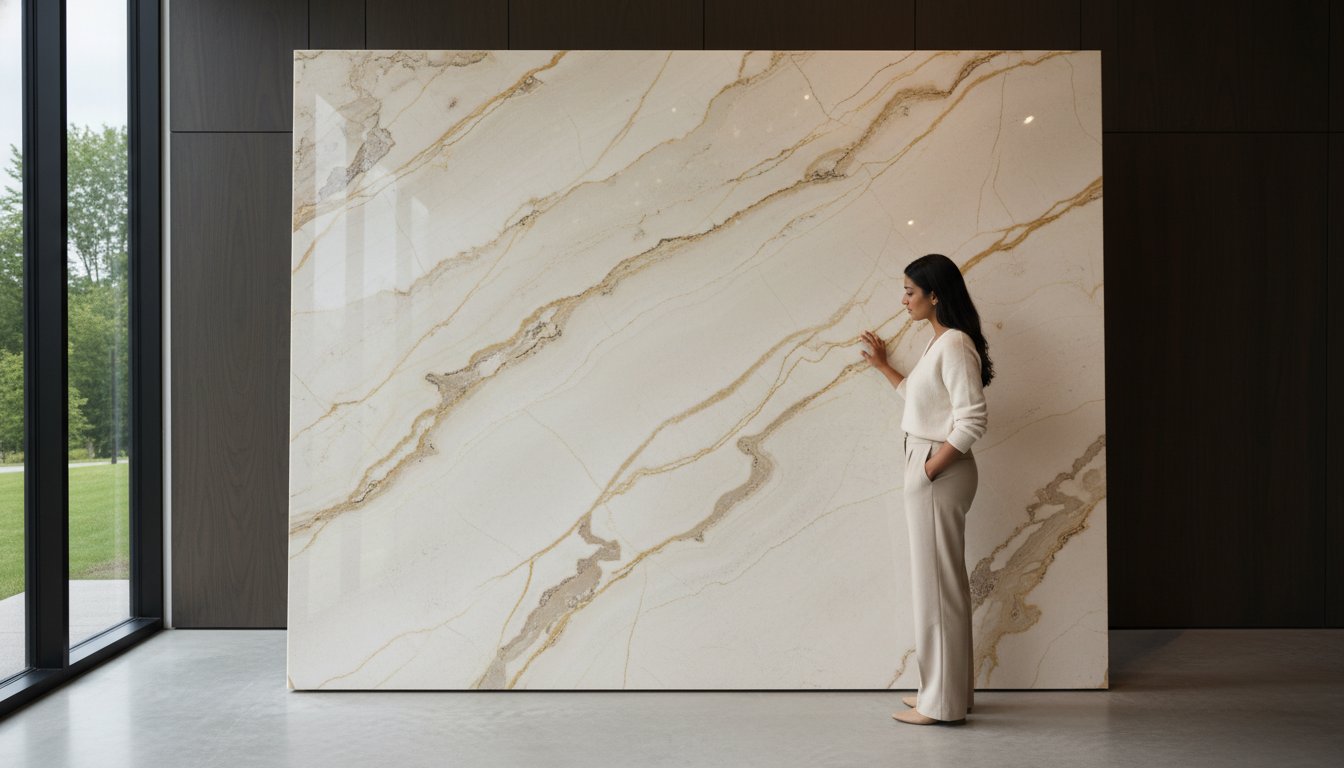
The assumption that a luxury kitchen requires high-maintenance surfaces is a misconception that often leads to unnecessary anxiety during a major renovation. You likely appreciate the timeless elegance of natural stone but hesitate at the prospect of a permanent stain on a porous surface. Understanding how to choose a kitchen countertop material involves more than just matching a colour palette; it requires a deep dive into the geological integrity and technical specifications of each slab. Whether you are caught between the industrial resilience of quartz and the intricate depth of natural quartzite, your decision should reflect a commitment to both architectural permanence and refined taste.
We recognize that selecting a premium surface is an investment in your home’s foundational character. It's a process that demands a balance of aesthetic desire and functional reality. This guide provides a sophisticated framework to help you distinguish between engineered porcelain and geological masterpieces like marble or granite. You will gain the confidence to resolve common uncertainties about slab density while learning exactly how to inspect a stone in a Mississauga gallery. We will examine the specific performance traits of the 2026 market to ensure your choice remains both contemporary and enduring.
Key Takeaways
- Align your material choice with your culinary lifestyle by assessing the specific "mess factor" and frequency of use in your kitchen.
- Master the professional framework for how to choose a kitchen countertop material by balancing geological density with long-term aesthetic goals.
- Compare the technical advantages of the "Big Four" surfaces, including why quartzite has become the preferred super-material for modern luxury interiors.
- Understand why a physical slab inspection at a professional gallery is the only way to realize the full scale of veining and colour depth before purchase.
- Learn how to navigate the supply chain to secure high-end, imported stone that elevates the architectural value of your Ontario residence.
Defining Your Kitchen Lifestyle and Performance Requirements
In 2026, the luxury residential market emphasizes architectural permanence over transient design fads. Selecting a surface is no longer just about colour; it's about a commitment to long-term performance. When you evaluate how to choose a kitchen countertop material for a Mississauga estate or a modern Ontario loft, start by auditing your daily habits. Consider these lifestyle factors:
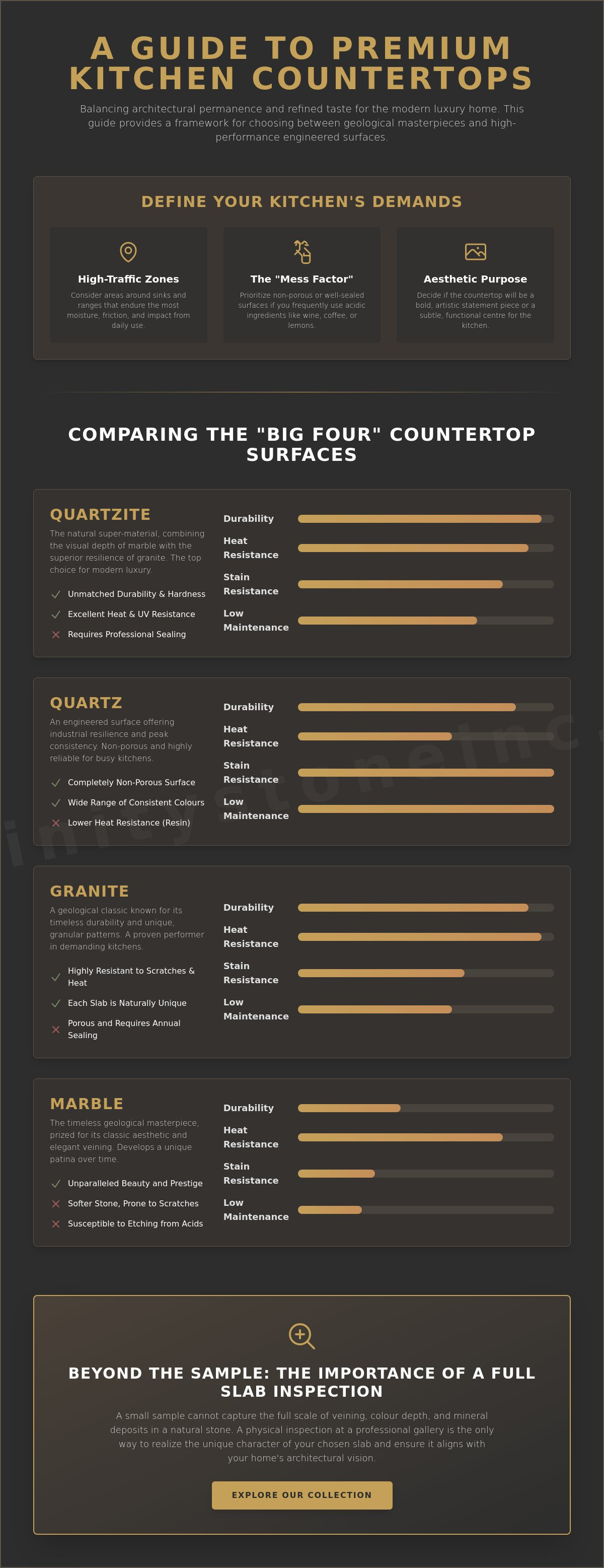
- High-Traffic Zones: Areas around ranges and sinks endure the most friction, moisture, and impact.
- The Mess Factor: Frequent entertainers should prioritize surfaces that handle acidic ingredients like lemons and wine without etching.
- Aesthetic Purpose: Decide if the surface is a bold statement piece or a reliable functional centre for the home.
This shift toward sustainable, lifelong investments requires a balance between visual impact and geological resilience. A comprehensive guide to countertop materials provides a baseline for technical specifications, but your personal lifestyle is the final arbiter. Are you a meticulous cook who cleans as they go, or does your kitchen thrive in a state of creative chaos? This self-assessment dictates whether you should invest in a high-density quartzite slab or a low-maintenance porcelain surface.
The Maintenance Threshold: How Much Care is Realistic?
The distinction between daily maintenance and long-term preservation is vital. Porosity levels determine how quickly a spill becomes a permanent stain. Some natural stones require annual sealing with professional-grade products to maintain their integrity. If you appreciate the way a stone ages, a natural marble patina might be desirable. However, if you prefer a surface that remains identical to the day of purchase, a non-porous engineered slab is the superior choice. Be honest about your tolerance for maintenance before committing to a specific stone category.
Heat Resistance and Structural Integrity
Thermal shock remains a primary cause of surface failure in high-performance kitchens. Some materials can crack when exposed to sudden temperature changes from hot cookware. Beyond heat, consider the physical impact of heavy pots. Selecting a robust edge profile, such as a bullnose or a slight radius, helps prevent chipping that often occurs with sharp, square edges. These technical details ensure your stone remains structurally sound for decades, providing a clear path for how to choose a kitchen countertop material that suits your specific home environment.
The Geological Spectrum: Natural Stone vs. Engineered Surfaces
Deciding how to choose a kitchen countertop material starts with an appreciation for the origin of the slab. Natural stone offers an irreplaceable narrative; each fissure and mineral deposit represents millennia of geological pressure and heat. Conversely, engineered surfaces provide a controlled, non-porous alternative designed for peak architectural consistency. By 2026, high-definition printing and advanced resin binders have made the visual distinction between these categories nearly indistinguishable to the untrained eye, though their technical performance remains distinct.
Sourcing natural stone involves direct extraction from global quarries, resulting in slabs that are unique works of art. Industrial production for engineered surfaces relies on mineral recycling and chemical binders, offering a different environmental profile. Discerning homeowners often weigh the romanticism of a one-of-a-kind natural slab against the practical benefits of manufactured precision. An in-depth comparison of countertop materials reveals that while natural stone provides unmatched character, engineered options deliver the reliability required for high-volume culinary spaces.
Natural Stone: Marble, Granite, and Quartzite
The geological formation process dictates a stone's hardness and resistance to daily wear. Granite and quartzite represent the pinnacle of durability, while marble offers a softer, more classic aesthetic that develops a storied patina over time. Quartzite slabs have emerged as the primary choice for high-end GTA projects because they combine the crystalline beauty of marble with the structural resilience of granite. For those seeking a historic, European feel, the timeless elegance of marble slabs remains a staple in sophisticated Canadian architecture.
Engineered Excellence: Quartz and Porcelain
Premium quartz consists of approximately 90 to 93 percent crushed mineral bound by high-performance resins. This creates a surface immune to common kitchen spills and acidic etching. For more demanding environments, porcelain countertops represent the new frontier of engineered excellence. These slabs are fired at extreme temperatures, resulting in a UV-stable material ideal for sun-drenched Ontario kitchens or outdoor terrace applications. Exploring a curated collection of premium stone slabs allows you to see these differences firsthand before making a final commitment to your design project.
Comparing the Big Four: Quartzite, Quartz, Marble, and Granite
Mastering how to choose a kitchen countertop material requires a technical understanding of the "Big Four" surfaces that dominate the luxury market. While aesthetic appeal often initiates the selection process, the long-term success of a kitchen design depends on the material's geological or engineered profile. Each category offers a distinct set of performance markers suited to different architectural requirements.
- Quartzite: This metamorphic rock has become the 2026 super-material, offering a crystalline depth that replicates marble while providing a mineral hardness that often exceeds granite.
- Quartz: As an engineered surface, quartz is the king of colour consistency. It remains a popular choice for those seeking a maintenance-free environment without the need for periodic sealing.
- Marble: This remains the unparalleled choice for purists. It's a material that tells a story through its natural patina, making it ideal for low-impact zones where visual heritage is the priority.
- Granite: An igneous workhorse, granite provides vast pattern variety and exceptional heat resistance, serving as a reliable foundation for high-production culinary spaces.
Hardness and Scratch Resistance Comparison
The Mohs scale of mineral hardness provides a definitive framework for evaluating surface durability. Quartzite typically registers at a 7, making it harder than most granite varieties, which usually sit between 6 and 7. This high rating ensures that the surface remains impervious to most household scratches. In contrast, marble registers significantly lower, usually between 3 and 4. This soft composition makes marble vulnerable to metal utensils and abrasive cleaners, requiring a homeowner who appreciates the inevitable "living finish" of a natural stone.
Stain Resistance and Chemical Sensitivity
Chemical resilience is the final pillar of a successful material choice. Acid etching occurs when acidic substances like lemon juice or vinegar react with the calcium carbonate in stones like marble, leaving dull spots on the polished surface. Engineered quartz and porcelain eliminate this risk entirely due to their non-porous nature. For natural options, the application of high-performance sealants is essential to protect stone slabs from deep-seated stains. Understanding these chemical boundaries is a critical step in learning how to choose a kitchen countertop material that aligns with your specific maintenance threshold.
Beyond the Sample: How to Inspect and Select a Full Stone Slab
A four-inch sample is a mere snapshot of a material's character, not a complete biography. Relying solely on small swatches is a frequent error when homeowners determine how to choose a kitchen countertop material. Natural stone is a product of geological history, meaning veining patterns, mineral clusters, and colour shifts vary across a single three-metre slab. Visiting a Mississauga slab gallery is an essential step to realize the true scale of these features before they are integrated into your architectural plans.
During a physical inspection, you must distinguish between natural fissures and structural cracks. Fissures are naturally occurring microscopic separations between mineral crystals that do not compromise the stone's integrity. Conversely, a crack is a physical break caused by stress or mishandling. Professionals also use this time to plan for bookmatching. This process involves using adjacent slabs that are mirror images of one another, creating a symmetrical flow of veining across waterfall islands or full-height feature backsplashes. The lustre and perceived colour of the stone will also shift depending on the gallery's lighting, so viewing the slab under different intensities is a prudent move.
Visual Inspection Checklist
A disciplined inspection ensures the final installation meets your aesthetic standards. Use this criteria when reviewing your inventory:
- Pigment Clusters: Check for "blooms" or inconsistent resin pools in engineered quartz that may disrupt a clean visual field.
- Surface Finish: Verify the texture across the entire surface, whether you have selected a high-gloss polished, a soft honed, or a tactile leathered finish.
- Batch Consistency: If your project requires multiple slabs, ensure they come from the same bundle to guarantee colour and pattern alignment.
The Role of the Slab Supplier vs. the Fabricator
The distinction between a supplier and a fabricator is fundamental to a successful renovation. Sourcing from a dedicated quartz slab supplier in Mississauga ensures you have access to a higher tier of handpicked inventory that has been curated by industry experts. While a fabricator focuses on the precision of the cut and installation, the supplier provides the raw geological or engineered masterpiece. Infinity Stone Inc. focuses exclusively on the procurement of premium materials, providing the foundational slabs that allow your chosen fabricator to achieve elite results. To begin your selection process with a curated range of high-end materials, view our current inventory of premium slabs.
Elevating Your Ontario Home with Premium Slab Sourcing
Refining your strategy for how to choose a kitchen countertop material culminates in the physical selection of a premium slab. In the 2026 Ontario market, the demand for exclusive, handpicked stone has reached a new peak. Homeowners in Mississauga and the surrounding GTA now prioritize materials that offer both global prestige and local availability. This final phase of your renovation requires seamless coordination between your interior designer, your chosen fabricator, and your slab supplier to ensure the architectural vision is realized without compromise.
The GTA design community understands that a high-end interior is defined by its foundational elements. Sourcing imported quartzite, marble, or porcelain from a specialized distributor provides access to rare aesthetics that mass-market retailers cannot replicate. By selecting a specific slab from a curated inventory, you secure a unique piece of geological history that serves as the definitive statement in your residence. This collaborative process ensures that the technical requirements of the stone align with the creative direction of the project.
Sourcing in Mississauga: The Local Advantage
Viewing slabs in person at a Mississauga distribution centre is the only way to verify the nuance of a stone's character. Local sourcing allows you to examine rare varieties of quartzite and marble that are often bypassed by national chains. Ontario based distributors possess a specific understanding of regional design trends, such as the current shift toward warm, earthy tones and dramatic, full-height backsplashes. This local expertise ensures the material you select is appropriate for the climate and lifestyle of a Canadian home.
Next Steps for Your Kitchen Transformation
Transitioning from research to acquisition involves a structured approach. Once you have mastered the framework of how to choose a kitchen countertop material, your next step is to experience the slabs in a professional gallery environment. Booking a viewing appointment allows you to walk through the inventory and witness the interplay of light and texture on full-scale slabs.
Prepare for your visit by bringing preliminary measurements. While your fabricator will provide the final technical template, having an estimate of your square footage helps the supplier identify slabs that meet your project's scale. Finally, confirm that your fabricator has the specialized equipment required to process high-density materials. Porcelain and certain quartzite varieties demand specific diamond-tipped tools and precision handling. Ensuring your fabrication partner is prepared for these technical requirements is the final safeguard for your investment.
Securing Your Architectural Legacy with the Perfect Surface
The journey to a refined kitchen environment requires a disciplined approach to material selection. You've learned that geological performance must dictate your choice as much as aesthetic desire. Whether you prioritize the crystalline hardness of quartzite or the maintenance-free consistency of engineered quartz, your decision defines the architectural legacy of your home. Mastering how to choose a kitchen countertop material ensures that your investment withstands the rigours of a high-performance culinary space while maintaining its visual depth for decades.
As a specialized supplier of rare quartzite and marble, we serve as a steady partner for Ontario’s top designers and architects. Our exclusive Mississauga slab gallery provides the environment necessary to inspect full-scale inventory under professional lighting. We focus on curated excellence to provide the foundational elements for high-end living. Each slab in our collection is handpicked to satisfy the technical requirements of builders and the aesthetic sensibilities of decorators.
Explore our handpicked collection of premium slabs in Mississauga and realize the full potential of your next design project. We look forward to helping you secure a surface that reflects your taste and unwavering standard of excellence.
Frequently Asked Questions
Which kitchen countertop material is the most durable for 2026?
Quartzite and porcelain represent the peak of durability in the 2026 luxury market. Quartzite offers the highest mineral hardness on the Mohs scale among natural stones, providing exceptional scratch resistance. Porcelain provides unmatched resilience against heat, UV rays, and chemical exposure. These materials provide the structural integrity required for heavy-duty culinary environments while maintaining a pristine architectural finish over decades of use.
Is quartzite better than quartz for a busy family kitchen?
Quartzite is the superior choice for families seeking natural authenticity, while quartz offers unmatched maintenance-free performance. Quartzite is a natural metamorphic rock that requires periodic sealing but withstands higher heat than engineered options. Quartz is non-porous and never requires sealing, making it a practical solution for households with high spill risks. Your decision hinges on whether you value geological uniqueness or industrial consistency.
How do I prevent my marble countertops from staining or etching?
Preventing marble damage requires the application of high-performance penetrating sealers and the immediate removal of acidic substances like citrus or wine. Etching is a chemical reaction between acids and the stone's calcium carbonate, which a sealer cannot entirely stop. Using cutting boards and coasters is an essential habit for marble owners. Many connoisseurs now opt for a honed finish to make any inevitable etching less visible to the eye.
Do I need to seal my natural stone countertops every year?
Most premium natural stone slabs require sealing every one to three years depending on the stone's porosity and usage frequency. High-density granites and quartzites may go longer between applications, whereas lighter marbles often benefit from more frequent care. You can test your surface by placing a few drops of water on it; if the water beads, the seal is intact. If the stone absorbs the moisture, it's time for a professional-grade reapplication.
Can I put hot pans directly on a quartz countertop?
You should never place hot pans directly on a quartz surface because the resin binders can suffer permanent thermal damage. While the mineral content is heat-resistant, the polymer resins used in engineered stone can discolour or crack at temperatures above 150 degrees Celsius. Always use trivets or heat pads to protect the structural and visual integrity of the slab. This precaution is a key part of how to choose a kitchen countertop material that fits your cooking style.
What is the difference between a stone supplier and a countertop fabricator?
A stone supplier curates and sells the raw material slabs, while a fabricator cuts, edges, and installs the finished product. The supplier is your primary contact for material selection and inventory quality, ensuring you have access to premium blocks. The fabricator is a separate professional who handles the technical measurements and on-site placement. Coordinating between these two entities ensures that your chosen high-end material is handled with the appropriate level of craftsmanship.
Why is quartzite more expensive than granite or quartz?
Quartzite’s higher cost reflects its complex extraction process and the extreme hardness that makes it difficult to process. It is a rare metamorphic rock that requires specialized diamond-tipped tools for cutting and polishing, increasing the labour involved in preparation. The global demand for its marble-like appearance and granite-like durability also contributes to its status as a premium luxury material. This investment yields a surface with unique crystalline depth and superior longevity.
How many slabs do I need for a standard kitchen island and backsplash?
A standard kitchen project involving a large island and a full-height backsplash typically requires two to three slabs. The exact count depends on the slab dimensions, which usually average around 300 by 180 centimetres in size. If you require bookmatching for a seamless veining transition, you must source slabs from the same bundle. Consult with your professional partners to determine the exact yield based on your specific kitchen layout and edge profiles.


