

What if the answer to “kid-proof countertop options canada” isn’t a single material, but a better match for your family’s routines? Sticky spills, dropped utensils and busy meal prep can make stains, scratches and chips feel inevitable. A resilient surface can make everyday care easier, but no countertop can make a kitchen childproof or prevent every mark.
The right choice balances durability, maintenance and the look you want, without expecting a premium surface to be indestructible. This guide compares quartz, granite, quartzite, marble and porcelain for family life in Canada, including their practical strengths and care considerations. You’ll learn how natural and engineered surfaces differ, where each material may suit your household, and how thoughtful selection can help you manage everyday wear. The goal is a countertop that works with your routines and complements your design, alongside the habits that help keep your kitchen safer.
Key Takeaways
- Use “kid-proof” as a practical goal, not a guarantee: no countertop prevents every mark or kitchen mishap.
- Compare quartz, granite, quartzite, marble and porcelain by their family-relevant strengths and care needs, rather than relying on a universal ranking.
- Find the right fit by weighing your household routines, design preferences and comfort with visible wear.
- Review care guidance for the specific material and finish before settling on a countertop.
- Explore kid-proof countertop options canada with a clearer sense of how each slab material may suit your family-focused kitchen.
What Makes a Countertop Family-Friendly, and What ‘Kid-Proof’ Really Means
A family-friendly countertop does more than look composed on opening day. It balances routine care, resistance to the kinds of wear a household expects, visual appeal and the way the kitchen is used. A surface that suits frequent meal preparation may not be the one a household chooses if its first priority is preserving a delicate, polished appearance.
Countertop durability describes how a surface responds to everyday use; child safety describes how household hazards are managed. “Kid-proof” is shorthand for a surface that can suit family routines, not a promise that it will prevent every stain, scratch, chip or injury. This overview of countertop materials and their properties illustrates how materials differ. Those qualities can inform your selection, but they don’t replace safe habits.
Which everyday family demands should a countertop handle?
Start with the work your kitchen actually sees: juice or sauce spills, food preparation, repeated wiping, and lunch containers or appliances being set down in a hurry. Then consider which kinds of wear matter most in your home. A household that cooks often may focus on cleanup and heat exposure, while one with young children may pay particular attention to stains or impacts from dropped objects.
These are separate considerations, not a single measure of toughness:
- Stain performance: How the surface responds to spills and whether its care routine helps protect against marks.
- Scratch performance: How it stands up to contact with utensils, cookware and food-preparation tools.
- Heat performance: How it responds to hot items, which can differ by material and product.
- Impact performance: How vulnerable it may be to chips or damage from a forceful knock, particularly at edges.
Don’t assume that strength in one area guarantees strength in another. Compare these properties with your routines, and review care guidance for the specific material and finish you’re considering.
Can a countertop make a kitchen childproof?
No. Choosing a durable surface can help you plan for daily wear, but it can’t make a kitchen childproof. Hot cookware and liquids, sharp objects and climbing present hazards that material selection alone doesn’t address. Supervision and other appropriate safety measures remain important, whether the counter is natural stone or an engineered material.
The Public Health Agency of Canada advises keeping hot food and liquids away from countertop edges. It’s a practical example of how household habits complement surface choice: a resistant countertop still shouldn’t be treated as a safeguard against burns or other accidents. Consider access and routines as well as appearance when planning the space.
For families comparing kid-proof countertop options canada, the more useful question is which material’s care and wear characteristics fit the household. A considered choice can support everyday use and preserve the kitchen’s intended design, but no surface eliminates the need for realistic expectations and attentive habits.
How Quartz, Granite, Quartzite, Marble, and Porcelain Differ in Family Kitchens
Material names offer a useful starting point, but they don’t tell the whole story. A particular slab’s composition, pattern and finish can affect its appearance and care needs. Compare the material category, then review guidance for the specific product to see how it may fit your household.
How do quartz, granite, and quartzite compare?
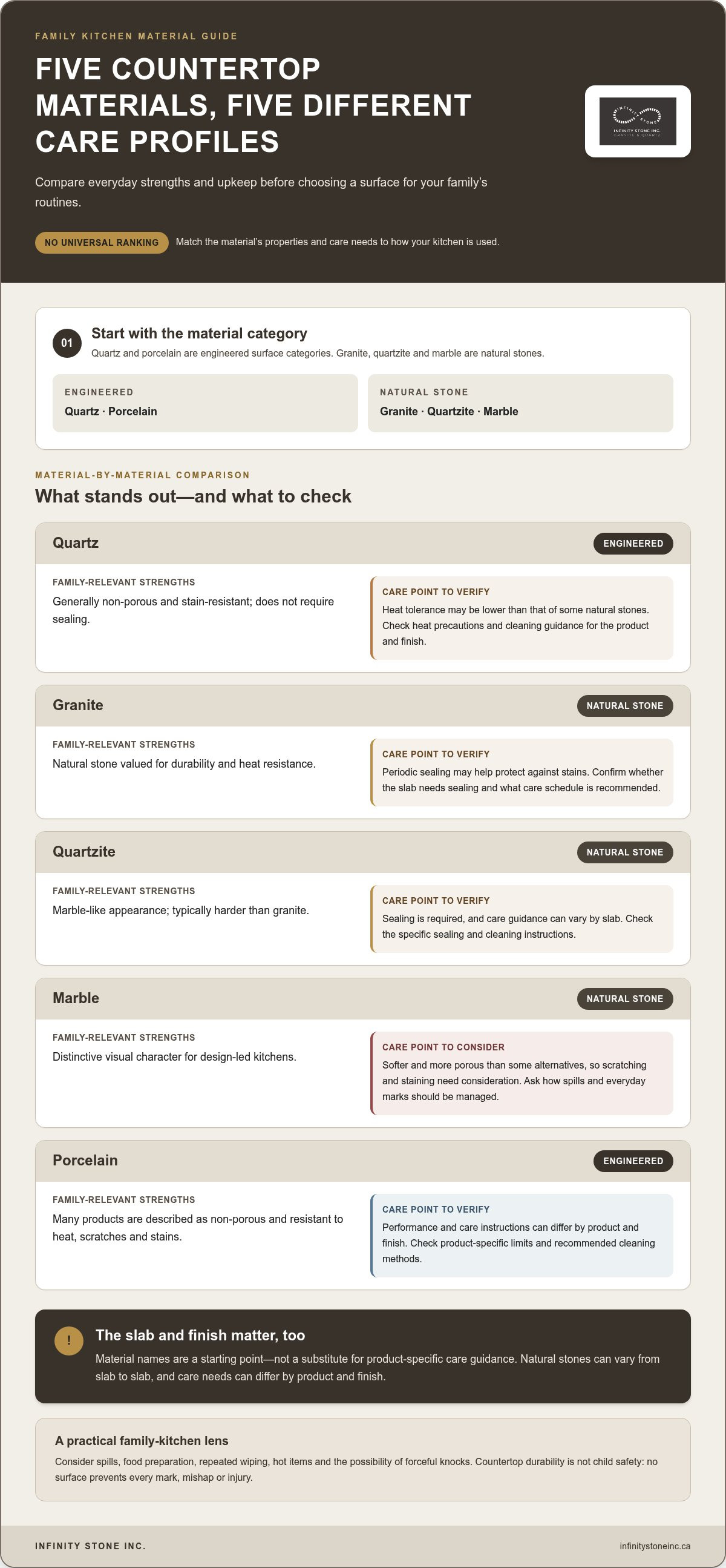
Quartz is an engineered surface, while granite and quartzite are natural stones. Their differences matter in daily care: engineered quartz is generally non-porous and doesn’t require sealing, while granite and quartzite may require periodic sealing. Natural stones also vary from slab to slab. These category-level descriptions are a starting point, not a substitute for product-specific care instructions.
| Material | Family-relevant strengths | Care considerations | Questions to verify |
|---|---|---|---|
| Quartz | Engineered category; generally non-porous and stain-resistant. | Doesn’t require sealing. Heat tolerance may be lower than that of some natural stones. | What heat precautions and cleaning guidance apply to this product and finish? |
| Granite | Natural stone valued for durability and heat resistance. | Periodic sealing may be needed to help protect against stains. | Does this slab require sealing, and what care schedule is recommended? |
| Quartzite | Natural stone with a marble-like appearance; typically harder than granite. | Sealing is required, and care guidance can vary by slab. | What sealing and cleaning instructions apply to this specific material? |
| Marble | Natural stone with distinctive visual character for design-led kitchens. | It’s softer and more porous than some alternatives, so scratching and staining require consideration. | How should spills, stains and everyday marks be managed? |
| Porcelain | Another engineered surface category; many products are described as non-porous and resistant to heat, scratches and stains. | Performance and care instructions can differ by product and finish. | What are the product-specific limits and recommended cleaning methods? |
Where do marble and porcelain fit a family kitchen?
Marble can be a considered choice when natural character and a refined appearance lead the design, provided the household is comfortable with its care needs and potential for visible wear. Porcelain offers a different surface category, but broad claims about resistance don’t apply equally to every product. For both materials, review the specific finish and manufacturer’s care guidance.
For any of these five options, compare claims about heat, stain and scratch resistance, along with maintenance requirements, against reliable product information. A surface that suits frequent cleanup may not be the one that best matches your design priorities. No single property defines family suitability; it’s the balance of performance, care and appearance that matters.
For a closer look at kid-proof countertop options canada, compare the slab’s documented properties with your household’s routines. Exploring natural and engineered stone slabs can help you identify which material category aligns with your design direction and care expectations.
Which Kid-Friendly Countertop Option Is the Best Fit for Your Household?
There’s no universal winner for a family kitchen. Build a useful shortlist by identifying your priorities: simpler day-to-day care, natural variation, a particular design direction, or greater comfort with signs of use. Weigh those preferences against the material’s product-specific properties and care guidance. A premium surface can suit a busy home when its upkeep and appearance align with how your household uses the kitchen.
Which material suits busy routines and simpler care preferences?
Think about what “easy to live with” means in your home. If frequent wiping and fewer upkeep steps matter most, compare the care instructions for quartz and porcelain products, which are often described as low-maintenance categories. That doesn’t make every product identical or maintenance-free. Natural stones such as granite and quartzite may involve sealing, while marble may call for more attentive care. Confirm the requirements for the specific slab and finish.
Your tolerance for visible wear can also shape the decision. A household that prefers a pristine appearance may weigh potential marks more heavily than one that welcomes the character that develops through use. Review care needs, spill response and the product’s stated limits together, rather than treating one durability claim as a complete measure of suitability.
| Material | Potential advantages | Trade-offs to consider |
|---|---|---|
| Quartz | Engineered category; many products are non-porous and don’t require sealing. | Heat tolerance and care guidance vary by product; use the manufacturer’s precautions. |
| Granite | Natural variation can bring distinctive pattern and character. | Sealing may be needed, and properties differ between slabs. |
| Quartzite | Natural veining offers a stone aesthetic, with some products resembling marble. | Care, including sealing, should follow product-specific instructions. |
| Marble | Expressive veining can make it a striking design feature. | Its care demands and potential for visible scratching or staining may not suit every household. |
| Porcelain | Some products are designed to resist stains, scratches and heat. | Confirm performance claims, care instructions and limitations for the specific product. |
How should design priorities shape the shortlist?
Natural stone can offer variation in veining and pattern, while engineered categories may suit a preference for a more consistent visual effect. Neither approach is inherently more family-friendly. Consider how the slab’s colour and pattern will relate to cabinetry, lighting, flooring and adjacent finishes, then view the material in the context of the whole room.
If engineered quartz is on your shortlist, this guide to quartz countertops in Mississauga offers additional context. For a design-led porcelain option, explore the guide to luxury porcelain countertops in Ontario.
Use kid-proof countertop options canada as a starting point for comparison, not as a promise of a mark-proof surface. The best fit is the material whose documented properties, care routine and visual character make sense for your household.
How to Choose and Care for a Family-Friendly Countertop
A confident choice comes from matching a material to your household, then understanding how to care for the specific surface. Rather than relying on a broad label such as “durable,” use a short, repeatable process to narrow the options. This keeps practical needs in view without sidelining the kitchen’s design.
What should you assess before choosing a countertop?
Begin with a clear picture of daily use: who prepares meals, how often the counter is cleaned, and which spills or objects are most likely. Separate essential performance priorities from design preferences such as colour, veining and finish. If natural variation is central to the look, assess the actual slab, since its pattern may differ from a small sample.
Use this four-step process to build your shortlist:
- Identify routines: Note meal-preparation habits, frequent activities at the counter and where children spend time in the kitchen.
- Rank priorities: Decide which matter most, such as straightforward cleanup, stain care, heat precautions or a particular visual character.
- Compare materials: Weigh quartz, granite, quartzite, marble and porcelain against those priorities, considering the specific product and finish rather than the category name alone.
- Review care guidance: Read the manufacturer’s or supplier’s instructions for the exact material and finish, including cleaning methods and any sealing requirements.
This order helps distinguish a genuine household requirement from a preference. For instance, a distinctive natural pattern may be a design priority, while a clearly understood cleaning routine may be essential to everyday comfort.
How can everyday habits help protect the surface?
Care begins with the instructions for the selected product. Don’t assume one cleaner or technique suits every surface; recommendations can vary by material and finish. Keep the guidance accessible so everyone who uses the kitchen knows how to clean spills and maintain the counter appropriately. Good habits support the surface, but they can’t guarantee that damage will never occur.
For family safety, follow practical precautions alongside material care. Public Health Agency of Canada guidance recommends keeping hot food and liquids away from countertop edges. Maintain appropriate supervision, and handle hot cookware and sharp tools with care. Trivets and cutting boards can help separate hot or sharp items from the surface, but they don’t eliminate every risk of damage or injury.
Shortlist checklist: Compare each material’s documented care, relevant wear considerations, visual character and fit with your household routines before making a selection.
If you’re ready to compare materials for an Ontario kitchen, explore countertop slab options across quartz, granite, quartzite, marble and porcelain. For families researching kid-proof countertop options canada, a considered shortlist pairs realistic care expectations with the design direction you want to live with every day.
Explore Countertop Slabs for a Family-Focused Ontario Kitchen
A family-focused countertop choice brings together household priorities, material properties and realistic care expectations. Instead of searching for a surface that promises to prevent every mark, consider which slab category best suits your routines and design intentions. Quartzite, quartz, granite, marble and porcelain each offer a distinct material character, with product-specific details that should inform your shortlist.
Infinity Stone Inc., a Mississauga-based supplier, offers natural and engineered slab options for Ontario homes. Comparing materials can help connect practical needs, such as the level of care you’re comfortable with, to the appearance you want in the kitchen.
What should you look for when viewing countertop slabs?
Look beyond a small sample if natural variation is important to your room’s design. Compare the visible pattern and colour across the slab with your cabinetry, flooring, lighting and other finishes. A veined stone may become a focal point, while a more uniform pattern may support a quieter scheme. The overall relationship matters: a surface viewed alone can feel different beside the materials planned for the kitchen.
As you compare options, keep your household priorities in view:
- Consider the visual composition: Look at the slab’s pattern and variation alongside cabinetry and adjacent finishes.
- Revisit care expectations: Review guidance for the specific material and finish, including recommended cleaning and upkeep.
- Match properties to routines: Keep your most important family-use considerations in the shortlist, and weigh them against the design you want.
For broader context on evaluating materials and slab character, consult this guide to sourcing premium stone slabs in Ontario. It can help frame the design questions to consider as you compare options.
How can Ontario homeowners take the next step?
Begin with the priorities you’ve established: the look you want, the care routine that feels manageable and the material properties relevant to your household. Then explore slab categories with those criteria in mind. This keeps the decision grounded in how the kitchen will be used, rather than in a broad claim that one material is best for every family.
As an Ontario supplier of natural and engineered slabs, Infinity Stone Inc. offers quartzite, quartz, granite, marble and porcelain options. Its selection includes handpicked materials imported from around the world. Reviewing a slab alongside its care guidance can help you make a more considered choice for your space.
For readers researching kid-proof countertop options canada, a practical shortlist balances family routines with the surface’s documented properties and design appeal. Explore countertop slab options as you plan a family-focused Ontario kitchen.
Choose a Surface That Feels Right for the Years Ahead
A family kitchen changes as routines shift, children grow and design priorities evolve. Rather than aiming for a flawless surface, choose one whose appearance and care expectations feel comfortable in everyday life. That perspective makes “kid-proof” less about eliminating every possible mark and more about creating a kitchen you can enjoy using.
Keep your shortlist grounded in what matters most to your household, then let the slab’s character help shape the room. The right choice should feel considered during busy weekday meals and in the finished design. Use kid-proof countertop options canada as a starting point for a practical decision, not a promise of perfection.
Explore materials and picture how they’ll work in your home. Explore countertop slab options for your family kitchen and take the next step towards a space that reflects your routines and personal style.
Frequently Asked Questions
Is there a truly kid-proof countertop?
No countertop is completely kid-proof or immune to damage. A surface may suit your household’s cleanup and wear expectations, but it can’t prevent every scratch, chip, stain or accident. Think of “kid-proof” as a practical shorthand, not a performance guarantee. A counter that handles routine spills well still needs sensible care, and hot cookware or sharp utensils still call for safe handling.
Which countertop material is easiest to maintain with children?
Quartz and porcelain are often considered lower-maintenance options because many products in these categories are non-porous and don’t require sealing. That can simplify upkeep, but cleaning instructions and performance vary by product and finish. Before choosing, consider whether you prefer wiping up spills promptly or are comfortable with periodic care such as sealing. The material’s specific maintenance guide is more useful than a broad category label.
Can kids scratch or stain quartz countertops?
Yes. Quartz is generally stain-resistant, but that doesn’t make every product stain-proof or scratch-proof. Abrasive contact, sharp objects or spills left on the surface may still cause marks or damage, depending on the product and circumstances. Follow its cleaning guidance, wipe spills as directed and use a cutting board for food preparation. Check the manufacturer’s care instructions for the particular quartz surface and finish.
Is granite a good countertop choice for a family kitchen?
Granite can suit a family kitchen if its natural appearance and care needs fit your household. It’s valued for durability and heat resistance, but those broad qualities don’t establish the performance of every slab. Granite may require periodic sealing to help protect against stains. Before deciding, review the slab’s care guidance and consider whether that upkeep works with your routine, especially if the kitchen sees frequent cooking.
Can hot pots damage a countertop?
Yes, hot cookware may damage a countertop, and heat tolerance depends on the material and specific product. Don’t treat a general claim about heat resistance as permission to place hot pots directly on the surface. Use a trivet or another suitable barrier, and follow the product’s care instructions. In a family kitchen, keep hot food and liquids away from counter edges as a practical safety measure.
Are marble countertops practical for a home with children?
They can be, if the household accepts the care expectations and the possibility of visible wear. Marble is a design-led natural stone, but it’s softer and more porous than some alternatives, so scratches and stains deserve consideration. A family that values its distinctive veining and is comfortable following specific care guidance may still find it suitable. The decision depends on your tolerance for upkeep and marks over time.
How do I choose a countertop for a family kitchen in Ontario?
Start by listing your household’s everyday demands, then rank practical priorities such as cleanup, heat precautions and expected upkeep alongside design preferences. Compare quartz, granite, quartzite, marble and porcelain using product-specific care information, not material names alone. If natural variation matters, view the slab with your cabinetry and finishes in mind. For kid-proof countertop options canada, choose a surface whose documented properties and care routine suit your family’s life in Ontario.


