
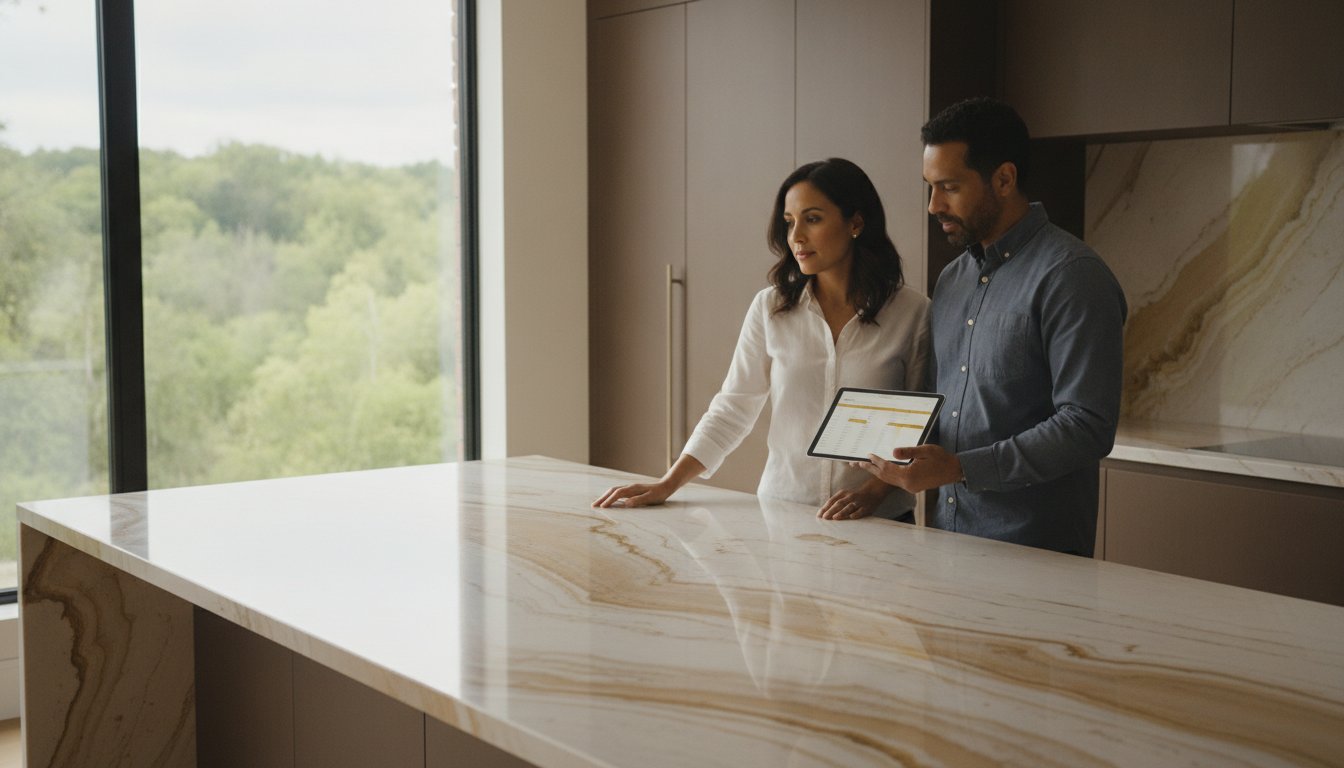
The most expensive mistake in a luxury kitchen renovation isn't choosing the wrong material; it's failing to decouple the cost of the raw slab from the fabrication labour. For many homeowners, learning how to budget for stone slabs in ontario feels like navigating a maze of opaque quotes and hidden fees. You've likely felt the frustration of seeing a beautiful Statuario marble or Taj Mahal quartzite only to realize the final invoice bears little resemblance to the initial sticker price. It's a common pain point in the GTA market where premium aesthetics meet complex logistical requirements.
We understand that a sophisticated renovation requires a steady, reliable partner who values transparency as much as elite craftsmanship. This guide promises to demystify the pricing structures of 2026, giving you the confidence to select high-tier materials that align with your financial framework. We'll examine the specific price tiers for natural and engineered surfaces, provide a logical structure to separate procurement from installation, and explore the technical differences between quartzite and quartz value. By the end, you'll have a purposeful roadmap to secure the foundational elements for your high-end living space.
Key Takeaways
- Distinguish between the slab distributor and the fabricator to ensure financial transparency and accurate cost allocation from the outset.
- Navigate the 2026 material hierarchy to understand the specific cost-to-durability ratios of porcelain, granite, marble, and luxury quartzite.
- Master how to budget for stone slabs in ontario by decoupling the price of premium raw materials from separate fabrication, polishing, and transport fees.
- Follow a structured framework to calculate total square footage for islands and backsplashes before selecting your material tier at a specialized showroom.
- Realize the value of partnering with a curated supplier that focuses exclusively on high-tier architectural surfaces for the Greater Toronto Area market.
Understanding the Ontario Stone Slab Market in 2026
Grasping the regional landscape is the first step in learning how to budget for stone slabs in ontario. The Greater Toronto Area serves as the primary gateway for international stone imports in Canada. Centrally located in Mississauga, high-tier distributors provide the necessary infrastructure to house thousands of square feet of inventory. This concentration of logistics and expertise makes the GTA the most competitive and diverse market for architectural surfaces. For homeowners, this means access to a global palette of materials, though it requires a structured approach to procurement.
In 2026, we see a distinct movement toward high-performance natural materials. Homeowners are increasingly prioritizing longevity, moving away from standard synthetic options toward Dimension stone varieties like quartzite. This shift requires a more nuanced financial plan. Unlike flooring or paint, where costs are predictable per box or gallon, stone budgeting involves fluctuating variables like slab yield and material rarity. You aren't just buying a surface; you're investing in a geological masterpiece that has been transported across continents.
The Distinction Between Supplier and Fabricator
A successful renovation project relies on a two-part ecosystem. The slab supplier acts as the curator, sourcing raw materials like marble or porcelain from global quarries. The fabricator is the technician who templates, cuts, and installs these materials. Visiting a Mississauga showroom allows you to handpick specific slabs, ensuring the unique veining patterns align with your design vision. This direct selection process is essential for high-end projects where visual continuity is paramount. By selecting your material at the source, you maintain control over the aesthetic quality before the stone ever reaches the fabrication shop.
Why Slab Pricing is Rarely Listed Online
Opaque pricing often stems from the volatile nature of the global supply chain. Slabs are priced based on a tier system that accounts for rarity, geological origin, and international shipping costs. Exchange rates and fuel surcharges directly impact the landed cost in Ontario. Most importantly, rarity and geological origin dictate the base price of a slab, making fixed online pricing impossible for premium inventory. Every block extracted from a quarry is unique, and its market value reflects that individuality.
Budgeting for stone is fundamentally different from other finishes because you are purchasing a whole unit rather than just the square footage used. If your kitchen island requires 55 square feet but the selected slab only provides 50, you must purchase a second slab. This yield factor can double your material costs instantly. Professional guidance at the supplier level helps you navigate these complexities, ensuring you understand how to budget for stone slabs in ontario effectively while avoiding the pitfalls of hidden waste costs.
Comparing Material Tiers: Quartzite, Marble, and Engineered Stone
Understanding the hierarchy of materials is central to learning how to budget for stone slabs in ontario. Not all surfaces are created equal; the market in 2026 distinguishes clearly between entry-level functional stone and high-tier architectural statements. At the foundation, you find granite and porcelain, followed by premium quartz, and culminating in the rare, exotic quartzites and marbles that define luxury interiors. This hierarchy reflects a balance of geological rarity, extraction difficulty, and aesthetic demand. When determining how to budget for stone slabs in ontario, remember that pattern complexity like bookmatching can shift a project from a standard renovation to a bespoke architectural installation.
Complexity in pattern and colour dictates the financial tier of a slab. Bookmatching, where two slabs are polished to mirror each other, requires precision cutting and specific slab sequences. This technique increases the cost significantly but offers an unparalleled visual impact for large-format features. When reviewing your project, ensure your estimates align with Ontario's Consumer Protection Act to confirm you are receiving a transparent, written breakdown of these material choices. This legal framework provides a layer of security for homeowners investing in high-value surfaces.
Natural Stone: The Investment in Rarity
Choosing natural stone is an investment in long-term property value. Premium quartzite slabs offer a superior cost-to-durability ratio, resisting scratches and heat better than almost any other material. While marble remains the gold standard for high-end aesthetics, its maintenance requirements necessitate a more disciplined approach to care. Granite continues to provide a stable, reliable option for high-traffic kitchens, offering a variety of leathered and honed finishes that remain popular in 2026. For those refining their design palette, you can explore our curated inventory to see how these tiers differ in person.
Engineered Surfaces: Quartz and Porcelain
Engineered stone provides a more predictable pricing model for many GTA homeowners. Sourcing quartz countertops in Mississauga allows for consistency in both colour and lead times. Meanwhile, porcelain countertops have emerged as a sophisticated alternative for those seeking the look of rare marble in a large-format, lightweight slab. Unlike natural stone, which is sold strictly by the slab, engineered materials are sometimes priced per square foot by fabricators, though the "per slab" model remains the standard for premium inventory. This distinction is vital when comparing quotes from multiple providers.
Decoding the Price Tag: Slab Costs vs. Fabrication Fees
To truly understand how to budget for stone slabs in ontario, you must look beyond the initial price per square foot. A transparent financial plan requires a clear separation between the raw architectural material and the professional services required to shape it. While mass-market retailers often provide a single bundled figure, this approach obscures the actual value of the stone. In the luxury market, your budget is a composite of material procurement, CNC fabrication, hand-finishing, and specialized transport. Adhering to Natural Stone Institute guidelines ensures that these processes meet international standards for structural integrity and aesthetic precision.
Thickness plays a dual role in both material and labour costs. In Ontario, 3cm slabs are the preferred standard for kitchen surfaces due to their inherent strength and visual presence. While 2cm slabs may appear more cost-effective at first glance, they frequently necessitate additional plywood sub-tops and edge buildup to achieve a high-end profile. These extra steps increase fabrication hours, often equalizing the total cost while compromising the solid-stone aesthetic. Selecting the appropriate thickness at the outset is a critical component of a realistic budget.
Yield optimization is another key strategy for savvy homeowners. It's a common misconception that a larger, more expensive slab is always a greater financial burden. In reality, a single oversized slab can often cover an entire kitchen island and perimeter without requiring a second piece. By avoiding the purchase of two smaller slabs, you reduce both material waste and the number of seams in your final installation. This approach ensures your investment is directed toward the stone itself rather than unnecessary surplus material.
The Hidden Impact of Complexity
The geometry of your design significantly influences the fabrication budget. A standard eased edge is efficient; however, a mitred edge creates a seamless, thick-slab appearance that requires meticulous mitre cuts and epoxy bonding. Similarly, sink cutouts vary in complexity. Undermount sinks require polished interior edges, whereas drop-in models do not. In the GTA, the waterfall island remains a signature of elite design, yet it demands precise vein-matching and additional square footage, representing a significant premium in both material yield and labour.
Waste and Yield: The 20% Rule
The "20% Rule" is a fundamental concept in stone procurement. Because natural and engineered slabs are sold as whole units, you must purchase the entire piece regardless of your project's specific dimensions. A kitchen requiring 45 square feet may still necessitate the purchase of a 65-square-foot slab. To optimize your investment, consider using the remaining remnants for smaller applications like powder room vanities or fireplace hearths. Layout complexity increases the waste factor in a stone budget, especially when trying to avoid seams in large, continuous surfaces.

A Step-by-Step Framework to Budget for Your Ontario Renovation
Precision is the hallmark of a successful luxury renovation. Learning how to budget for stone slabs in ontario requires a chronological framework that moves from abstract design to concrete logistical planning. Unlike generic estimates, a professional budget accounts for the specific architectural demands of your space and the regional challenges of the GTA market. By following a structured approach, you ensure that every dollar is allocated toward high-value features rather than unforeseen administrative costs.
Step 1 involves calculating your gross square footage. You must measure every surface, including islands and backsplashes, but remember to account for the waste factor and yield optimization discussed previously. Step 2 is the selection phase. Visit a specialized stone slab supplier to view full slabs in person. This step allows you to align your aesthetic desires with a specific material tier before committing to a fabricator. Seeing the full scale of the stone is the only way to realize the true potential of your design.
The third step is accounting for fabrication labour, which typically ranges from 50% to 100% of the material cost. This ratio fluctuates based on the complexity of your edge profiles and the number of sink cutouts. Step 4 addresses logistical extras. Delivering heavy stone to a high-rise condo in downtown Toronto often requires you to organize specialized elevator bookings or crane rentals. Finally, Step 5 is setting aside a 10% contingency. This fund is essential for structural reinforcements, as high-density materials like quartzite or granite can weigh significantly more than the surfaces they replace.
Measuring Like a Professional
Distinguishing between net and gross square footage is vital for financial accuracy. Net square footage represents the visible surface area of your finished countertops. Gross square footage includes the entire slab area required to achieve your specific layout. When measuring, always include a 4-inch backsplash if you aren't opting for a full-height stone wall. We suggest bringing a detailed floor plan to our Mississauga showroom for a more precise estimation of your material needs. This direct consultation helps eliminate the guesswork often found in remote quoting.
Logistics and Regional Considerations
Regional geography dictates a portion of your renovation costs. Transporting delicate marble slabs through the narrow streets of downtown Toronto presents different challenges than a suburban Mississauga delivery. Older Ontario homes with stairs-only access may require additional manpower, increasing your labour budget. Always verify if your fabricator includes the removal and disposal of old countertops, as this service often carries a separate fee. To begin your procurement process with expert guidance, view our current inventory of premium slabs.
Sourcing Premium Slabs at Infinity Stone Inc. in Mississauga
A successful renovation concludes where the material meets the vision. Sourcing your architectural surfaces at Infinity Stone Inc. provides a level of curated excellence that mass-market retailers cannot replicate. As specialists in high-end natural and engineered slabs, we focus exclusively on material quality. This specialization is a fundamental component of how to budget for stone slabs in ontario, as it allows you to identify the true value of the stone before fabrication costs are applied. By decoupling the material from the labour, you gain total transparency over your investment and avoid the hidden markups common in bundled quotes.
Visiting our Mississauga facility offers an immersive experience unlike any other in the GTA. You'll view full-sized exotic slabs in a setting designed to showcase their geological complexity and natural beauty. Our inventory is not a mere collection of products but a gallery of foundational elements for high-end living. This direct access ensures that you, your designer, and your fabricator are aligned on the specific slab that will become the centrepiece of your home. We facilitate this process by providing technical data and origin details that assist your team in planning a flawless installation, ensuring the stone's physical properties match your project's functional requirements.
The Infinity Stone Selection Process
Our selection process is defined by a commitment to rarity, durability, and aesthetic prestige. We maintain a handpicked inventory of quartzite, marble, and granite sourced directly from the world's most renowned quarries. For those seeking a dramatic architectural statement, we offer bookmatched sets that are ideal for high-impact feature walls or expansive kitchen islands. Every slab in our collection comes with complete transparency regarding its geological classification and technical specifications. This knowledge is essential for professional builders and decorators who require materials that meet both elite aesthetic standards and strict structural requirements.
Next Steps for Your Ontario Project
The best way to realize the true colour, scale, and texture of our inventory is to book a private viewing at our showroom. Seeing the stone in person allows you to appreciate the subtle veining and depth that digital photographs cannot capture. To simplify how to budget for stone slabs in ontario, we provide specific "slab-only" quotes. This allows you to secure your preferred material and then work with your chosen fabricator to determine the labour costs independently. This structured approach eliminates ambiguity and ensures your budget remains both realistic and purposeful. Visit our Mississauga showroom to browse our exclusive 2026 slab collection.
Building a Transparent Foundation for Your 2026 Project
Mastering how to budget for stone slabs in ontario requires a shift from bundled estimates to a more granular, transparent approach. By separating the procurement of rare geological specimens from the technical labour of fabrication, you maintain control over both the aesthetic outcome and the financial framework of your renovation. Understanding that your investment is as much about the rarity of the stone as it is about the precision of the installation allows for a more purposeful design journey. This clarity ensures that your high-end living space is built upon a foundation of both elegance and long-term durability.
Since 2017, Infinity Stone Inc. has served the GTA design community by providing direct-to-professional sourcing and maximum transparency. Our exclusive, handpicked inventory of exotic quartzite and marble slabs is curated for those who value elite craftsmanship and geological rarity. We invite you to browse our curated gallery of premium stone slabs in Mississauga to discover the ideal material for your next project. Your vision for a sophisticated, enduring home is well within reach when guided by expertise and a well-structured plan.
Frequently Asked Questions
How much does a typical stone slab cost in Ontario in 2026?
The cost of a stone slab in Ontario is determined by its classification within a tiered pricing system. Rarity, geological origin, and extraction difficulty are the primary drivers of value. Standard granite or porcelain occupies the foundational tier; exotic quartzites and rare marbles represent the peak of the market. Understanding these tiers is essential when learning how to budget for stone slabs in ontario to ensure precise financial allocation for your renovation.
Is it cheaper to buy stone slabs directly from a supplier in Mississauga?
Direct procurement from a specialized supplier offers maximum financial transparency by decoupling material costs from fabrication fees. While the word "cheaper" implies a discount, the real value lies in seeing the full-sized slab and paying only for the raw material quality. This structured approach prevents the markups often found in bundled quotes from general contractors. It ensures your investment is directed toward the foundational elements of your high-end interior, providing a steady partnership.
What is the most expensive type of stone slab for Ontario kitchens?
Exotic quartzites and rare Italian marbles currently represent the most significant investments for Ontario residential projects. Materials like Taj Mahal quartzite or Calacatta marble are highly sought after for their unique veining and limited availability in global quarries. These stones are often sold in bookmatched pairs to create seamless architectural features. Their market value reflects their status as elite identity markers for the most sophisticated kitchen and bathroom designs within the Greater Toronto Area.
Does the thickness of the slab (2cm vs 3cm) significantly change the budget?
Choosing between 2cm and 3cm thickness involves more than just the initial material price. While 2cm slabs have a lower base cost, they often require additional fabrication steps like plywood sub-tops and edge buildup to achieve a premium profile. These labour hours can equalize the total expenditure. In Ontario, 3cm slabs remain the professional standard for kitchen applications because they offer superior structural integrity and a solid stone aesthetic without the need for additional support.
How do I calculate how many slabs I need for my kitchen island?
Calculating slab requirements involves determining your gross square footage rather than just the net surface area of your counters. You must account for the "waste factor," which typically adds 20% to your measurements to cover cuts and pattern matching. If your island requires a single continuous piece without seams, you may need to purchase an oversized slab. Consulting with a specialist in Mississauga can help you optimize your yield and minimize unnecessary material surplus for your project.
Are there hidden costs when importing stone slabs to Canada?
International logistics, including exchange rates and fuel surcharges, are the primary variables impacting the landed cost of stone in Canada. These factors are typically integrated into the distributor's tier system rather than appearing as separate line items. However, homeowners should consider regional delivery challenges, such as crane rentals for high-rise condos or specialized transport for delicate marble. Factoring these into your plan is a key part of how to budget for stone slabs in ontario effectively.
Can I save money by choosing a quartz slab over quartzite?
Engineered quartz slabs generally provide a more predictable pricing model compared to exotic natural stones. Because quartz is manufactured for consistency, it lacks the rarity premiums associated with unique geological formations. However, high-tier engineered surfaces with realistic marble veining can sometimes approach the cost of natural granite. While quartz offers excellent durability and low maintenance, it does not possess the unique, one-of-a-kind character that drives the value of a natural quartzite or marble in a luxury renovation.
What should I ask a stone supplier before committing to a purchase?
Inquire about the stone's geological classification and its specific technical properties, such as hardness and porosity. You should also ask if the supplier has bookmatched sets available and if you can handpick the exact slabs for your project. Professional validation of the slab's origin and its suitability for your specific residential application ensures that you are making an informed investment. This direct communication with the curator establishes a reliable partnership for your high-end design project.


