
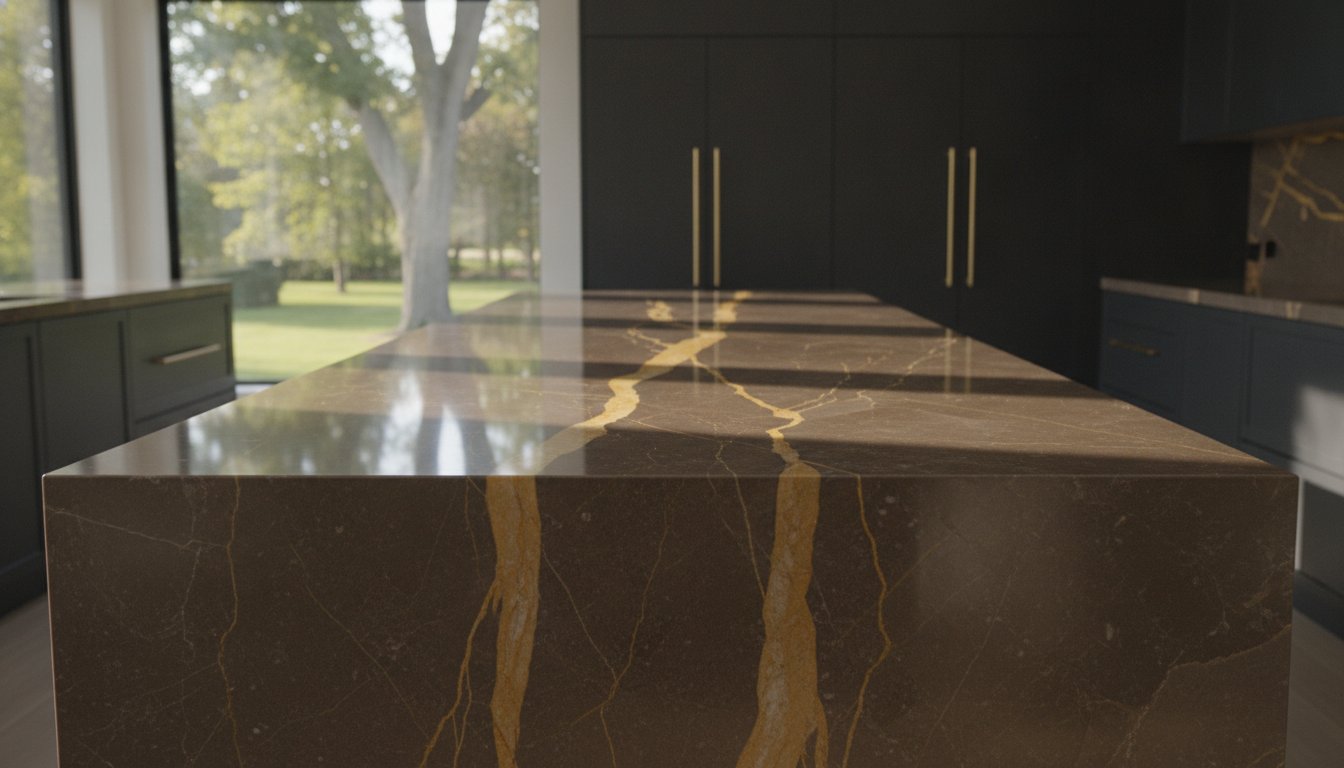
What if the most exquisite surface in your home was also the most indestructible? For many homeowners, the desire for a luxury kitchen is often tempered by the fear that a single glass of red wine or a heavy cast-iron pan will permanently scar a significant investment. You want the prestige of natural stone without the constant anxiety of maintenance. It's a common dilemma; balancing aesthetic ambition with the functional realities of a high-traffic family centre requires more than just a keen eye for colour.
Selecting durable stone slabs for kitchen countertops is a decision that defines the longevity and architectural value of your home. We promise to move past the confusing technical jargon to provide a clear, evidence-based guide to the most resilient materials available in 2026. You will gain the confidence to distinguish between quartzite and quartz based on geological facts. This guide previews the latest market shifts toward high-performance porcelain, the enduring strength of granite, and how strategic material selection can recoup up to 95% of its cost at resale.
Key Takeaways
- Understand the three pillars of slab performance—hardness, porosity, and thermal stability—to ensure your kitchen surfaces withstand the demands of a modern Canadian household.
- Identify the geological advantages of quartzite and granite as the premier choices for those seeking the highest level of resilience without sacrificing natural beauty.
- Learn how to navigate the 'marble dilemma' by selecting sophisticated alternatives that offer the same prestigious aesthetic without the risk of acidic etching or permanent staining.
- Master the professional framework for selecting durable stone slabs for kitchen countertops by prioritizing full-slab inspections over small samples at a specialized showroom.
- Recognize the value of sourcing materials through an expert distributor who handpicks premium inventory from global quarries specifically for the Ontario luxury market.
Defining Durability: The Performance Requirements of a Modern Kitchen
True durability in a high-end kitchen is not merely about longevity; it's about maintaining a pristine aesthetic under the relentless pressure of a busy household. In Canada, the kitchen serves as the social centre for large gatherings and rigorous culinary experimentation. This lifestyle demands a higher performance standard for all architectural surfaces. Selecting durable stone slabs for kitchen countertops requires a nuanced understanding of geological properties to ensure your investment remains a focal point of luxury rather than a source of maintenance anxiety.
Professional designers evaluate stone based on three primary pillars: hardness, porosity, and thermal stability. These metrics determine how a slab responds to the physical and chemical stressors of daily life. We utilize the Mohs Scale of Mineral Hardness to quantify a material's resistance to scratching. For example, common stainless steel cutlery typically ranks around 5.5 on this scale. If your chosen stone ranks lower, your knives and heavy cookware will leave permanent abrasions. This scientific framework is essential for distinguishing between materials that simply look robust and those that possess genuine mineral strength.
It is equally vital to differentiate between surface scratches and deep structural fissures. Surface scratches are superficial marks on the finish, often remediable through professional polishing. Structural fissures, however, are inherent geological separations that can lead to catastrophic cracks if the slab is subjected to uneven weight or rapid temperature shifts. High-quality inventory is meticulously inspected to ensure that natural veining does not mask these structural weaknesses.
Porosity and the Science of Stain Resistance
Mineral density determines how effectively a surface repels liquids. Highly porous stones absorb oils, pigments, and acids, leading to deep-seated discolouration that is difficult to reverse. While many countertop materials offer immense natural beauty, even the most resilient options require professional-grade sealing to create a reliable moisture barrier. Low porosity is essential for kitchen hygiene because it prevents the absorption of organic matter that fuels bacterial growth.
Thermal Stability in High-Traffic Culinary Spaces
Heat resistance is frequently the most overlooked factor in modern kitchen design. Thermal stability refers to a material's ability to withstand rapid temperature changes, known as thermal shock, without cracking or degrading. Natural stone slabs generally offer superior heat resistance compared to engineered resins, which can scorch, discolour, or melt when in contact with hot pans. Your surfaces must survive the "holiday meal test," where multiple heavy roasting pans and boiling pots are moved across the workspace during a single evening of entertaining. Choosing durable stone slabs for kitchen countertops with high thermal stability ensures your surfaces remain unmarred by the heat of professional-grade appliances.
The Durability Hierarchy: Comparing Premium Slab Materials
Selecting the ideal surface requires a sophisticated understanding of how different materials perform under pressure. Not all durable stone slabs for kitchen countertops are engineered or quarried to the same specifications. While quartz currently holds a 51% market share in 2026, many connoisseurs are turning toward natural alternatives for their unique geological signatures and superior heat resistance. Establishing a hierarchy of durability allows homeowners to align their aesthetic preferences with the functional demands of their culinary space. Adhering to the Natural Stone Institute's care and cleaning guidance ensures these premium surfaces retain their lustre for decades.
Granite remains the timeless workhorse of the luxury market. It offers a balanced profile of scratch resistance and thermal stability that few materials can match. Its crystalline structure provides a dense, reliable work surface that handles high-heat cookware with ease. However, for those seeking the pinnacle of natural performance, quartzite has emerged as the undisputed leader. Demand for this material is growing at 12% annually as more designers recognize its diamond-like hardness and sophisticated veining. You can explore these options in person by visiting our Mississauga stone gallery to witness the depth of these natural minerals.
Quartzite vs. Quartz: The Battle for the Countertop
The distinction between these two materials is often misunderstood. Quartzite slabs are 100% natural metamorphic rocks, formed under intense heat and pressure within the earth. This process results in a material that is naturally resistant to heat and UV rays. Conversely, engineered quartz is a man-made composite bound by petroleum-based resins. While quartz offers exceptional consistency and a non-porous surface, its resin content makes it susceptible to damage from hot pans. Visually, the organic depth and unpredictable movement of natural quartzite provide an exclusivity that mass-produced quartz cannot replicate.
The Resilience of Large Format Porcelain
Porcelain is the fastest-growing segment in the 2026 market, prized for its industrial-strength performance. These slabs are manufactured through high-fire kilning, creating a vitrified surface with nearly zero porosity. This makes porcelain countertops exceptionally hygienic and resistant to deep-seated staining. In Ontario, porcelain has become the preferred choice for outdoor kitchens because it withstands extreme freeze-thaw cycles without cracking. Modern engineering has significantly improved the impact resistance of these slabs, allowing for sleek, thin-profile designs that don't compromise on structural integrity. Choosing durable stone slabs for kitchen countertops from the porcelain category offers a tech-forward solution for the modern minimalist.
The Aesthetic Dilemma: Achieving the Marble Look Without the Fragility
The most frequent objection voiced by homeowners in our Mississauga gallery is a profound hesitation toward marble. While the luminous white background and iconic grey veining of Calacatta or Carrara are synonymous with high-end living, the practical reality often falls short for an active culinary environment. Traditional marble slabs are inherently soft and chemically sensitive. Choosing durable stone slabs for kitchen countertops often means looking beyond the classic choice to find materials that offer the same visual prestige with significantly higher resilience. This transition from aesthetic desire to functional requirement is a core part of the Natural Stone Institute's guide to countertop considerations.
Realizing a high-end aesthetic without the anxiety of permanent damage requires a shift in focus toward geological integrity. For many, the fear of staining an expensive investment is enough to compromise on their design vision. However, by understanding the mineral composition of your surfaces, you can select a slab that withstands the rigours of daily life while maintaining its sophisticated appearance. The goal is to move from a kitchen that needs to be protected to one that is designed to be used.
Etching vs. Staining: Understanding Chemical Sensitivity
Etching is often confused with staining, yet the two are fundamentally different. Staining occurs when a liquid penetrates the pores; etching is a chemical reaction that physically dissolves the surface. When acidic substances like lemon juice, vinegar, or red wine contact a calcite-based stone like marble, they create dull, matte spots that cannot be wiped away. Silicate-based stones, including granite and quartzite, are chemically inert to these household acids. Acid sensitivity is the primary reason to avoid marble in a chef’s kitchen where citric juices and vinegars are in constant use.
Sourcing Slabs with Natural Veining and Superior Hardness
Sophisticated homeowners now prioritize "marble-alternative" quartzites to achieve a bright, airy aesthetic without the constant fear of damage. Varieties such as Taj Mahal, Sea Pearl, and White Macaubas provide the creamy tones and elegant movement of marble but rank much higher on the Mohs scale. These durable stone slabs for kitchen countertops allow for a seamless integration of luxury and performance. The role of stone slabs in modern design is to serve as a durable focal point that withstands the test of time. By selecting a quartzite with the "Calacatta look," you realize a kitchen that remains pristine for decades, regardless of how often you entertain.

Selection Framework: How to Inspect a Slab for Longevity
Digital visualizers and small swatches are insufficient for professional-grade material selection. A four-inch sample cannot reveal the structural fissures or mineral variations present in a full ten-foot slab. To secure truly durable stone slabs for kitchen countertops, a physical inspection at a Mississauga showroom is non-negotiable. This allows you to witness the specific lot's character and integrity before it's committed to your architectural plans. Seeing the exact slab ensures that the veining you admire doesn't coincide with a geological weakness that could lead to future complications.
Professional inspection requires a high-intensity flashlight. By shining light parallel to the slab's surface, you can identify micro-cracks or excessive resin fills that remain invisible under standard gallery lighting. You must also consider how the finish impacts long-term performance. Polished surfaces provide a high-gloss aesthetic and the best stain resistance by effectively sealing the stone's surface. Honed finishes offer a matte, contemporary look but may require more frequent sealing. Leathered finishes are increasingly popular for their ability to hide fingerprints and water spots, making them an excellent choice for high-traffic islands.
The Showroom Inspection Checklist
- Step 1: Examine the perimeter. Check the edges for chipping or excessive resin-bound repairs that might compromise the slab during the fabrication or transport process.
- Step 2: Use multiple lighting angles. Move around the slab to find surface inconsistencies or dull spots that indicate uneven polishing or mineral soft points.
- Step 3: Verify the thickness. Standard luxury slabs are typically 3cm thick. This provides superior structural durability and a more substantial architectural presence compared to 2cm options, which often require additional sub-top support.
Questions to Ask Your Slab Distributor
Inquire about the origin and geological classification of the specific lot; stones from different quarries can vary significantly in mineral density. Confirm if the slab has been pre-sealed or treated at the quarry to understand your initial maintenance requirements. Finally, discuss the logistics of transporting large-format slabs. Ensuring the material reaches your fabricator without stress fractures is critical for a successful installation. You can view our current inventory of premium slabs to begin this rigorous selection process with a knowledgeable industry expert.
Sourcing Excellence: The Infinity Stone Distribution Advantage
Excellence in architectural surfaces begins at the source. Infinity Stone Inc. maintains a rigorous global acquisition process, handpicking durable stone slabs for kitchen countertops from elite quarries in Brazil, Italy, and beyond. This hands-on selection ensures that every lot in our Mississauga inventory meets the highest standards of structural integrity and aesthetic depth. By controlling the supply chain from the quarry to the gallery, we provide Ontario homeowners with materials that are as reliable as they are visually arresting.
Working with a specialist distributor offers technical advantages that mass-market retailers cannot replicate. We understand the specific mineralogy of every bundle, from the heat resistance of a specific granite lot to the density of our latest porcelain arrivals. This technical knowledge is essential for a seamless transition from slab selection to professional fabrication. Mississauga designers and builders rely on our expertise to identify materials that will perform under the unique demands of high-stakes residential projects. Our role is to serve as a steady partner, ensuring the foundational elements of your kitchen are of the highest calibre.
A Curated Inventory of High-Performance Materials
Our collection focuses on rare quartzite slabs and exotic granites that define luxury in the modern home. We prioritize materials that exceed standard architectural durability requirements, focusing on high-density minerals that resist the wear of daily culinary use. This exclusivity is a hallmark of our service; we provide the GTA market with hand-selected lots that are often unavailable through standard channels. Each slab is an individual work of geological art, curated for those who realize that quality is the ultimate luxury.
Partnering with the Design Community in Ontario
We provide comprehensive support to architects and interior designers during the material specification phase. A successful project often relies on a "material-first" design philosophy, where the focal stone slab is selected before cabinetry or flooring. This approach allows the natural movement and colour palette of the stone to guide the entire aesthetic direction of the space. By providing detailed geological data and professional validation, we help the design community make confident selections for their clients. We invite you to visit our Mississauga showroom to explore our durable stone inventory and witness the technical superiority of our handpicked collection first-hand.
Securing the Foundational Elements of Your Luxury Kitchen
High-end kitchen design requires a meticulous balance of mineral integrity and architectural vision. You now understand that true durability is a product of geological composition rather than mere aesthetic appeal. By prioritizing materials with high thermal stability and low porosity, such as quartzite and porcelain, you ensure your surfaces withstand the rigours of a busy Canadian household while maintaining their prestigious lustre. These technical considerations are the difference between a temporary trend and a lifelong investment.
Selecting durable stone slabs for kitchen countertops involves a rigorous inspection process that moves beyond digital visualizers and small samples. Visiting a specialized Mississauga-based distribution centre allows you to verify the structural soundness of our handpicked global inventory in person. We remain a trusted partner for GTA luxury designers, providing the technical expertise and curated lots required for high-stakes residential projects. This professional validation ensures your material selection is grounded in geological fact.
Your journey from inspiration to application begins with a commitment to quality over convenience. Explore our curated collection of premium durable slabs at Infinity Stone Inc. to find the foundational elements for your high-end living space. We look forward to supporting your vision with surfaces that define excellence for decades to come.
Frequently Asked Questions
What is the most durable natural stone for a kitchen countertop?
Quartzite is the most durable natural stone available for residential architectural surfaces. It outranks granite on the Mohs scale of mineral hardness and offers superior resistance to both scratching and chemical weathering. This geological strength ensures that durable stone slabs for kitchen countertops maintain their structural integrity even in the most demanding culinary environments.
Is quartzite more durable than granite for heavy kitchen use?
Quartzite offers higher mineral hardness than granite due to its high concentration of silica. While granite is an exceptionally resilient workhorse, quartzite's metamorphic formation results in a denser crystalline structure that is less prone to surface abrasions. Both materials are excellent choices for luxury projects, but quartzite is the superior option for those prioritizing maximum scratch resistance.
Can I put hot pans directly on a porcelain slab countertop?
Porcelain slabs are designed to withstand direct heat from hot cookware without scorching, discolouring, or cracking. Because these slabs are manufactured at temperatures exceeding 1200 degrees Celsius, they possess a thermal stability that exceeds both natural stone and resin-bound engineered quartz. You can safely move pots from the range to the surface without the risk of thermal shock.
How often do I need to seal a durable stone like quartzite or granite?
Most high-density natural stones require professional sealing every one to two years to maintain an effective moisture barrier. You can perform a simple water test; if water no longer beads on the surface and begins to darken the stone, it's time for a new application. Some exceptionally dense durable stone slabs for kitchen countertops may require less frequent treatment depending on the frequency of use.
Why is marble considered less durable than other kitchen slabs?
Marble is primarily composed of calcite, a mineral that is both geologically soft and chemically reactive to acids. This composition makes it susceptible to physical scratches and etching, which are dull spots caused by contact with common household items like lemon juice or vinegar. While aesthetically prestigious, it lacks the geological hardness required for a high-traffic, maintenance-free kitchen centre.
Do durable stone slabs chip easily at the edges?
Edge durability depends largely on the architectural profile you select rather than the stone's inherent properties. Sharp, square edges are more vulnerable to impact from heavy pots, while eased, bevelled, or bullnose profiles distribute force more effectively to prevent chipping. Selecting a 3cm slab also provides significantly greater edge strength compared to thinner 2cm alternatives.
What is the best finish for a durable kitchen countertop: polished or honed?
A polished finish is the most durable option for preventing deep-seated stains because the polishing process effectively closes the stone's surface pores. While honed finishes provide a sophisticated matte look, they can be more susceptible to absorbing oils if the sealant isn't maintained. For high-traffic islands, a polished or leathered finish typically offers the best balance of long-term resilience and ease of care.


